
Moisture Content Testing: Small Test, Big Impact on Ground Behaviour
Moisture content (also called water content) is one of the most fundamental soil tests in geotechnical engineering. It’s routinely carried out as a stand-alone test or alongside key laboratory tests such as triaxial, CBR, and permeability. While it’s quick and cost-effective, the data it provides is critical—because even small changes in moisture can significantly affect ground performance.
Moisture content influences many physical properties, including:
- compaction behaviour and achievable dry density
- strength and short-term stability
- settlement and compressibility
- shrink–swell behaviour in clay-rich soils
- permeability and drainage response
How the test works
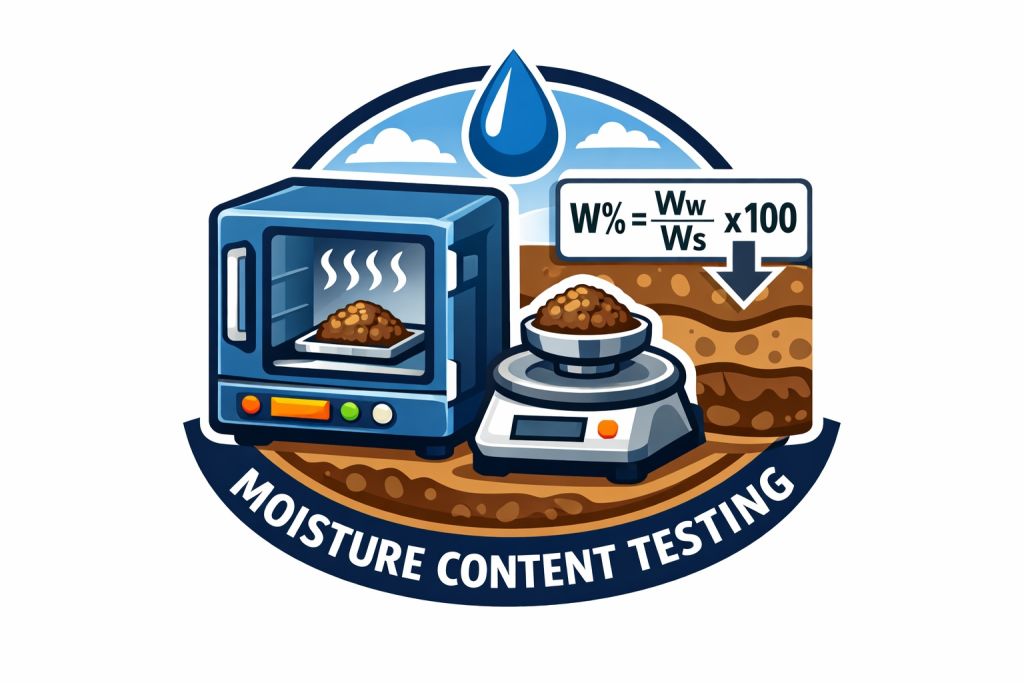
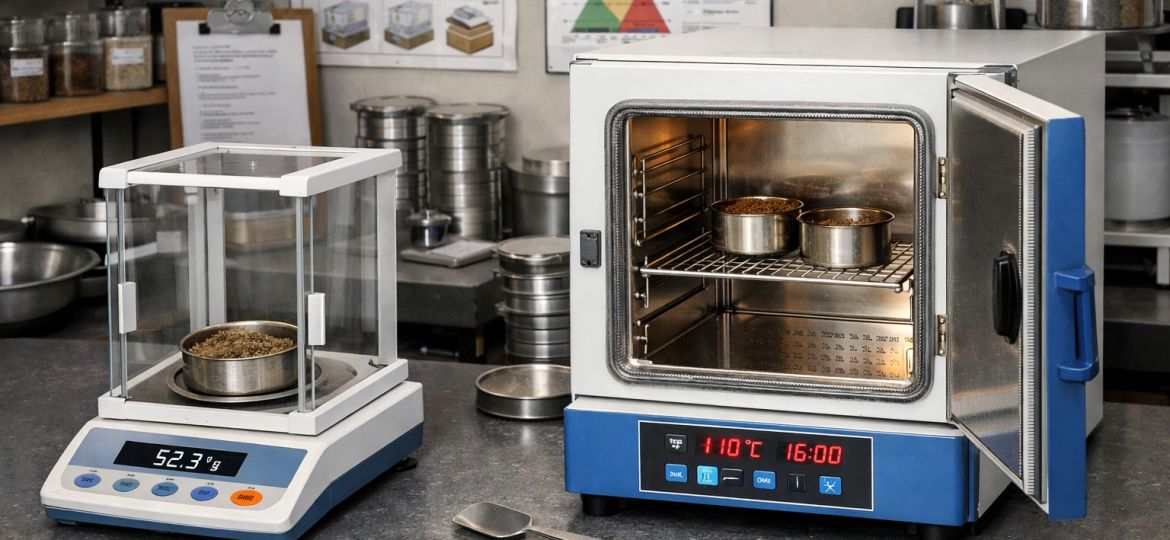
In the laboratory, a representative portion of soil is weighed, then placed in an oven and dried until a constant mass is achieved—commonly over a ~16 hour drying period. The loss in mass is used to calculate water content, giving a clear measure of how wet the material was at the time of sampling.
Why choose The Testing Lab PLC?
At The Testing Lab PLC, we provide moisture content testing with reliable handling, consistent methods, and clear reporting that supports the interpretation of your wider test suite. It’s a simple result—but it often explains why soils behave the way they do.
Need moisture content testing? Contact The Testing Lab PLC to discuss your samples and turnaround.