

Is a generic £15 DIY logbook really worth risking a £20,000 fine from the Health and Safety Executive? Many UK property managers realise too late that a simple checklist isn’t a substitute for a professional engineering survey when they book legionella risk assessment services. You’re likely feeling the pressure of staying on the right side of the HSE ACOP L8 regulations, especially as the 2026 compliance standards become more stringent. It’s frustrating when you can’t tell if you’re paying for a genuine safety audit or just a piece of paper that won’t hold up during a rigorous inspection.
This guide eliminates that uncertainty. We’ll show you exactly how to secure professional services that provide full legal protection and UKAS accredited certification. You’ll gain a clear understanding of the latest 2026 pricing structures, the mandatory frequency of testing for commercial buildings, and the specific technical benchmarks our laboratory team uses to secure your water systems UK wide. We’ve simplified the path from technical confusion to total regulatory peace of mind, acting as your strategic partner in water safety.
Key Takeaways
- Understand your mandatory legal obligations under ACOP L8 and how professional assessments differ from simple logbook documentation.
- Gain insight into the rigorous site survey process, including technical temperature monitoring at sentinel points and comprehensive asset identification.
- Learn how to book legionella risk assessment services UK wide to ensure continuous compliance with the Health and Safety at Work Act 1974.
- Identify the specific trigger events and HSE frequency guidelines that necessitate a formal review of your property’s water hygiene strategy.
- Discover the efficiency of a laboratory-led approach to compliance, integrating water safety with other essential surveys for a streamlined risk management solution.
Why You Should Book a Legionella Risk Assessment for Your UK Property
Every UK duty holder, whether a landlord or an employer, carries a non-negotiable legal responsibility under the Health and Safety at Work etc. Act 1974. It is not a recommendation; it is a statutory requirement. When you book legionella risk assessment services, you are initiating a systematic engineering review of your water systems to identify where Legionella pneumophila bacteria could proliferate. What is Legionella? It is a water-borne pathogen that causes a severe form of pneumonia, and its presence in your pipes can lead to catastrophic health outcomes for tenants or staff. Neglecting this duty exposes your organisation to significant physical risks and severe financial penalties that can cripple a business.
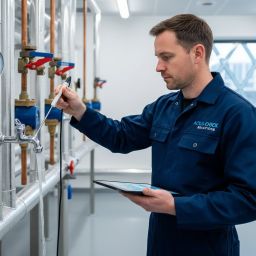
Professional assessors look for specific environmental conditions that encourage bacterial growth. These include water temperatures between 20°C and 45°C, the presence of scale or rust, and “dead legs” where water stagnates. A dead leg is a length of pipe leading to a fitting that is rarely used, such as a redundant sink in a converted office. These areas become breeding grounds for biofilms. Without a professional eye to map the schematic of your plumbing, these hidden hazards remain invisible until an outbreak occurs. Our approach treats water hygiene with the same precision as high-stakes software testing, ensuring every “bug” in your plumbing is identified and mitigated.
The Legal Reality for UK Landlords and Employers
The Health and Safety Executive (HSE) enforces strict guidelines through the Approved Code of Practice L8 (ACoP L8) and HSG274. These regulations apply UK wide, and failure to comply can result in unlimited fines or even custodial sentences for responsible individuals. In 2017, a UK firm faced a fine exceeding £300,000 following a single case of Legionnaires’ disease linked to their cooling towers. A professional assessment protects you by providing a documented trail of due diligence. An independent assessor provides an objective perspective that internal staff often lack; they don’t overlook the “minor” temperature fluctuations in a calorifier that could signal a failing heating element—a common issue that leads many to explore Boiler Installation 3,000.00 as a long-term solution.
The Difference Between a Logbook and an Assessment
There is a common misconception that purchasing a pre-printed “Legionella logbook” constitutes compliance. It does not. A logbook is merely a repository for data; it’s the empty vessel where you record weekly flushings and monthly temperature checks. The risk assessment is the foundational document for all subsequent monitoring and provides the strategic roadmap for your entire water safety policy. While a DIY approach might seem cost-effective for a single domestic property, it is dangerously inadequate for complex commercial buildings with intricate pipework and multiple occupants. Professional assessments ensure that the methodology used to test your system meets the rigorous standards required by UK insurers and health inspectors.
For those managing complex commercial properties like hotels or event venues, ensuring safety compliance is the foundation for a building’s success. Once that is handled, the focus can shift to creating excellent experiences for guests, whether for a corporate conference or a wedding. As an example of a top-tier vendor that elevates such occasions, you can visit The Hitmen Trio, an award-winning band that specializes in high-energy performances.
By choosing to book legionella risk assessment professionals, you’re not just ticking a box. You’re integrating a quality assurance framework into your property management. We treat your water system like a critical piece of infrastructure. We measure, we document, and we provide clear, actionable steps to eliminate risk. This proactive stance is the only way to ensure that your building remains safe, your legal standing remains secure, and your reputation remains untarnished by preventable health crises.
Understanding UK Legislation: ACOP L8 and HSG274 Compliance
Compliance isn’t a box-ticking exercise; it’s a legal mandate rooted in the Health and Safety at Work Act 1974. This act requires employers to protect staff and the public from risks, including biological hazards like Legionella. To provide clarity, the Health and Safety Executive (HSE) published the ACOP L8 and HSG274 Compliance framework. This code of practice carries a unique legal weight. If you’re prosecuted for a breach of health and safety law and it’s proved you didn’t follow the ACOP, the court will find you at fault unless you can show you complied in another way.
While ACOP L8 sets the legal standard, the HSG274 technical guidance provides the engineering specifications. It’s divided into three parts, with Part 2 being the most relevant for the majority of commercial premises. It covers hot and cold water systems, detailing everything from temperature control to the frequency of tank inspections. To ensure these technical nuances aren’t missed, most savvy property managers book legionella risk assessment consultations to establish a precise baseline for their site. Without this, you’re operating in the dark, which is a significant risk when you consider that insurers often void policies if statutory inspections aren’t up to date.
Who is the “Duty Holder” and the “Responsible Person”?
UK law identifies two critical roles for water management. The Duty Holder is usually the employer or the building owner. They carry the ultimate legal burden. They must appoint a “Responsible Person” who possesses sufficient authority and competence to manage the risk. This person oversees the written scheme of control, which is a live document detailing how the site prevents bacterial growth. When you book legionella risk assessment services, you’re providing the Responsible Person with the data they need to justify their safety decisions and maintain legal protection.
ACOP L8 Compliance Across the UK
These regulations aren’t regional suggestions; they apply UK-wide. Whether your facility is in Doncaster, Belfast, or Cardiff, the HSE enforces the same rigorous standards. Since the 2013 revision of ACOP L8, the focus has shifted towards a more proportional approach for lower-risk systems, but the requirement for a formal risk assessment remains absolute for all business premises. We adopt a UKAS accredited consultancy approach to multi-hazard compliance, ensuring that water safety is integrated into your broader safety strategy. This laboratory-level precision ensures that every pipe, dead leg, and storage tank is accounted for in your compliance audit.
The financial stakes are high. Under the Corporate Manslaughter and Corporate Homicide Act 2007, the penalties for negligence have increased significantly. Fines for health and safety breaches can easily exceed £100,000 for medium-sized enterprises, and that doesn’t account for the reputational damage. By adhering to the technical specifications in HSG274, you aren’t just avoiding a fine; you’re applying a scientific method to building management. It’s about moving from a reactive “fix it when it breaks” mindset to a proactive, engineered solution that keeps your water systems clean and your business insured. If you’re unsure about your current compliance status, it’s time to book legionella risk assessment support to close any gaps in your safety records.
The Professional Assessment Process: What Happens During a Site Visit?
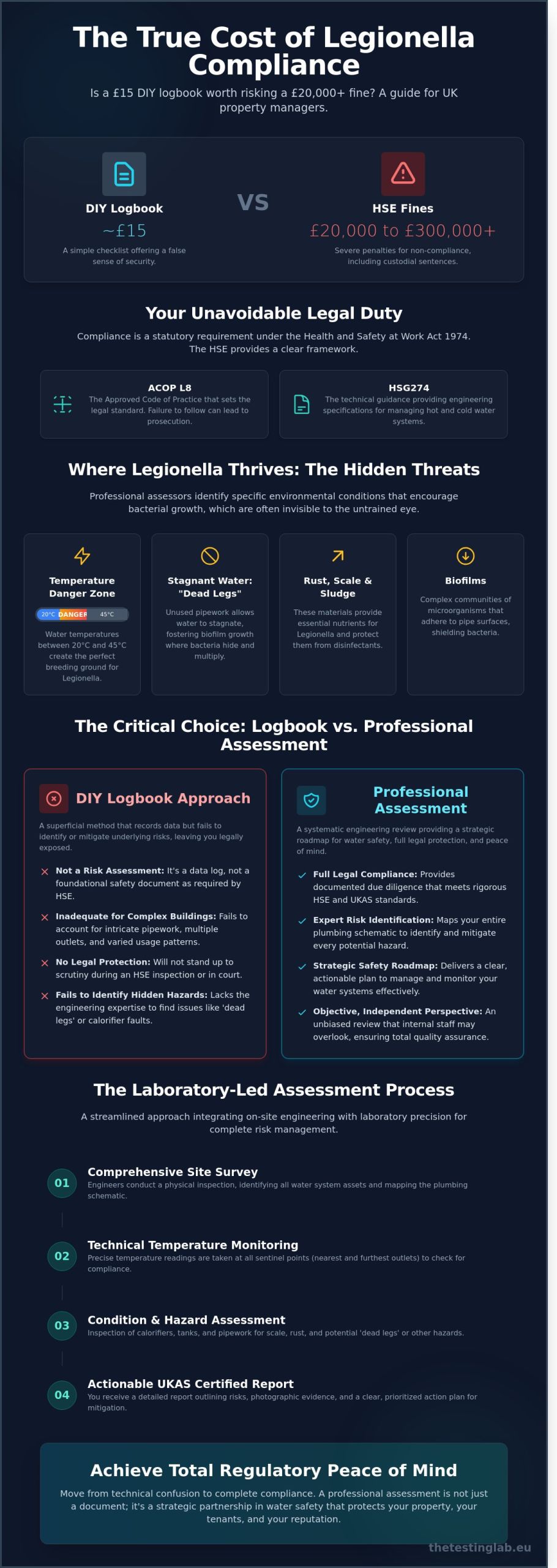
When you book legionella risk assessment services with us, the process follows a rigorous, engineering-led methodology. Our assessors don’t just tick boxes; they conduct a deep-dive forensic analysis of your building’s water infrastructure to ensure compliance with the Approved Code of Practice (ACOP L8). The visit is structured into five distinct phases to capture every potential biological hazard.
- Step 1: Asset Identification. We begin with a comprehensive site survey. This involves mapping every water source, from basic tea points to complex cooling towers, creating a full asset register.
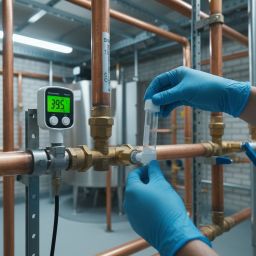
- Step 2: Thermal Monitoring. Our team measures temperatures at sentinel points. Cold water must remain below 20°C, and hot water must reach at least 50°C (55°C in healthcare settings) within one minute of running.
- Step 3: Tank Inspection. We physically inspect cold water storage tanks. We look for signs of corrosion, sediment, or organic biofilm growth that provides a nutrient source for bacteria.
- Step 4: Regulatory Review. We audit your existing written scheme of control and maintenance logs. If these records are missing or incomplete, your business faces immediate legal liability under UK health and safety law.
- Step 5: Prioritised Reporting. You receive a final digital report. This isn’t a vague document; it’s a data-heavy action plan that ranks risks from low to critical so you can allocate your maintenance budget effectively.
Technical Inspection of Water Assets
Precision is vital during the physical inspection. We examine Thermostatic Mixing Valves (TMVs) to ensure they fail-safe correctly and don’t harbour stagnant water. Showerheads are checked for scale buildup, as 85% of Legionella cases involve inhaled aerosols. In high-risk environments like spa pools or cooling towers, we evaluate the mechanical efficiency of drift eliminators. We identify dead legs, which are redundant pipework sections where water stagnates. Even a 30cm stretch of unused pipe can become a breeding ground for Legionella pneumophila within days.
The Importance of UKAS Accredited Laboratory Analysis
Physical inspections are the foundation, but water sampling provides the empirical proof required for high-risk sites. If our assessor identifies conditions conducive to bacterial growth, such as temperatures fluctuating between 20°C and 45°C, we recommend immediate sampling. We utilise a UKAS accredited laboratory based right here in Doncaster. This local proximity is a strategic advantage, allowing for rapid processing of samples from our UK-wide operations. Culturing typically begins within 24 hours of collection, ensuring the most accurate results possible. Using a Doncaster-based facility significantly reduces transit times, which is critical for maintaining the biological integrity of the water sample. When you book legionella risk assessment with a lab-integrated partner, you move from guesswork to scientific certainty through our comprehensive Legionella risk assessment services.
How Often Should You Organise a Re-assessment?
HSE guidance under the Approved Code of Practice L8 (ACOP L8) doesn’t specify a rigid expiry date for your documentation. Instead, it mandates that you must review the assessment regularly or whenever there’s a reason to suspect it’s no longer valid. While many site managers still cling to the “two-year rule” that was common in older guidance, the modern UK-wide standard focuses on a risk-based approach. If you manage a high-complexity system or a site with vulnerable residents, a biennial review is likely insufficient. You’ll need to justify your review frequency based on the specific technical demands of your water system.
The myth of the two-year rule often leads to complacency. In a professional engineering context, we treat the risk assessment as a dynamic tool rather than a static certificate. If your building’s occupancy drops by 30% for a period of six months, the risk of stagnation increases significantly. You shouldn’t wait for a two-year milestone to address these changes. It’s a strategic necessity to book legionella risk assessment updates whenever the operational reality of your building shifts away from the original survey parameters.
Integrating these checks into your broader occupational hygiene schedule ensures you maintain a continuous chain of compliance. This isn’t just about avoiding a fine; it’s about precision in safety management. By aligning Legionella reviews with your annual mechanical and electrical (M&E) audits, you create a holistic view of building health. This laboratory-style rigour ensures that no valve, dead-leg, or temperature fluctuation goes unrecorded, keeping your staff and tenants protected under UK health and safety law.
This holistic view of safety often extends beyond the building’s infrastructure to include direct employee health management. For those managing workforces, integrating services from occupational health specialists can be a crucial next step. As an example of this comprehensive approach, firms like Persona Health in Australia focus on everything from pre-employment medicals to injury management, complementing environmental safety with direct human-centric care.
Factors That Change Your Risk Profile
Significant alterations to your plumbing system are the most common triggers for an immediate re-assessment. If you’ve completed renovations that involved modifying more than 10% of your pipework or installing new thermostatic mixing valves (TMVs), your previous assessment is technically obsolete. Changes in occupant vulnerability also dictate a review. For instance, if a commercial unit is repurposed into a healthcare clinic, the risk profile spikes because the users are more susceptible to infection. Finally, any laboratory test returning a Legionella count exceeding 1,000 cfu/l requires an immediate, full-scale review of your existing control scheme to identify the failure point.
Maintaining the Legionella Log Book Post-Assessment
Your risk assessment provides the blueprint for your daily operations. The findings dictate exactly which sentinel points need monthly temperature checks and which showerheads require quarterly descaling. Under UK law, specifically Regulation 5 of the Management of Health and Safety at Work Regulations 1999, you must retain these records for at least five years. This includes 52 weeks of flushing logs for infrequently used outlets and 12 months of chemical treatment records if applicable. Keeping a precise, digital logbook allows you to spot trends, such as a gradual drop in calorifier temperatures, before they become a regulatory breach. Organising a schedule that triggers alerts 30 days before a deadline ensures your Doncaster site remains 100% compliant at all times.
Don’t leave your compliance to chance. Ensure your building’s safety by choosing a partner who understands the technical nuances of water hygiene. Book legionella risk assessment services with our expert team today to secure your site.
Booking Your Legionella Assessment with The Testing Lab PLC
Choosing a compliance partner involves more than ticking a box. Our Doncaster headquarters serves as a strategic hub, allowing us to deploy specialist engineers UK-wide within 24 to 48 hours. We don’t just provide a report; we deliver a scientific audit grounded in the Health and Safety at Work etc. Act 1974. When you book legionella risk assessment services with us, you’re accessing a team that prioritises engineering precision over simple checklists. Our approach ensures that your facility remains compliant with ACoP L8 and HSG274 regulations without the stress of managing multiple vendors.
Our methodology focuses on the technical nuances of your water system. We’ve found that 15% of commercial buildings in South Yorkshire have dead legs or redundant pipework that previous inspectors missed. Our engineers identify these specific risks, providing a clear roadmap for remediation. This level of detail is why 92% of our clients transition from a single assessment to a long-term water management contract. We believe that transparency is the foundation of safety, which is why our reporting is clear, data-driven, and actionable.
A Strategic Partner for Health and Safety
We take the burden of quality assurance off your shoulders by managing the entire lifecycle of environmental testing. Our UKAS accredited laboratory ensures that every sample is processed with scientific rigour, eliminating the risk of false negatives that could lead to legal liability. For developers working on brownfield sites, we offer integrated expertise in asbestos in soils, ensuring your groundworks and water systems meet the highest safety standards simultaneously. This multidisciplinary approach is essential for modern construction and facility management.
Combining services is a practical way to reduce operational downtime. If your facility requires both water and air quality checks, we coordinate these visits to minimise disruption to your daily operations. We’ve helped local Doncaster firms reduce their compliance costs by 18% through these bundled service agreements. Our reports are delivered through a secure digital portal, using clear data visualisations to show exactly where your system stands against current UK legislation. You’ll always have a clear audit trail ready for any HSE inspection.
Get a Professional Quote Today
The process to book legionella risk assessment visits is straightforward and designed for busy facility managers. We provide bespoke quotes based on the complexity of your infrastructure, not a generic price list. Independent testing provides the most reliable data for your business because our results are impartial and backed by laboratory evidence. We don’t sell plumbing repairs, so our recommendations are always focused purely on your safety and legal compliance. This independence ensures there’s no conflict of interest in our findings.
- Receive a detailed, bespoke quote within 4 working hours of your enquiry.
- Benefit from our 15 years of experience in UK-wide environmental testing and engineering.
- Access all your compliance reports through our secure digital portal 24/7.
- Integrate Legionella testing with asbestos surveys for a unified safety strategy.
Don’t leave your compliance to chance. Contact our Doncaster team to discuss your specific site requirements and secure your facility’s safety. Book your Legionella risk assessment today and experience the difference that a laboratory-led, engineering approach makes to your health and safety strategy. We’re ready to help you navigate the complexities of water safety with precision and professionalism.
Secure Your 2026 Statutory Compliance Today
Maintaining water safety isn’t just a box-ticking exercise; it’s a critical legal obligation under ACOP L8 and HSG274 regulations. Neglecting these standards risks public health and carries heavy penalties for duty holders across the country. When you book legionella risk assessment services with a UKAS Accredited Laboratory #2112, you’re investing in over 20 years of technical expertise. Our Doncaster-based headquarters coordinates UK-wide service coverage to ensure every property stays compliant with the latest HSE health and safety guidelines. We’ve spent two decades refining a laboratory-grade approach that transforms complex compliance into a streamlined, manageable process for your business. It’s about moving from reactive fixes to proactive safety management. Don’t leave your site’s safety to chance when professional certainty is a single step away. Our team is ready to help you navigate the technical requirements of the 2026 compliance landscape with total confidence.
Request a Legionella Risk Assessment Quote
Frequently Asked Questions
Is a Legionella risk assessment a legal requirement in the UK?
Yes, it’s a legal requirement for all UK employers and landlords under the Health and Safety at Work etc. Act 1974. The Management of Health and Safety at Work Regulations 1999 also mandate that you identify and manage risks like Legionella. Failure to comply can lead to fines exceeding £20,000 or even imprisonment. It’s your responsibility to ensure a competent person evaluates your water systems regularly to protect occupants.
Can I carry out my own Legionella risk assessment?
You can carry out your own assessment if you’re competent and understand the technical complexities of water systems. However, most business owners lack the specific engineering training required by the Health and Safety Executive. If you choose to book legionella risk assessment services with a professional, you ensure every dead leg and blind end in your pipework is correctly identified. Mistakes in self-assessment often lead to missed hazards and legal liability.
How much does it cost to book a professional Legionella assessment?
A professional assessment for a standard residential property typically starts from £100. For larger commercial sites in Doncaster or across the UK, prices range between £350 and £1,200 depending on the number of water outlets and cooling towers. We provide a fixed-price quote after reviewing your building’s floor plan. This precision ensures you don’t pay for unnecessary site time while receiving a comprehensive technical report that meets all UK standards.
What happens if Legionella is found in my water system?
If tests confirm Legionella bacteria above 1,000 cfu/l, you must implement immediate remedial actions. This usually involves chemical disinfection using chlorine or thermal shock treatment where water temperatures exceed 60°C. You’ll also need to restrict access to affected areas to protect occupants. Following the 2013 ACoP L8 guidelines, you must re-test the water after treatment to confirm the system is safe and the bacteria count has dropped to safe levels.
Does a Legionella risk assessment cover all types of buildings?
Every UK building with a water system where people might be exposed to aerosolised droplets requires an assessment. This includes dental practices, warehouses, and residential flats. Even simple systems like a single toilet and sink fall under the HSE’s scope. In 2022, over 500 cases of Legionnaires’ disease were reported in England and Wales. This proves that no building type is exempt from the risk of bacterial colonisation regardless of its size.
How long does a Legionella risk assessment report remain valid?
There’s no fixed expiry date, but the HSE recommends reviewing your assessment every 2 years. You must also update it immediately if you change the water system, change the building’s use, or if new health and safety data emerges. Keeping your records up to date is a core part of your compliance strategy. It ensures your safety protocols reflect the current physical state of your plumbing and cooling infrastructure at all times.
What is the difference between a Legionella test and a risk assessment?
A risk assessment is a physical survey of the entire water system to identify potential hazards, while a test involves taking water samples for laboratory analysis. When you book legionella risk assessment visits, the engineer examines pipework and temperatures. Sampling isn’t always mandatory but is often necessary for high-risk systems like cooling towers or hospitals. Think of the assessment as a diagnostic check and the test as a specific biological lab verification.
How do I know if my Legionella assessor is competent?
A competent assessor must demonstrate specific training and experience, such as a City & Guilds qualification in Legionella control. You should verify if they belong to the Legionella Control Association, which audits members against a 9-point code of conduct. Ask for evidence of their previous 12 months of field experience. Professionalism in this field requires a blend of engineering knowledge and strict adherence to the BS 8580-1:2019 standard for risk assessments.