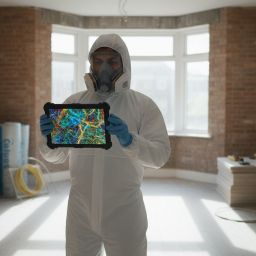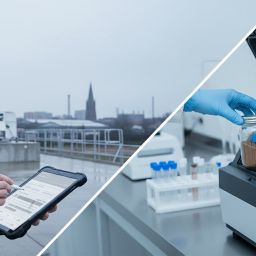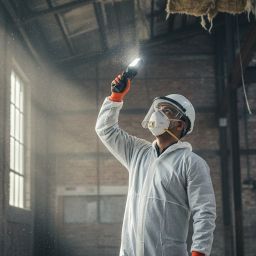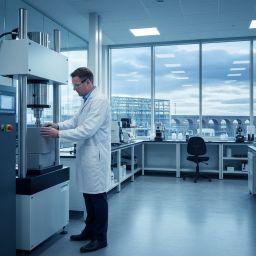

The threat of a steep HSE fine looms over every construction and refurbishment project. Coupled with the anxiety of project delays from slow lab results and the sheer complexity of asbestos regulations, the pressure to get it right is immense. But what if you could navigate this landscape with confidence and precision? The key to unlocking both project efficiency and absolute legal certainty lies in a robust understanding of UKAS accredited asbestos testing.
This complete 2026 guide is your definitive roadmap. We will demystify the entire process, breaking down the technical differences between analysis types and clarifying the stringent standards that underpin UKAS certification. You will gain the critical knowledge needed to ensure your site is not just safe, but fully compliant with all current UK legislation, safeguarding your team and your business.
Prepare to master the requirements, secure the fast, accurate results your timeline demands, and achieve total peace of mind. Let’s ensure your project is built on a foundation of unshakeable safety and compliance.
Key Takeaways
- Learn why UKAS accreditation is the mandatory benchmark for asbestos testing, ensuring your results meet strict ISO/IEC 17025 standards for legal and safety compliance.
- Master the mandatory 4-stage clearance process for high-risk removals and understand the crucial “independence rule” that protects you from conflicts of interest.
- Follow a sample’s journey from your site to the lab, recognising why a strict chain of custody is essential for legally defensible UKAS accredited asbestos testing.
- Identify the key criteria for choosing a lab partner, including their logistical efficiency, capacity for large-scale projects, and commitment to unbiased analysis.
What is UKAS Accredited Asbestos Testing and Why is it Mandatory?
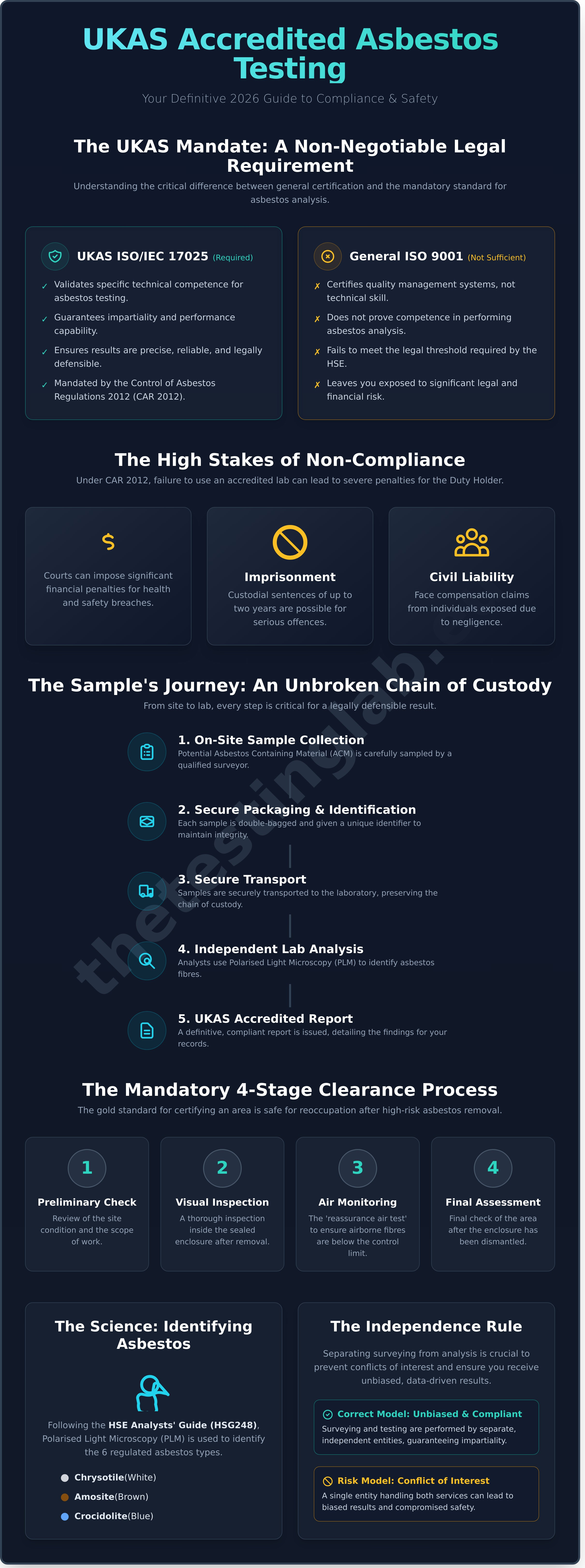
When dealing with a substance as hazardous as asbestos, guesswork and assumptions are not an option. This is where UKAS accredited asbestos testing becomes a non-negotiable step for property owners and managers in Doncaster. UKAS stands for the United Kingdom Accreditation Service (UKAS), the sole national body recognised by the government to assess organisations that provide testing, inspection, and calibration services. In the context of asbestos, UKAS accreditation signifies that a laboratory has been independently and rigorously evaluated to meet the internationally recognised standard ISO/IEC 17025.
This standard isn’t just a quality mark; it’s a legal cornerstone. The Control of Asbestos Regulations 2012 (CAR 2012) mandates that anyone managing non-domestic premises must take reasonable steps to identify and manage asbestos. This “duty to manage” can only be fulfilled with accurate, reliable data. Consequently, using a UKAS accredited laboratory is the only way to ensure your asbestos sample analysis is legally compliant, technically sound, and provides the certainty needed to protect occupants and avoid prosecution. Unaccredited analysis, including many “DIY” testing kits, simply fails to meet this legal threshold, leaving you exposed to significant risk.
The Difference Between Accreditation and Certification
It’s crucial to understand that general certification, like ISO 9001, is not sufficient for asbestos analysis. While ISO 9001 certifies a company’s quality management systems, UKAS accreditation to ISO 17025 specifically validates a laboratory’s technical competence to perform the analysis. Labs undergo a demanding peer-review process by technical experts to achieve and maintain this status, which proves their “competence, impartiality, and performance capability.” This ensures that every result is precise, reliable, and legally defensible.
Your Legal Obligations as a Duty Holder
Under Regulation 4 of CAR 2012, the “Duty Holder” is the person or organisation responsible for maintaining and repairing non-domestic premises. This could be the owner, landlord, or a managing agent. Failure to use a competent, accredited laboratory for asbestos analysis can lead to severe penalties, including:
- Unlimited Fines: Courts can impose significant financial penalties for breaches of health and safety law.
- Imprisonment: For serious offences, custodial sentences of up to two years are possible.
- Civil Liability: You may face civil claims for compensation from individuals exposed to asbestos due to negligence.
To ensure full compliance by 2026 and beyond, the Duty Holder must exclusively commission a UKAS accredited laboratory for all asbestos sample analysis to meet their legal duty to manage.
Just as navigating health and safety law requires specialist partners, many businesses find themselves needing similar expert support for other complex UK regulations, such as immigration law for skilled workers. For guidance in that area, one resource available is 1-absolute-advisor.com, which specializes in visa applications.
The Science of the Lab: How Asbestos Samples are Analyzed
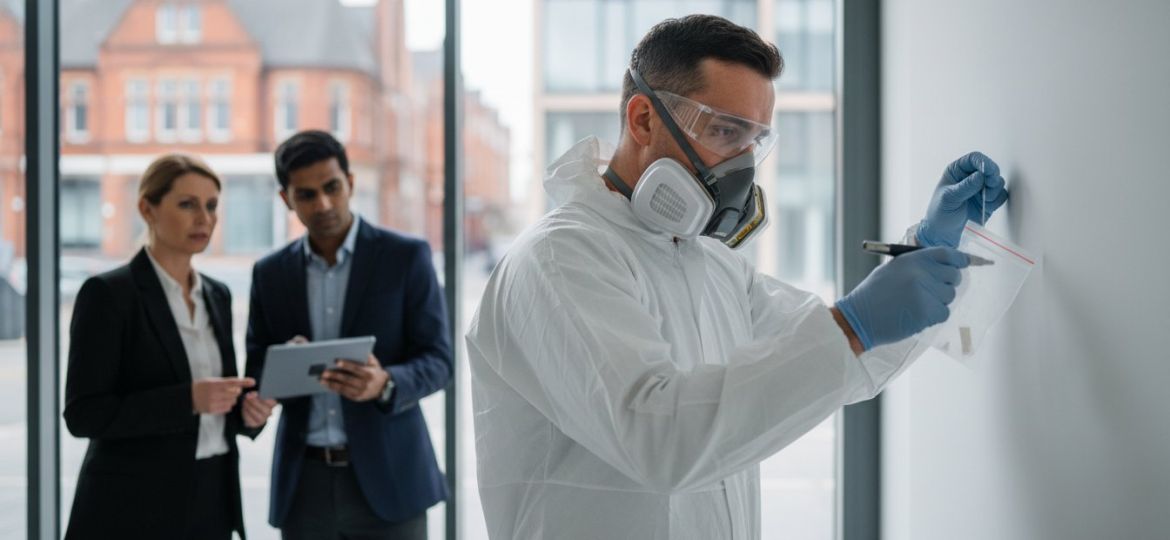
Once a potential asbestos-containing material (ACM) is sampled on-site in Doncaster, its journey is only just beginning. To yield reliable data, the sample must be handled with scientific precision from the moment of extraction to the final report. This is where a dedicated laboratory-first approach demonstrates its value over general consultancies. An unbroken chain of custody, with every sample double-bagged, uniquely identified, and securely transported, ensures its integrity is never compromised.
The core benefit of using an independent laboratory for UKAS accredited asbestos testing is the guarantee of unbiased, data-driven results. Our focus is purely on the scientific analysis, free from any potential conflicts of interest that may arise when surveying and testing are handled by the same entity. This commitment to impartiality ensures you receive a definitive, factual report on the composition of your materials.
Bulk Identification using Polarised Light Microscopy (PLM)
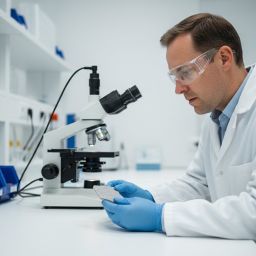
The primary method for identifying asbestos fibres in bulk building materials is Polarised Light Microscopy (PLM). This highly specialised technique allows our Doncaster-based analysts to positively identify the six regulated types of asbestos. The process follows meticulous steps outlined in the official HSE Asbestos: The Analysts’ Guide, ensuring full compliance. Analysts mount a small portion of the sample on a microscope slide with specific refractive index liquids. By manipulating polarised light and observing the unique optical properties, such as colour changes (dispersion staining), they can distinguish between different fibre types like Chrysotile (white), Amosite (brown), and Crocidolite (blue).
Asbestos in Soils and Water Absorption Testing
Beyond traditional building materials, the analysis of asbestos in soil is a critical requirement for brownfield site developments. Our laboratory performs both qualitative analysis (to confirm the presence of asbestos) and more complex quantitative analysis to determine the percentage of asbestos by weight, a key metric for risk assessment and waste classification. Additionally, we conduct water absorption testing on asbestos-cement products. This test determines the material’s porosity, providing crucial data on its potential to release fibres if damaged and helping to assess the overall risk level accurately.
The 4-Stage Clearance Process and Air Monitoring
After the removal of high-risk, licensed asbestos materials such as insulation board or sprayed coatings, a property is not automatically safe. UK regulations mandate a rigorous 4-Stage Clearance Process to verify the area is meticulously clean and ready for re-occupation. This critical verification must be conducted by an independent laboratory, entirely separate from the removal contractor. This rule ensures complete impartiality and provides you with unbiased, factual results you can trust.
The Four Stages of Site Clearance
This methodical process is the gold standard for ensuring a site is safe post-remediation. Each stage must be passed before the analyst can proceed to the next.
- Stage 1: Preliminary Site Check: The analyst first reviews the removal contractor’s plan of work and site documentation to confirm all required protocols were correctly followed.
- Stage 2: Thorough Visual Inspection: Arguably the most critical stage. The analyst conducts a detailed visual inspection of the sealed work area, searching for any traces of dust or debris. The area must be perfectly clean to the naked eye.
- Stage 3: Air Clearance Monitoring: Air samples are taken from within the enclosure and analysed on-site using powerful phase-contrast microscopy. This is a key part of UKAS accredited asbestos testing, confirming that airborne fibre concentrations are below the control limit of 0.01 fibres per cubic centimetre (f/cm³).
- Stage 4: Final Assessment: Once the area passes the air test, the enclosure is carefully dismantled. The analyst performs a final visual check of the wider area before issuing a Certificate for Reoccupation.
Types of Asbestos Air Monitoring
Air monitoring is the only definitive method for quantifying airborne asbestos risk. While essential for the 4-stage clearance, different types of monitoring are used to maintain safety throughout a project.
- Background Monitoring: Establishes a baseline fibre level in the atmosphere before any asbestos work begins.
- Leak Testing: Conducted outside the sealed enclosure during removal to ensure no dangerous fibres are escaping into adjacent, occupied areas.
- Personal Monitoring: A small air sampling pump is worn by a removal operative to measure their personal exposure, verifying the effectiveness of their respiratory protective equipment (RPE).
The goal of this precise scientific analysis is to provide objective proof of safety. A modern lab report showing fibre counts are below the “limit of detection” offers the highest possible assurance that a space is safe to return to.
Logistics and Turnaround: Choosing the Right Lab Partner
Selecting a laboratory for asbestos analysis goes beyond scientific capability; it involves evaluating logistical efficiency and operational transparency. The right partner ensures your project timelines are met, compliance is maintained, and you have complete visibility from sample collection to final report. Delays in testing can lead to costly downtime on construction and demolition sites, making your lab’s capacity and location critical business factors.
At The Testing Lab PLC, we have engineered our services to meet the demanding pace of modern industry. We understand that project managers require not just accuracy, but also speed and reliability. We offer a range of turnaround times to fit your specific needs:
- Same-Day Service: For critical situations where work has been halted and immediate results are required to proceed safely.
- 24-Hour Service: Our most popular option for urgent projects, balancing speed with cost-effectiveness.
- Standard 3-Day Service: Ideal for planned surveys and non-urgent sample analysis, providing comprehensive results within a predictable timeframe.
This flexibility, combined with our high-volume capacity, allows us to seamlessly manage large-scale national construction contracts without compromising our service standards for smaller, local projects. To further enhance project management, our secure online portal provides clients with real-time sample tracking, access to historical data, and instant download of final reports. Explore our services and see how we can become your strategic partner at thetestinglab.eu.
National Coverage with a Local Professional Touch
Our Doncaster headquarters is strategically positioned at the heart of the UK’s motorway network, providing unparalleled logistical access to projects from Scotland to the South Coast. This central location ensures efficient sample transport and rapid deployment of our surveyors. We extend this reach to Ireland with specialised transport protocols and offer fixed-fee site survey charges for our national account clients, delivering predictable costs and consistent, high-quality UKAS accredited asbestos testing nationwide.
Interpreting Your Asbestos Analysis Report
A clear, concise report is the final product of any analysis. When you receive your certificate, look for these key sections to verify its integrity:
- The UKAS Logo: This is your primary assurance that the analysis was performed to the highest internationally recognised standards.
- Sample Description: A precise description of the material tested (e.g., “White ceiling tile,” “Grey pipe insulation”).
- Asbestos Fibre Type Identified: The report will specify the type(s) of asbestos found, such as Chrysotile, Amosite, or Crocidolite.
- “No Asbestos Detected” (NAD): This scientific term means that under microscopic analysis, no asbestos fibres were identified. It confirms the sample is clear to the limits of detection for the analytical method used.
Crucially, every report is underpinned by a robust Sample Chain of Custody. In a lab context, this is the formal, documented chronological trail that records the sequence of custody, control, and analysis of a physical sample. It provides an auditable record, ensuring the sample’s integrity from collection on-site to its final analysis in our laboratory, guaranteeing the result corresponds precisely to the sample taken.
Comprehensive Compliance with The Testing Lab PLC
Choosing a testing provider is a critical decision for your project’s safety and legal compliance. At The Testing Lab PLC, we operate as a dedicated, independent laboratory. This is a crucial distinction: our sole focus is on providing precise, impartial analysis. Because we are not involved in asbestos removal, there is zero conflict of interest, guaranteeing that your results are based purely on scientific evidence and your best interests.
Our expertise extends beyond asbestos to create a holistic environmental safety solution for your Doncaster site. We integrate our services to cover other critical areas of occupational hygiene, including water and soil analysis. This allows you to manage risks like Legionella and land contaminants through a single, trusted partner, streamlining your compliance and ensuring all aspects of your site are professionally assessed.
Our commitment to quality is unwavering. We adhere strictly to the highest UKAS standards, ensuring every test meets rigorous quality control protocols. Furthermore, we are proactive in our approach, continuously aligning our methods with forthcoming 2026 health and safety regulations to keep your projects ahead of the compliance curve.
A Strategic Partner in Occupational Hygiene
We apply a “Laboratory Approach” to environmental safety-a methodology rooted in precision engineering and meticulous analysis. This means we treat every sample and every site survey with the scientific rigour it deserves. To further support your team, we offer training and consultancy to help you understand your risk profile and manage it effectively. This includes comprehensive Legionella risk assessment services to protect your water systems.
Requesting a Quote or Booking a Survey
Getting started with us is straightforward, whether you’re a contractor with a single sample or a national organisation requiring a framework agreement. Our process is designed for efficiency:
- Bulk & Single Samples: Easily submit bulk or individual samples directly to our laboratory for rapid, accurate analysis. Ideal for tradespeople and ongoing projects.
- Site Surveys: Arrange a site visit for a comprehensive Management Survey or a pre-work Refurbishment/Demolition Survey conducted by our qualified surveyors.
Take the definitive step towards guaranteed compliance and safety. Contact The Testing Lab PLC for UKAS accredited asbestos testing today and let our experts provide the clarity and assurance you need.
Your Partner in Asbestos Safety and Compliance
Navigating the complexities of asbestos management ultimately comes down to precision and trust. As this guide has shown, understanding the mandatory nature of UKAS accreditation and the meticulous science behind the 4-stage clearance process are fundamental to ensuring both safety and legal compliance. Choosing the right laboratory is not merely a logistical step; it is a critical commitment to the health of your occupants and the integrity of your project.
At The Testing Lab PLC, we deliver this certainty. As a fully independent, UKAS Accredited laboratory (ISO 17025), we have provided impartial and precise analysis for clients across the UK and Ireland since 2002. Our commitment to efficient UKAS accredited asbestos testing removes the burden of compliance, allowing you to proceed with absolute confidence. Don’t leave safety to chance-partner with the experts.
Take the next step towards a fully compliant and safe environment. Get a Fast Quote for UKAS Accredited Asbestos Testing and let our expertise work for you.
Frequently Asked Questions About Asbestos Testing
Is UKAS accreditation a legal requirement for asbestos testing?
While not a strict legal requirement for every type of sample analysis, it is the standard insisted upon by the Health and Safety Executive (HSE) for reliable results. For critical tasks like the 4-stage clearance after licensed removal, UKAS accreditation is mandatory. Using a UKAS accredited lab ensures procedures are impartial, accurate, and meet the highest technical standards, which is vital for compliance with the Control of Asbestos Regulations 2012.
How long does UKAS accredited asbestos sample analysis take?
Our standard turnaround for sample analysis at our Doncaster laboratory is typically 24-48 hours from the moment we receive the sample. We understand that some situations are time-sensitive, which is why we also offer an expedited same-day service for urgent requirements. Upon completion, we issue a formal Certificate of Analysis detailing the precise findings, including the type of any asbestos identified within the material.
Can I take my own asbestos samples and send them to your lab?
Although it is technically possible, we strongly advise against it due to the serious health risks. Disturbing potential asbestos-containing materials (ACMs) without the correct training, equipment, and personal protective equipment (PPE) can release harmful fibres into the air. For your safety and to guarantee a viable, representative sample is taken, we always recommend using one of our fully qualified and equipped surveyors to perform the collection.
What is the difference between a Management Survey and a Refurbishment Survey?
A Management Survey is designed to locate and assess asbestos that could be disturbed during normal occupation and routine maintenance activities. It is less intrusive. In contrast, a Refurbishment or Demolition Survey is a fully intrusive inspection required before any construction or demolition work begins. This is essential for tradespeople; for instance, a company like Viktor’s Plumbing Services would require a Refurbishment Survey to be completed before starting a major bathroom refit in an older property. It aims to find all asbestos in the work area, even if it requires destructive methods to access hidden voids and cavities.
How much does a UKAS accredited asbestos test cost in 2026?
The laboratory cost for analysing a single bulk sample typically ranges from £40 to £60 + VAT. This price covers the technical process of identifying asbestos fibres using polarised light microscopy. The total cost can vary depending on the number of samples and if you require a surveyor to visit your Doncaster property for sample collection. For a precise quote covering both collection and our rigorous UKAS accredited asbestos testing, please contact our team.
What happens if asbestos is found in my sample?
If our laboratory analysis confirms the presence of asbestos, your report will clearly identify the type(s) detected (e.g., Chrysotile, Amosite). We will then provide clear, impartial advice on your next steps. Depending on the material’s condition and location, the appropriate action may be to manage it safely in situ or to arrange for its removal by a licensed contractor. We will help you understand your legal duties and ensure the situation is handled safely.
Do you provide asbestos testing services outside of Doncaster?
Yes, we do. While our state-of-the-art laboratory is based in Doncaster, our certified surveyors operate throughout Yorkshire and the neighbouring regions, including Sheffield, Leeds, and Hull. Furthermore, our lab-only analysis service is available nationwide. You can safely send samples to us from anywhere in the UK using our specialised asbestos testing kits, and we will process them with the same high level of precision and care.
Why is a 4-stage clearance necessary after asbestos removal?
A 4-stage clearance is a mandatory verification process stipulated by the HSE following licensed asbestos removal. It is a critical safety procedure to ensure an area is completely clean and safe for re-occupation. The process involves a visual inspection of the removal area, air monitoring to check for airborne fibres, and a final assessment by a UKAS accredited analyst, providing definitive, impartial proof that the decontamination was successful.