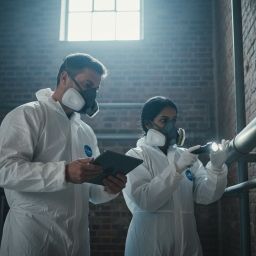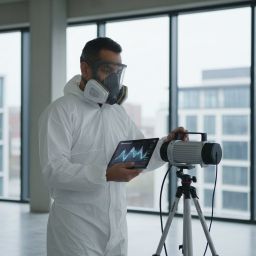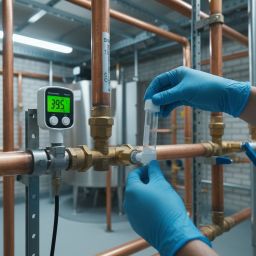

If you believe a cheap DIY kit provides sufficient legal cover under the Control of Asbestos Regulations 2012, you’re likely exposing your property to a £20,000 fine or significant health liabilities. It’s understandable to feel overwhelmed by the duty to manage requirements or the fear of accidentally disturbing invisible fibres during asbestos sample testing or a 2026 renovation. We agree that the complex web of UK safety standards often feels like a barrier to progress rather than a safety net.
This guide ensures you master the technicalities of the process, from selecting UKAS-accredited laboratories to interpreting complex microscopic analysis. You’ll gain the precision needed to secure a legally compliant result and the confidence to act if fibres are detected. We’re breaking down the exact laboratory techniques and legislative updates you need to know to keep your UK-wide projects safe and compliant.
Key Takeaways
- Understand why visual identification of hazardous materials is impossible and how UK legislation mandates professional analysis to mitigate long-term health risks.
- Discover the scientific precision of Polarised Light Microscopy (PLM) used in accredited laboratories to definitively distinguish between different asbestos fibre types.
- Evaluate the safety and legal implications of DIY kits versus professional asbestos sample testing to ensure your property remains fully compliant with UK-wide regulations.
- Learn how to accurately interpret analysis reports and material risk assessments to determine the most secure and efficient next steps for your renovation or demolition project.
- Recognise why UKAS accreditation is the essential benchmark for independent, engineering-led consultancy and ensures the highest standards of laboratory excellence.
The Legal and Safety Imperative of Asbestos Sample Testing in the UK
Precision is the foundation of building safety. In the United Kingdom, asbestos was integrated into more than 3,000 different construction products before its total ban in November 1999. Because these hazardous fibres are often microscopic, you can’t rely on a simple walk-through to identify risks. Professional asbestos sample testing stands as the only definitive method to confirm the presence, type, and condition of asbestos-containing materials (ACMs). Without laboratory analysis, any renovation or maintenance work carries an unacceptable level of risk to contractors and occupants alike.
The health implications of disturbing legacy asbestos are severe and well-documented. When materials are damaged, they release invisible fibres into the air that, once inhaled, can lead to fatal conditions such as mesothelioma, asbestosis, and lung cancer. According to Health and Safety Executive (HSE) data, asbestos remains the single greatest cause of work-related deaths in the UK, accounting for approximately 5,000 fatalities every year. This isn’t a historical issue; it’s a current operational challenge for every UK-wide property manager. For a comprehensive overview of asbestos, its chemical properties, and its historical applications, understanding its physical resilience helps explain why it remains so prevalent in our current infrastructure.
Why Visual Identification Fails
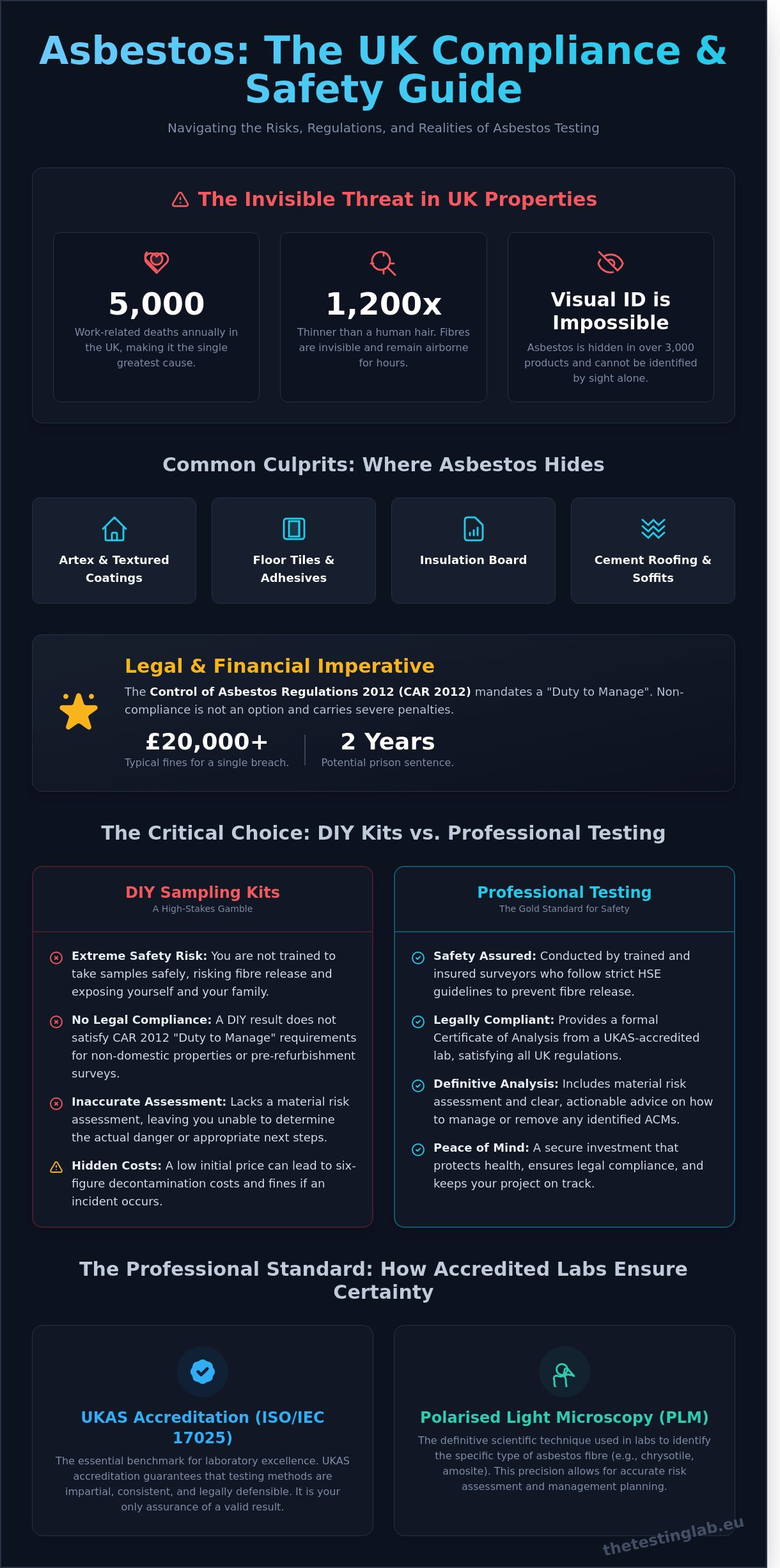
You can’t identify asbestos by its colour or texture alone. Many common materials hide their toxic content behind layers of paint or within composite structures. Artex ceiling coatings, for instance, frequently contain 1% to 5% chrysotile, yet they look identical to non-asbestos decorative finishes. Floor tiles, bitumen adhesives, and pipe lagging often appear benign while harbouring high concentrations of fibres. Because these fibres are 1,200 times thinner than a human hair, they remain suspended in the air for hours when disturbed. Assuming a material is safe without asbestos sample testing is a gamble that leads to legal prosecution and irreversible health damage.
- Artex and textured coatings: Frequently contain white asbestos but look like standard plaster.
- Thermoplastic floor tiles: Often contain asbestos in both the tile and the underlying adhesive.
- Insulation board: Used for fireproofing, these boards are highly friable and release fibres easily.
- Cement products: Corrugated roofing and soffits remain common in industrial units.
UK Legislation and Compliance
The Control of Asbestos Regulations 2012 (CAR 2012) dictates how asbestos must be managed across the UK. Regulation 4, known as the “Duty to Manage,” places a strict legal obligation on owners and managers of non-domestic premises. You’re required to identify the location and condition of any asbestos and keep an up-to-date record. If you’re planning work that might disturb the fabric of a building, the law requires a more intrusive survey and sampling programme before any tools touch the walls. This isn’t optional. It’s a statutory requirement designed to prevent accidental exposure.
The HSE actively enforces these regulations through site inspections and audits. Failure to comply doesn’t just result in a warning. In the UK, non-compliance can lead to unlimited fines and prison sentences of up to two years. Magistrates’ courts frequently issue fines exceeding £20,000 for single breaches where a “Duty Holder” failed to conduct proper testing before starting refurbishments. Beyond the financial penalties, the reputational damage and the cost of emergency decontamination following an accidental “strike” can reach six figures. Professional testing provides the data needed to create a robust management plan, ensuring your projects remain compliant, safe, and on schedule.
Beyond physical testing, managing these significant financial liabilities is a critical component of your overall risk strategy. To ensure your business is protected against unforeseen events and compliance issues, working with commercial insurance specialists is essential. For example, Paterson Insurance Brokers provides tailored risk management solutions for companies across the UK, helping to safeguard them against such costly scenarios.
The Science of the Lab: How Asbestos Fibres are Identified
Identifying hazardous materials requires more than a quick glance. At our Doncaster facility, the journey of asbestos sample testing begins with a rigorous chain of custody. Every sample is logged into our Laboratory Information Management System (LIMS) immediately upon arrival. This ensures a transparent audit trail from the point of collection to the final certificate of analysis. We handle over 500 samples weekly; each one must follow this strict protocol to maintain integrity and prevent data loss.
The UKAS (United Kingdom Accreditation Service) stamp isn’t just a logo. It’s a guarantee that the laboratory operates to the ISO/IEC 17025 standard. Without this accreditation, results lack the legal weight required to satisfy your legal duty to manage asbestos under the Control of Asbestos Regulations 2012. It’s the difference between a guess and a legally defensible report that protects your workforce and your business from litigation. We provide these services UK wide, ensuring that every client receives the same level of scientific precision regardless of their location.
Fibre Identification Techniques
Analysts use Polarised Light Microscopy (PLM) as the primary tool for identification. Polarised Light Microscopy (PLM) is the industry standard for bulk sample analysis. It allows our team to see how light interacts with the fibres at a microscopic level. We look specifically at refractive indices using specialised dispersion staining oils. These oils create a “halo” effect around the fibre, revealing its identity. This is how we distinguish between white (Chrysotile), brown (Amosite), and blue (Crocidolite) asbestos. Each fibre type has a unique optical signature that our trained analysts identify with 100% certainty before confirming a result.
Advanced Laboratory Analysis
Sometimes samples are complex. Floor tiles, bitumen, or textured coatings often contain very low fibre counts that are difficult to isolate. In these cases, we employ more sophisticated methods. XRD analysis is used to identify the crystalline structure of the mineral, providing a definitive fingerprint. For broader material characterisation, we use XRF analysis to determine the elemental composition of the sample. These tools allow us to solve mineralogical puzzles that standard microscopy might miss.
Maintaining a controlled laboratory environment is critical. We use HEPA-filtered extraction units and strict cleaning regimes to prevent cross-contamination between samples. If a sample is contaminated during the analysis stage, the result is worthless. Our laboratory environment is monitored daily to ensure background fibre levels remain below 0.01 f/ml. This level of detail is why we’re considered a strategic partner rather than just a service provider. If you need clarity on a suspect material, you can book a laboratory slot for immediate analysis.
The transition from a raw site sample to a verified result is a scientific process that leaves no room for error. By combining traditional microscopy with advanced mineralogical tools, we provide a comprehensive picture of the risks present in your building. This data-driven approach ensures that your remediation or management plans are based on facts, not assumptions.
DIY Sampling Kits vs. Professional Asbestos Surveys
Deciding between a £40 postal kit and a professional surveyor involves more than just comparing initial invoices. It’s a choice about risk management and legal liability. In the UK, the Control of Asbestos Regulations 2012 establishes a clear legal duty to manage asbestos for all non-domestic premises. While domestic homeowners aren’t under the same strict mandate for their private residence, the physical risks remain identical. If you disturb a high-content Chrysotile ceiling rose or an Insulating Board (AIB) without proper suppression, you’ve effectively contaminated your entire living space. Professional asbestos sample testing mitigates this risk through controlled, scientific methodology.
The financial gap between DIY and professional services is often smaller than it appears. A standard DIY kit covers a single sample, whereas a professional surveyor’s attendance fee, typically starting around £200 for a UK-wide residential visit, includes a comprehensive visual inspection of the property. When you consider that professional decontamination of a single room after an accidental fibre release can exceed £2,500, the “savings” from a self-sampling kit become a significant financial gamble.
The Limitations of DIY Kits
Most retail kits provide a basic FFP3 mask and a pair of disposable gloves. This equipment is insufficient for high-risk materials. A standard dust mask doesn’t provide a guaranteed seal against microscopic fibres, especially if the wearer has facial hair. Beyond personal safety, DIY samples often suffer from “shadowing.” This happens when a homeowner samples the top layer of a material but misses the asbestos-containing bitumen or adhesive hidden directly beneath it. Furthermore, DIY results are rarely accepted by UK mortgage lenders or commercial solicitors during property transactions. They require the precision of a UKAS-accredited report to satisfy indemnity insurance requirements.
The Value of Professional Surveys
Our surveyors don’t just collect dust; they apply an engineering mindset to the entire building structure. We distinguish between Management Surveys, which are standard for occupied buildings, and Refurbishment and Demolition (R&D) Surveys. An R&D survey is a fully intrusive inspection. It’s necessary before any structural work because it uncovers materials hidden within the building’s fabric, such as pipe lagging behind false walls or AIB packers in floor joists. These are areas a homeowner would naturally overlook. By identifying these high-risk zones before tools hit the wall, we ensure project timelines remain intact and occupants stay safe. Our approach treats asbestos sample testing as a precision diagnostic tool rather than a simple box-ticking exercise.
Choosing a professional route provides more than just a lab result. It delivers a comprehensive management plan. We’ve seen hundreds of cases where “DIY-safe” renovations were halted by the local council or Health and Safety Executive because of improper documentation. Since the 1999 total ban on asbestos in the UK, the complexity of identifying these materials has increased as they’re often buried under decades of subsequent renovations. A professional surveyor brings the diagnostic equipment and the historical knowledge required to spot these hidden threats accurately.
Interpreting Your Asbestos Analysis Report and Next Steps
Receiving your lab results is a critical milestone in any UK construction or maintenance project. The report provides the empirical evidence needed to satisfy the Control of Asbestos Regulations 2012 (CAR 2012). It’s not just a “yes” or “no” document; it’s a technical breakdown that dictates your legal obligations and safety protocols across your UK-wide sites.
Decoding the Lab Certificate
When you review the certificate, “No Asbestos Detected” means the analyst found no asbestos fibres within the limit of detection using polarised light microscopy. If the result is “Asbestos Detected,” the report will specify the fibre type. Chrysotile (white asbestos) is often found in textured coatings or floor tiles, while Amosite (brown) and Crocidolite (blue) are frequently identified in high-risk thermal insulation or Asbestos Insulating Board (AIB). Understanding the material matrix is vital. Non-friable materials, like bitumen products, hold fibres tightly. Friable materials, such as pipe lagging, crumble easily and pose a 100% higher risk of fibre release if disturbed. You should use these findings as the foundation for professional asbestos consultancy to determine if the material requires immediate licensed removal or can be managed in situ.
The Duty Holder, as defined by Regulation 4 of CAR 2012, has a legal “duty to manage.” This means you must:
- Create and maintain an up-to-date Asbestos Management Plan (AMP).
- Record the location, type, and condition of the asbestos in a register.
- Assess the risk of anyone being exposed to these fibres.
- Provide the register to any contractor or employee before they start work on the fabric of the building.
Actionable Steps After a Positive Result
If your asbestos sample testing confirms the presence of hazardous fibres, immediate isolation is your first priority. Restrict access to the area and apply “Warning: Contains Asbestos” labels to the materials. You don’t always need to remove the material. If it’s in good condition, encapsulation is a viable engineering solution. This involves applying a protective adhesive coating to prevent fibre release, which typically costs between £15 and £30 per square metre, significantly less than the £60 to £150 per square metre often quoted for complex removals.
When removal is the only safe option, especially for high-risk friable materials, you must hire a HSE-licensed contractor. Once the work is finished, a 4-stage air clearance test is mandatory in the UK for most licensed projects. This independent verification ensures the air contains fewer than 0.01 fibres per cubic centimetre (f/cm3), proving the space is safe for re-occupation. We treat this final phase with the same precision as the initial testing, ensuring your project remains compliant and your personnel stay protected.
Don’t leave your compliance to chance; contact our expert team today to discuss your results and secure your site.
UK-Wide Asbestos Consultancy: Why UKAS Accreditation Matters
The Testing Lab PLC has operated as an independent, engineering-led consultancy since 2002. We provide comprehensive UK-wide coverage from our laboratory centre of excellence in Doncaster. Choosing a UKAS-accredited partner isn’t just a matter of ticking a box; it’s a critical legal safeguard for any property owner or developer. Under the Control of Asbestos Regulations 2012 (CAR 2012), your duty to manage requires reliable, high-quality data. UKAS accreditation to ISO 17025 standards ensures that your asbestos sample testing results are technically valid and will stand up in a court of law if challenged. Without this accreditation, your risk assessments lack the necessary legal weight to satisfy Health and Safety Executive (HSE) inspectors.
Our approach is rooted in technical precision rather than simple administrative processing. We’ve supported over 1,200 unique projects in the last 12 months, ranging from small commercial refurbishments to massive industrial decommissioning. By maintaining a laboratory-first mindset, we ensure that every sample is treated with scientific rigour. This engineering-led perspective allows us to act as a strategic partner, taking the burden of quality assurance off your shoulders so you can focus on your core operations.
Specialist Testing Capabilities
Brownfield developments often face complex contamination issues that go beyond simple building materials. We specialise in identifying and quantifying asbestos in soils, a service that is vital for developers working on former industrial sites. Our Doncaster facility uses advanced microscopy to detect even trace amounts of fibres in soil matrices. There’s often a direct link between asbestos presence and other site hazards. For this reason, we provide integrated environmental services, including Legionella risk assessments, to ensure your site is safe from both mineral and biological threats.
We remain strictly independent from removal contractors. This is a vital distinction. Removal firms may have a financial incentive to find contamination where none exists, or to overstate the scale of a problem. As an independent laboratory, our results are objective and unbiased. We’ve seen a 22% increase in clients switching to our independent services since 2021 to avoid these clear conflicts of interest. We provide the raw, scientific truth backed by decades of engineering experience.
Our Commitment to Quality
Precision doesn’t have to mean delays. We’ve refined our laboratory workflows to offer fast turnaround times, frequently delivering verified results within 24 to 48 hours of receipt. Our analysts and surveyors undergo a rigorous programme of continuous professional development (CPD) to stay ahead of evolving UK legislation and technical standards. This ensures every asbestos sample testing procedure we perform adheres to the highest level of technical precision currently available in the industry.
- Engineering-led methodology established in 2002.
- Full compliance with CAR 2012 and ISO 17025 standards.
- Dedicated laboratory centre of excellence in Doncaster.
- Strictly independent results to eliminate conflicts of interest.
We don’t just provide data; we provide peace of mind through transparency and expertise. Our team is always available to discuss technical findings and help you navigate the complexities of environmental compliance. If you need reliable, UKAS-accredited data across the country, contact The Testing Lab PLC for UK-wide asbestos testing today. We’re ready to act as your strategic partner in quality assurance.
Secure Your Compliance and Safety for 2026
Managing asbestos risk requires more than just awareness; it demands scientific precision. UK legislation, specifically the Control of Asbestos Regulations 2012, mandates that duty holders identify and manage all asbestos-containing materials with absolute certainty. Relying on unverified DIY kits often leads to false negatives, which puts lives at risk and creates significant legal liabilities. Professional asbestos sample testing through a UKAS accredited laboratory ensures your data is legally defensible and meets the rigorous standards of HSG248. It’s the only way to guarantee that your management plan is based on empirical evidence rather than guesswork.
We don’t just provide results; we act as your strategic partner to remove the burden of quality assurance. Since 2002, our independent PLC has delivered clarity to complex safety challenges across the country. From our Doncaster headquarters, we provide UK-wide coverage, operating as UKAS Accredited Laboratory No. 1155 to guarantee every fibre is identified with engineering-level accuracy. You’ll find that having a dedicated team of experts makes navigating these technical requirements straightforward and stress-free. It’s time to move from uncertainty to total site safety with a methodology grounded in transparency and expertise.
Take the weight of compliance off your shoulders today. Contact The Testing Lab PLC for accredited asbestos testing and consultancy and ensure your property remains safe for the future.
Frequently Asked Questions
Is asbestos sample testing a legal requirement for UK homeowners?
Asbestos sample testing isn’t a legal requirement for private UK homeowners under the Control of Asbestos Regulations 2012. However, the Health and Safety at Work etc. Act 1974 requires you to ensure a safe environment for any tradespeople entering your property. If you’re planning renovations on a house built before 1999, testing is the only way to mitigate the risk of accidental exposure and potential legal liabilities.
How much does it cost to have a sample tested for asbestos?
A single asbestos sample testing kit typically costs between £30 and £50 when sent via a postal service. If you require a professional surveyor to visit your property and collect the material, prices usually start from £120 for the initial call-out and first sample. Bulk discounts often apply, reducing the cost per sample by 15% when you’re testing multiple areas across a site simultaneously.
How long does it take to get asbestos test results back?
You’ll typically receive your results within 24 to 48 hours after the laboratory receives the material. We offer an express same day service available UK wide for urgent projects where safety decisions can’t wait. This rapid turnaround ensures your construction timelines remain on track while maintaining strict adherence to safety protocols and UKAS quality standards. It’s the most efficient way to manage risk.
Can I take an asbestos sample myself safely?
You can take a sample yourself using a dedicated DIY kit, but we don’t recommend this for high-risk materials like pipe insulation or spray coatings. The HSE suggests that only trained professionals should handle suspected asbestos to prevent fibre release. If you proceed, you must use a P3 respirator and follow the HSG248 guidelines to protect your household from contamination. Safety must always be your primary concern.
What happens if my asbestos test result is positive?
Don’t disturb the material if your test result is positive. You should immediately seal the area and contact a licensed contractor, such as AIONE Asbestos Removal, to assess the risk level. Depending on the material’s condition, you might choose to encapsulate it with a specialist coating or arrange for its safe removal and disposal at a licensed hazardous waste site. Always keep the certificate of analysis for your property’s permanent health and safety records.
Do I need a UKAS accredited lab for asbestos testing?
You should always use a UKAS accredited lab to ensure the results are legally defensible and scientifically accurate. UKAS accreditation to ISO/IEC 17025 confirms the laboratory meets the stringent technical requirements for identifying asbestos fibres. Using a non-accredited facility risks inaccurate results, which can lead to dangerous exposure or unnecessary, expensive removal costs. It’s the only way to guarantee the precision of your data.
What is the difference between an asbestos test and an asbestos survey?
An asbestos test identifies fibres in a specific piece of material, while a survey is a comprehensive inspection of the entire property. Management surveys are standard for occupying buildings, whereas Refurbishment and Demolition surveys are mandatory before any structural changes. A single test provides a snapshot, but a survey creates a full risk management plan for the whole site. Both are essential tools for maintaining a safe environment.
How many samples do I need to take for a single room?
You generally need 1 to 3 samples per material type in a single room to account for variations in manufactured products. For textured coatings like Artex, we recommend taking samples from at least two different areas because the asbestos fibres aren’t always distributed evenly. This systematic approach ensures a 99% confidence level in the accuracy of your final report. It’s a small investment to ensure your data is reliable.