
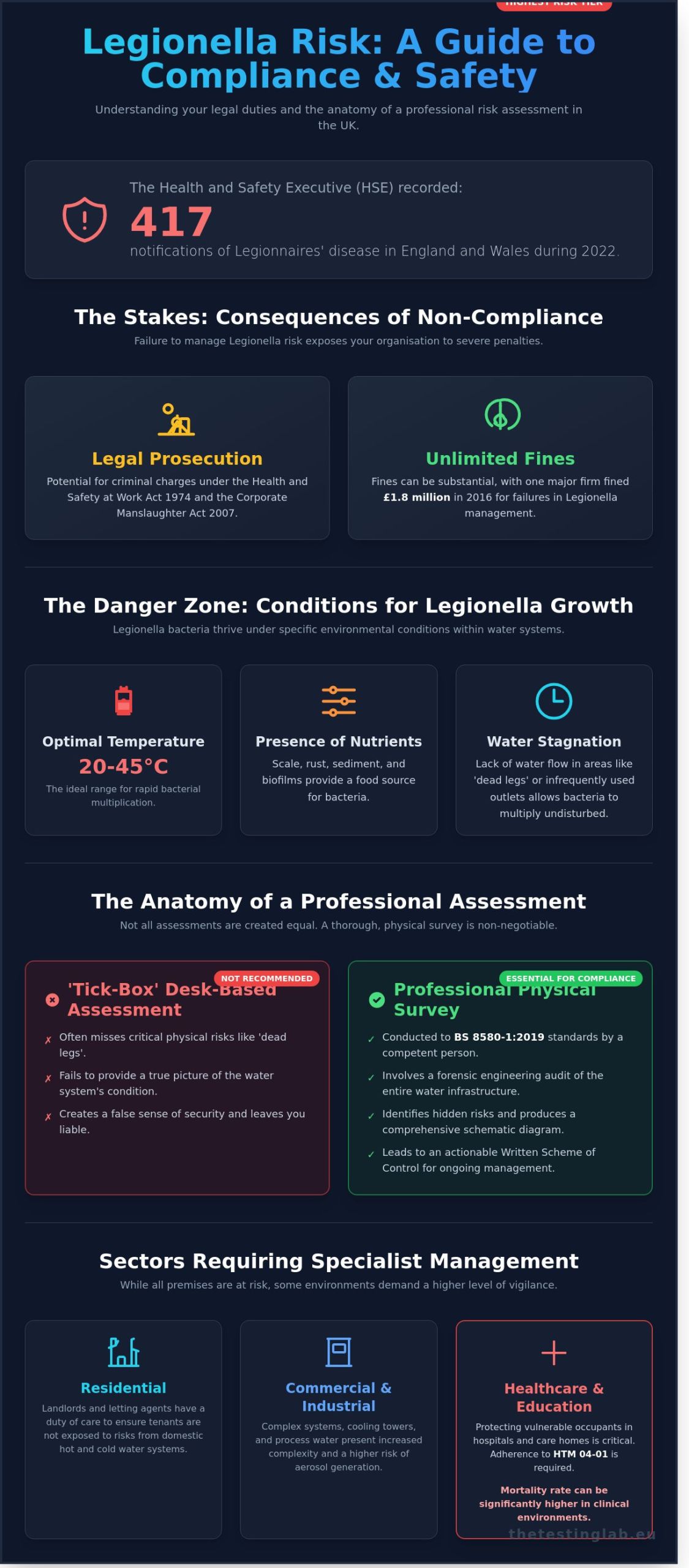
The Health and Safety Executive (HSE) recorded 417 notifications of Legionnaires’ disease in England and Wales during 2022, a figure that highlights the critical nature of water safety. You likely understand that failing to implement robust legionella risk assessment services doesn’t just risk public health; it exposes your organisation to unlimited fines and potential criminal prosecution under the Health and Safety at Work Act 1974. It’s a significant responsibility that requires far more than a casual tick-box exercise.
We know you’re looking for a way to simplify the complex maze of ACOP L8 regulations without facing astronomical costs for remedial works. You want a strategic partner who treats water safety with the precision of a scientific laboratory. This guide promises to demystify your legal obligations and walk you through the Legionella Control Association assessment process step by step. We’ll show you how to build a clear, actionable water safety plan that ensures full compliance. You’ll gain the expert guidance needed to secure your premises and the peace of mind that your building’s occupants are fully protected.
Key Takeaways
- Understand your statutory obligations under UK health and safety law to ensure your premises remain fully compliant and protected against Legionnaires’ disease.
- Discover why a thorough physical site survey conducted to BS 8580-1:2019 standards is vital for identifying hidden risks that desk-based shortcuts often miss.
- Learn how to select professional legionella risk assessment services by identifying the hallmarks of a “competent person” and the importance of The Legionella Control Association.
- Master the transition from assessment to action by implementing a comprehensive Written Scheme of Control, including critical temperature monitoring and flushing regimes.
- Gain peace of mind by leveraging the precision of a national PLC that combines strategic water hygiene consultancy with in-house laboratory expertise.
Understanding the Duty of Care: What are Legionella Risk Assessment Services?
In the United Kingdom, a Legionella risk assessment isn’t an optional safety check. It’s a statutory requirement under the Health and Safety at Work Act 1974. These assessments form the baseline of any water hygiene strategy. Our approach treats these evaluations with laboratory precision, ensuring every potential niche for bacterial growth is identified. The primary objective involves a methodical examination of your site’s water systems to evaluate the risk of occupants contracting What is Legionnaires’ disease? through the inhalation of contaminated aerosols. Professionals providing legionella risk assessment services look for specific conditions: water temperatures between 20°C and 45°C, the presence of nutrients like scale or rust, and stagnation within the pipework.
The ‘Duty Holder’ is the individual or organisation legally responsible for health and safety on a premises. This role usually falls to the employer, a self-employed person, or the person in control of the building, such as a managing agent. Their legal responsibilities are clear. They must appoint a competent person to manage the risk, maintain a detailed ‘written scheme’ for prevention, and keep records for at least five years. Ignoring these duties leads to severe repercussions. The Health and Safety Executive (HSE) issues substantial fines that can exceed £1,000,000 for large organisations. In 2016, for instance, a major firm was fined £1.8 million following a failure to manage Legionella risks properly. Beyond financial loss, non-compliance carries the risk of prosecution under the Corporate Manslaughter and Corporate Homicide Act 2007 and permanent reputational damage.
The Legal Framework: ACOP L8 and HSG274
The HSE’s Approved Code of Practice (ACOP L8) serves as the primary legal benchmark for water safety in the UK. It has a special legal status; if you’re prosecuted for a breach of health and safety law and it’s proved you didn’t follow the provisions of the code, you’ll need to show you complied with the law in some other way. While ACOP L8 outlines the ‘what,’ the HSG274 technical guidance provides the ‘how.’ This three-part roadmap covers evaporative cooling systems, hot and cold water services, and ‘other’ systems like spa pools. We use these frameworks to build a technical bridge between complex regulations and your daily operations.
Sectors Requiring Specialist Water Management
Different environments demand tailored legionella risk assessment services to ensure total compliance. In the residential sector, landlords and letting agents must ensure tenants aren’t exposed to risks, even in simple domestic systems. Commercial and industrial sites face higher complexities, particularly when managing cooling towers or large-scale process water which are prone to aerosol generation. Healthcare and education sectors represent the highest risk tier. Protecting vulnerable groups in hospitals or care homes requires adherence to HTM 04-01 standards. In these settings, the precision of the assessment can quite literally be a matter of life and death, as the mortality rate for Legionnaires’ disease can reach 10% in the general population and significantly higher in clinical environments.
This responsibility extends across the entire commercial sector, including the hospitality and leisure industries where public safety is paramount. Event planning companies, for instance, rely on partner venues like hotels and activity centres to be fully compliant. This diligence allows businesses focused on entertainment, such as stagfactory.com, to ensure their clients are safe during their events.
Effective risk management isn’t about guesswork. It’s about a structured, engineering-led investigation of your infrastructure. By identifying ‘dead legs’ in pipework or failing thermostatic mixing valves, we remove the burden of quality assurance from your shoulders. This proactive stance ensures your UK business remains compliant and your people remain safe.
The Anatomy of a Professional Legionella Risk Assessment
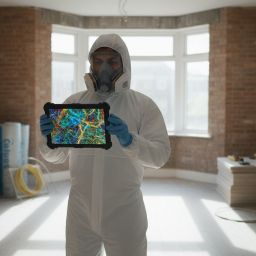
A professional legionella risk assessment services provider doesn’t just glance at your paperwork and sign a certificate. They perform a forensic engineering audit of your entire water infrastructure. This process follows the BS 8580-1:2019 standard strictly, ensuring every potential niche for Legionella pneumophila is identified and documented. It’s a technical deep dive that moves beyond simple checklists to evaluate the inherent design flaws and operational risks of your specific system.
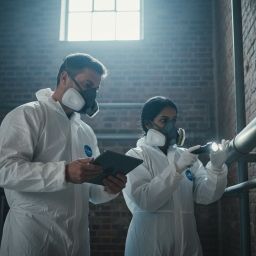
Desk-based assessments are a significant liability for UK business owners. They often miss “dead legs,” which are redundant lengths of pipework where water can sit stagnant for months. These areas become breeding grounds for biofilm. A true professional survey requires a physical walkthrough to map the entire system from the point of entry to the furthest outlet. This culminates in a comprehensive schematic diagram. This diagram isn’t just a drawing; it’s a legal requirement under ACoP L8 that serves as a technical map for your ongoing maintenance and monitoring strategy.
On-Site Inspection and Physical Assessment
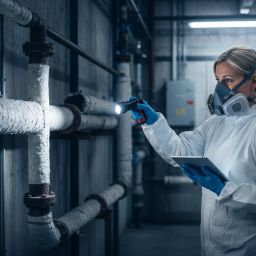
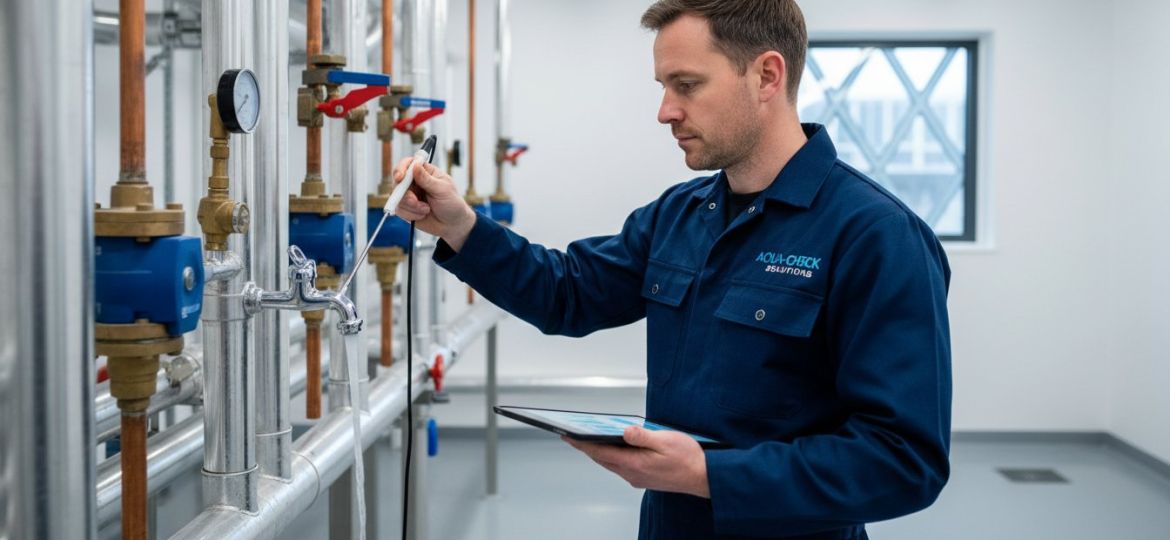
During the survey, engineers inspect cold water storage tanks for signs of corrosion, debris, or “biofouling.” They verify that thermal insulation is intact to prevent “heat gain,” which often pushes cold water temperatures into the 20°C to 45°C danger zone. A critical step involves measuring flow and return temperatures at “sentinel” outlets. According to UK Health and Safety Executive (HSE) guidance, hot water must be stored at 60°C and reach 50°C at the tap within one minute. We also assess aerosol-generating assets, such as showerheads and spray taps, which must be descaled at least every three months to prevent bacterial colonisation.
The Role of Microbiological Water Testing
Water sampling isn’t always mandatory, but it’s a vital diagnostic tool in specific scenarios. HSG274 Part 2 suggests sampling when temperature regimes aren’t consistently achieved or when a system is treated with biocides. The process requires precise technique to prevent cross-contamination on-site. Samples are collected in sterile bottles containing sodium thiosulphate to neutralise any residual chlorine. These are then transported to UKAS-accredited laboratories for analysis. There is a critical link between site findings and lab results; if a report shows counts exceeding 100 cfu/l (colony forming units per litre), it often validates physical evidence of stagnation or poor temperature control found during the initial inspection.
This level of detail ensures your business isn’t just “compliant” on paper, but actually safe in practice. If you haven’t had a physical inspection of your water assets in the last 24 months, it might be time to consult our technical team for a professional review of your current risk profile. We focus on providing the clarity and data you need to manage your water systems with total confidence.
Accreditation vs. ‘Tick-Box’ Exercises: Why The Legionella Control Association Matters
A common misconception among business owners is that any local plumber or maintenance worker can carry out a compliance check. This mistake often leads to “tick-box” exercises that offer a false sense of security while leaving the building owner legally exposed. The Health and Safety Executive defines a “competent person” as someone with the necessary skills, knowledge, and experience to manage the specific risks of a water system. It isn’t just about knowing how pipes connect; it’s about understanding the complex microbiology of Legionella pneumophila and the engineering nuances of thermal gain and stagnation.
Opting for budget legionella risk assessment services might save £150 today, but it can cost thousands in the event of an outbreak. Cheap assessments frequently miss “dead legs” in the pipework or fail to identify blind ends where bacteria thrive. If a report is found to be inadequate after an incident, your insurance provider may refuse to cover the claim, citing a failure to follow the HSE ACOP L8 guidance. Professionalism in this field requires a laboratory-style precision that general contractors simply aren’t equipped to provide. We view ourselves as a strategic partner, taking the weight of quality assurance off your shoulders with a methodical, engineering-led approach.
UKAS Accreditation Explained
UKAS accreditation to the ISO/IEC 17020 standard is the gold standard for inspection bodies. There’s a vital distinction between a “certified” company and an “accredited” one. While ISO 9001 certification focuses on general management systems, UKAS accreditation specifically validates the technical rigour and impartiality of the inspectors. For building managers, this creates a robust audit trail. When your samples go to a UKAS-accredited laboratory, you’re guaranteed that the detection of Legionella follows strict, repeatable protocols. This level of accuracy is non-negotiable for high-risk environments like care homes or dental surgeries in South Yorkshire.
Evaluating an Assessment Report
A high-quality report is a strategic tool, not just a stack of paper. Red flags include generic advice that could apply to any building and a lack of site-specific photography. Every legionella risk assessment services provider should deliver a clear “Action Plan” that categorises risks. We focus on three distinct tiers to help you allocate your maintenance budget effectively:
- High Risk: Immediate remedial action required, such as removing a redundant water tank or addressing a failed thermostatic mixing valve.
- Medium Risk: Issues to be addressed within 30 to 60 days, like adjusting calorifier temperatures to ensure they reach 60°C.
- Low Risk: Ongoing monitoring tasks, such as monthly showerhead descaling and temperature logging.
Your report must also state a clear review date. Under the 2013 revision of the L8 code, assessments must be reviewed whenever there’s a change to the system or the building’s use. If your current document lacks a specific monitoring frequency based on your building’s unique layout, it doesn’t meet the required standard of care. Our methodology ensures that every inspection is a precision process, providing the transparency you need to remain compliant and confident.
Implementing Your Water Safety Plan: From Assessment to Monitoring
Receiving your report from professional legionella risk assessment services marks the beginning of your compliance journey, not its conclusion. The document identifies vulnerabilities, but the Written Scheme of Control (WSC) provides the tactical framework for daily management. Without a structured plan, the data gathered during the assessment becomes stagnant and fails to protect your occupants. It’s the difference between identifying a risk and actively mitigating it through engineering precision.
Effective implementation relies on a clear hierarchy of responsibility. The ‘Responsible Person’ (RP) must be competent and trained to oversee the daily and weekly tasks that keep the system safe. This isn’t just about ticking boxes; it’s about creating a system where bacteria cannot thrive. Our approach treats water safety with the same rigor as high-stakes software testing, where every variable is monitored and every deviation is addressed immediately. Your staff don’t need to be chemists, but they must understand that hot water must reach 50°C within one minute at the furthest outlet to remain compliant.
The Written Scheme of Control
A robust WSC specifies exactly which taps require weekly flushing and which calorifiers need monthly temperature checks. You must maintain these records for at least five years under HSG274 guidelines to satisfy Health and Safety Executive (HSE) auditors. Digital logbooks are now the industry standard, replacing paper files because they offer real-time alerts when a check is missed. If your assessment identifies a dead leg in the pipework, you’ll need to schedule remedial works. We coordinate these repairs during low-occupancy periods, such as weekends or after 6:00 PM, to prevent operational downtime. A well-maintained WSC includes:
- A detailed schematic diagram of the entire water system updated every 24 months.
- Specific methods for descaling showerheads and hoses every three months.
- Emergency protocols for positive Legionella samples exceeding 1,000 cfu/l.
- Documented evidence of staff training and competence reviews.
Holistic Building Compliance
Managing a facility in The UK involves juggling multiple safety mandates. Integrating your water safety with asbestos and fire risk management creates a “Total Compliance” model. This approach reduces the administrative burden by 22% compared to managing disparate contractors. By utilising legionella risk assessment services that offer integrated surveying, you ensure that no safety gap is left unaddressed across your entire estate.
This holistic approach naturally includes maintaining high standards of general cleanliness throughout the facility, which is crucial for overall health and safety. For professional commercial cleaning services that complement a total compliance strategy, you can visit That’s Cleaning.
A single UKAS-accredited laboratory (ISO 17025) should handle your samples to ensure consistency in results. Combining Legionella monitoring with other environmental surveys during a single site visit can lower your annual compliance expenditure by approximately £435 per site. Centralised reporting allows you to view your entire risk profile through one dashboard. This transparency makes it easier to identify trends across multiple properties and proves your commitment to safety during rigorous audits. We don’t just provide data; we provide the strategic insight needed to maintain a safe environment year-round.
Take control of your facility’s safety today. Explore our comprehensive compliance solutions and move beyond simple assessment to total water safety management.
Specialist Water Hygiene Services by The Testing Lab PLC
The Testing Lab PLC operates as a strategic partner for organisations across the UK and Ireland, moving beyond the role of a standard service provider. Our PLC status provides a level of financial stability and operational scale that smaller contractors cannot match. This infrastructure allows us to manage over 4,500 water assets for our clients, ensuring that every site remains compliant with ACoP L8 and HSG274 regulations. We don’t just provide a checklist; we deliver an engineering-led analysis of your water systems.
Our methodology is built on precision. When we deliver legionella risk assessment services, we examine the entire hydraulic architecture of your facility. This includes identifying low-use outlets, dead-legs, and temperature inconsistencies that often go unnoticed during basic inspections. Our Doncaster-based team is equipped to handle everything from small commercial units to complex industrial cooling towers, providing a consistent standard of excellence regardless of the project’s size.
Our Accredited Laboratory Facilities
A primary advantage of working with The Testing Lab PLC is our partnering microbiological laboratory. Many providers outsource their sampling, which can lead to sample degradation during long transit times. We process 98% of our samples within our own controlled environment, ensuring the highest levels of accuracy for Legionella and other water-borne pathogens. Our laboratory staff work alongside our field technicians to provide a seamless chain of custody for every sample taken.
- Preliminary results are often available within 48 to 72 hours, allowing for immediate remedial action if high counts are detected.
- Our senior occupational hygienists, who average 15 years of industry experience, provide expert interpretation of every lab report.
- We use state-of-the-art PCR and culture methods to ensure no underlying risks are missed during the testing phase.
Tailored Solutions for Every Client
We understand that a retail outlet in the Frenchgate Centre has different risk profiles compared to a heavy industrial site in the Kirk Sandall area. Our consultancy is bespoke. We’ve managed portfolios ranging from single-site startups to multi-national industrial estates with over 500 locations. For clients with complex systems like cooling towers or evaporative condensers, we provide deep-dive technical audits that go far beyond the minimum legal requirements. Our goal is to take the burden of quality assurance off your shoulders, allowing you to focus on your core operations.
The reality of water safety is that it requires constant vigilance. When you book an assessment with our Doncaster team, you’ll receive a clear timeline and a dedicated project manager. Our legionella risk assessment services include a full digital report, photographic evidence of all non-conformances, and a prioritised action plan. We don’t leave you with a list of problems; we provide the technical roadmap to solve them. You can Contact The Testing Lab PLC for a professional Legionella risk assessment quote to begin securing your facility today.
Once the booking is confirmed, our technicians typically arrive on-site within five working days. They’ll conduct a thorough walkthrough, interview relevant staff, and inspect all plant equipment. It’s a transparent process designed to build trust and ensure your business meets its “Duty of Care” under the Health and Safety at Work Act 1974. Our commitment to transparency means you’ll always have direct access to the experts who tested your water, ensuring no question goes unanswered.
Prioritise Precision in Your Water Safety Management
Managing building safety requires more than a reactive approach. It demands a scientific methodology that bridges the gap between legal duty and operational excellence. Choosing legionella risk assessment services backed by technical rigour ensures your facility remains compliant with ACoP L8 and HSG274 guidelines. A “tick-box” exercise won’t protect your occupants or your reputation. Only a detailed, site-specific audit provides the clarity needed to mitigate microbial hazards effectively.
The Testing Lab PLC brings over 20 years of environmental testing expertise to every project. As a UKAS Accredited Laboratory operating to ISO/IEC 17025 and ISO/IEC 17020 standards, we provide the technical certainty required for complex water systems. We operate across the UK and Ireland, delivering national coverage with the precision of a specialist laboratory. We don’t just identify risks; we provide a strategic roadmap for long-term water hygiene.
Don’t leave your compliance to chance. You can secure your building compliance with a UKAS accredited Legionella risk assessment from The Testing Lab PLC today. Let’s work together to create a safer, fully compliant environment for everyone in your care.
Frequently Asked Questions
Is a Legionella risk assessment a legal requirement for my business?
Yes, it’s a mandatory legal requirement for every employer and person in control of premises under the Health and Safety at Work etc. Act 1974. The Management of Health and Safety at Work Regulations 1999 further clarifies that you must identify and assess risks from biological agents. If you manage a commercial property in Doncaster, failing to produce a valid assessment can result in fines exceeding £20,000. We act as your technical partner to ensure your documentation meets these strict HSE standards.
How often should a Legionella risk assessment be carried out?
You should review your assessment at least every 2 years or whenever there’s a reason to suspect the previous version is no longer valid. This includes significant changes to your water system, building use, or if the 2013 ACoP L8 guidelines indicate new risks. Our legionella risk assessment services provide a structured schedule to keep your records current. We ensure your safety documentation reflects the real-time status of your facility’s infrastructure.
Can I carry out a Legionella risk assessment myself?
You can legally perform the assessment if you’re “competent,” but you must possess the specific technical knowledge to identify hazards. Most business owners lack the calibrated equipment or engineering expertise required for complex plumbing systems. If an outbreak occurs and your assessment is deemed insufficient, the legal liability rests entirely on your shoulders. Professional testers bring a laboratory-grade precision that DIY methods simply can’t match, removing the burden of risk from your business.
What is the difference between a water test and a risk assessment?
A risk assessment is a comprehensive audit of your entire water system’s design and management, while a water test is a laboratory analysis of a specific sample. Think of the assessment as a preventative engineering survey and the test as a snapshot of current bacteria levels. Under BS 8580-1:2019, the assessment identifies potential hazards before they become a biological issue. Both are vital components of a robust safety framework for any Doncaster site.
What happens if Legionella is found in my water system?
You must immediately implement control measures such as system disinfection or thermal shocking at temperatures above 60°C. Following the discovery, you’re required to notify the local authority if a case of Legionnaires’ disease is confirmed. We help you navigate this process by providing clear, data-driven remediation plans. Rapid response is critical to protecting your staff and maintaining your brand’s reputation for safety; we ensure the problem is solved through methodical engineering.
How much does a professional Legionella risk assessment service cost?
For a standard small commercial property in Doncaster, professional legionella risk assessment services typically start from £150 to £350 plus VAT. Larger industrial sites or complexes with cooling towers require more intensive engineering hours, often costing upwards of £1,000. We provide transparent, fixed-fee quotes based on the number of water outlets and the complexity of your infrastructure. This ensures you only pay for the specific technical expertise your site requires without hidden costs.
Does a landlord need a Legionella certificate for every new tenancy?
There’s no legal requirement for a specific “Legionella certificate,” but landlords must conduct a risk assessment before a new tenancy begins. Section 3 of the Health and Safety at Work Act requires you to ensure the premises are safe for tenants. You don’t need to repeat the full process for every turnover if the water system hasn’t changed. Keeping a record of your findings for at least 5 years is the industry standard for legal protection.
What are the common signs of Legionnaires’ disease that staff should know?
Staff should watch for high fevers, a persistent cough, and muscle aches, which typically appear 2 to 10 days after exposure. Legionnaires’ disease is a severe form of pneumonia with a mortality rate of approximately 10% according to Public Health England data. Training your team to recognise these symptoms is a key part of your safety culture. Early detection and reporting can prevent a localised incident from becoming a major public health crisis.