
What if the most significant threat to your 2026 renovation timeline isn’t a supply chain delay, but a microscopic fibre invisible to the naked eye? For site managers and homeowners across the UK, the sudden discovery of suspect materials often triggers immediate anxiety regarding the Control of Asbestos Regulations 2012. You likely already know that maintaining site safety requires more than just a visual check. It demands a rigorous, scientific Asbestos Test to ensure every person remains protected from disturbed fibres. We understand that the pressure to keep a project on track while staying legally compliant can feel like a delicate balancing act.
This guide simplifies that complexity by providing a clear roadmap for your compliance journey. You’ll discover how to obtain a UKAS accredited certificate of analysis through precise sampling and laboratory methods that meet the ISO 17025 standard. We’ll outline the essential steps for managing identified materials UK-wide, ensuring you move from uncertainty to a documented, safe environment with a 24-hour turnaround that respects your budget and your schedule.
Key Takeaways
- Understand your legal obligations under the Control of Asbestos Regulations 2012 and when a professional bulk analysis is mandatory for UK compliance.
- Explore the precision of Polarised Light Microscopy (PLM) used in our UKAS accredited laboratory to accurately identify Chrysotile, Amosite, and Crocidolite fibres.
- Learn why a professional Asbestos Test is essential to maintain a safe chain of custody and avoid the severe health risks associated with DIY sampling kits.
- Master the 4-stage safety process, from the initial risk assessment by P402 qualified surveyors to secure sample collection and site clearance.
- Discover how partnering with an independent, UK-wide laboratory ensures technical excellence and removes the burden of quality assurance from your project.
What is an Asbestos Test and When is it Legally Required?
An Asbestos Test is the scientific identification of microscopic fibres within a bulk material sample. This process uses polarised light microscopy (PLM) to confirm whether a material contains asbestos and identifies the specific fibre type, such as chrysotile, amosite, or crocidolite. In the UK, this isn’t a matter of visual estimation. It’s a precise laboratory procedure designed to provide definitive evidence for property owners and contractors.
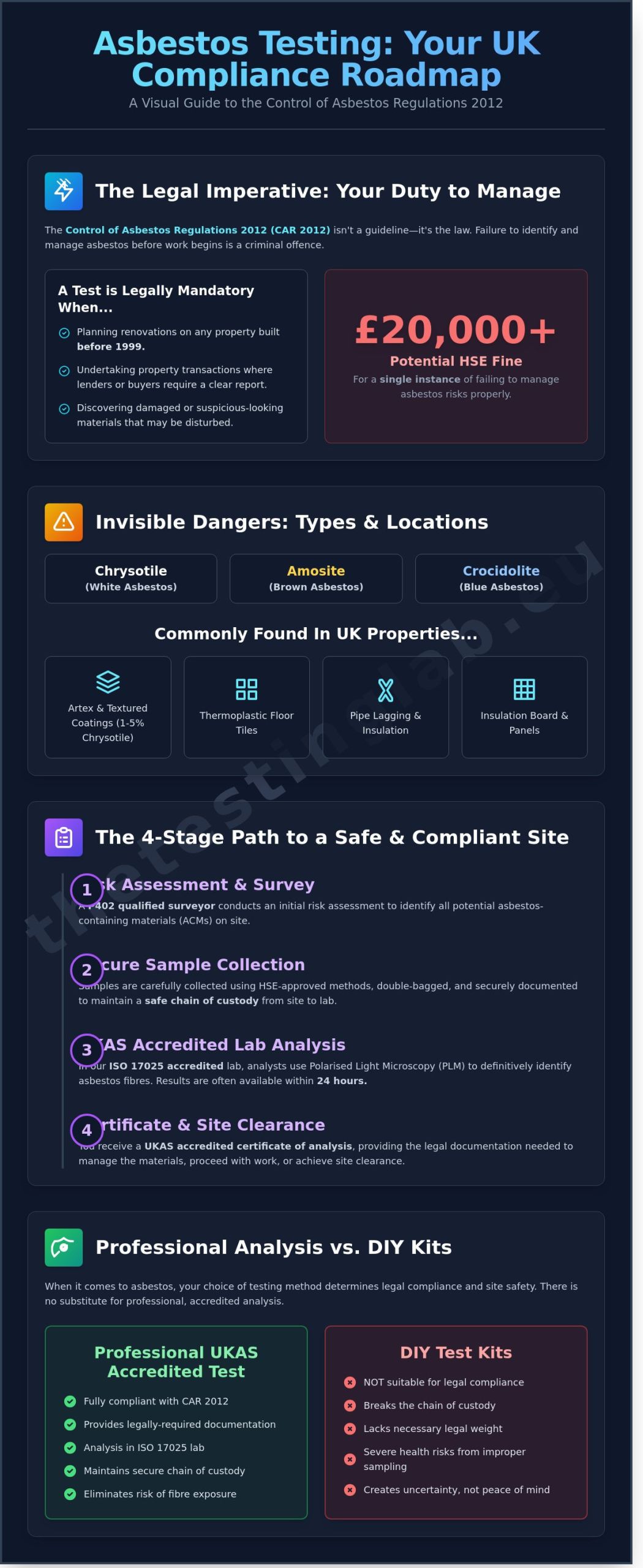
The Control of Asbestos Regulations 2012 (CAR 2012) dictates how these materials are managed across the UK. You’re legally required to commission an Asbestos Test in several specific scenarios. If you’re planning renovations on any property built before 1999, a test is mandatory to prevent accidental exposure. Property transactions also frequently trigger these requirements; lenders and buyers often demand a clear report before releasing funds. If you discover damaged material that looks suspicious, you must isolate the area and test it immediately to comply with health and safety standards.
It’s vital to distinguish between a single material test and a full building survey. A single test focuses on one specific item, like a section of textured coating. A full survey is a comprehensive, UK wide standard for assessing an entire premises. For complex projects, our asbestos consultancy services help determine which level of sampling matches your specific risk profile.
UK Legislation and Your Duty to Manage
Regulation 4 of CAR 2012 establishes a “Duty to Manage” for all non-domestic premises. This legal obligation applies to 100% of commercial buildings and the communal areas of residential blocks. To satisfy Health and Safety Executive (HSE) inspectors, you must possess a valid UKAS accredited Asbestos Test report. Failing to identify these materials before starting construction work is a criminal offence. In recent years, the HSE has issued fines exceeding £20,000 for single instances of failing to manage asbestos risks properly.
Recognising Suspicious Materials in the UK
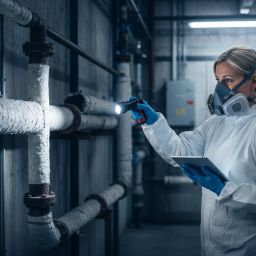
Asbestos was integrated into over 3,000 different building products before the 1999 ban. You’ll commonly find it in Artex ceilings, which often contain 1% to 5% chrysotile, as well as thermoplastic floor tiles and pipe lagging. Don’t rely on colour or texture to identify these hazards; “white” asbestos often looks grey, while “blue” or “brown” types can be masked by decades of paint. We advocate for a lab-first approach. If a material was installed before the millennium, it’s safer to treat it as a hazard until a laboratory certificate proves otherwise.
The Science of the Lab: How We Identify Asbestos Fibres
Precision in the laboratory isn’t just a goal; it’s a legal necessity. At our Doncaster facility, we treat every Asbestos Test as a forensic investigation. We operate under ISO 17025 standards, which is the specific UKAS accreditation for testing and calibration laboratories. This framework ensures that our methods, equipment, and staff competence meet the highest possible benchmarks in the UK. Without this accreditation, results lack the legal weight required for compliance with the Control of Asbestos Regulations 2012.
Our analysts use Polarised Light Microscopy (PLM) to examine samples. This technique allows us to observe the unique optical properties of fibres. We specifically look for the “big three” types commonly found in UK buildings: Chrysotile (white), Amosite (brown), and Crocidolite (blue). By using UKAS accredited analysis, we can distinguish these hazardous fibres from harmless synthetic or organic materials that often look identical to the naked eye. Each positive identification is backed by refractive index liquid testing to confirm the result with absolute certainty.
Bulk Sample Analysis Process
The process starts with careful sample preparation in a controlled environment. We safely extract fibres from the material matrix, whether it’s textured coating or high-density insulation board. Our team applies specific refractive index liquids to the fibres; these liquids change colour under polarised light based on the fibre type. This methodology ensures we don’t miss trace amounts of asbestos in complex materials. If you’re unsure about the risks in your portfolio, our asbestos consultancy services provide strategic oversight for UK-wide projects.
Asbestos in Soils: A Specialist Requirement
Standard material tests don’t work for brownfield site investigations. Soil samples require a more rigorous approach because fibres are often dispersed at low concentrations. We perform gravimetric quantification to determine the exact percentage of asbestos by weight. This data is vital for waste classification and determining if the soil is hazardous under WM3 regulations. For developers, accurate asbestos in soils testing is the difference between a compliant project and a costly environmental fine.
Every Asbestos Test concludes with the issuance of a Certificate of Analysis. This isn’t just a report; it’s a formal legal document that stays with the building’s health and safety file for its entire lifecycle. It provides the definitive proof needed for property transactions, renovation permits, and demolition projects across the UK. If you need to verify the safety of your premises, you can request a technical quote from our laboratory team today.
Professional Survey vs. DIY Asbestos Test Kits
While a £30 DIY kit might seem like a cost-effective shortcut, the hidden financial and health risks often reach thousands of pounds in decontamination fees. A professional Asbestos Test isn’t just about a laboratory result; it’s about the rigorous methodology used to obtain it. Professional surveyors maintain a strict chain of custody, ensuring every sample is documented from the point of extraction to the final UKAS accredited analysis. This precision removes the burden of quality assurance from your shoulders, providing a level of technological confidence that off-the-shelf kits cannot match.
DIY methods often fail to account for the “chain of custody” required for legal documentation. If you’re managing a commercial property, a self-sampled report usually holds zero weight with insurers or local authorities. Professionals provide a definitive, validated report that serves as a legal shield, ensuring your project remains on track and compliant with UK wide safety standards.
The Dangers of Improper Sampling
Sampling without engineering-grade controls is a high-stakes gamble. A single broken 225mm vinyl floor tile or a fragment of cement sheeting can release millions of microscopic fibres into the air. These fibres stay buoyant for up to 72 hours, potentially contaminating your entire HVAC system. Professionals mitigate this through “shadow vacuuming” using specialised H-type vacuums, which are legally required under the Control of Asbestos Regulations 2012 to prevent fibre migration. Without these tools, you aren’t just taking a sample; you’re potentially creating a long-term health hazard in your home or workplace.
Benefits of Professional Asbestos Consultancy
Engaging a professional asbestos consultancy transforms a stressful compliance task into a managed process. You gain access to a strategic partner who understands the UKAS accredited asbestos testing pillars. If your Asbestos Test returns a positive result, we don’t just leave you with a piece of paper. We provide expert advice on the “what next,” whether that involves immediate encapsulation or a managed removal plan. This laboratory-led approach ensures that every decision is backed by data, giving you total peace of mind that your environment is safe and your legal duties are fully discharged.
Managing health and safety extends beyond the worksite. For professionals and homeowners who also travel internationally, preparing for health risks abroad is just as crucial. Specialist clinics such as Vaccines For Travels offer the necessary vaccinations and advice to ensure you stay protected wherever your work or leisure takes you.
Similarly, for commercial properties like hotels or care facilities, ensuring a safe and hygienic environment post-renovation is paramount. This extends to sourcing high-quality textiles and supplies for the final fit-out. To see what this involves, you can learn more about Linen Plus, a prominent supplier in this sector.
This principle of specialised, independent verification extends to other high-value assets. For instance, in the growing electric vehicle market, the health of the battery is a critical safety and performance factor, much like the integrity of building materials. For those interested in this modern aspect of technical safety, you can explore Mobile EV Battery Testing to see how similar diagnostic principles are applied to next-generation transport.
Once the structural health of a property is secured, attention often turns to aesthetic and personal well-being. For those looking to enhance their smile with professional-grade results at home, oral care products from GLI GLI can provide that finishing touch.
The 4-Stage Process: From Sampling to Clearance
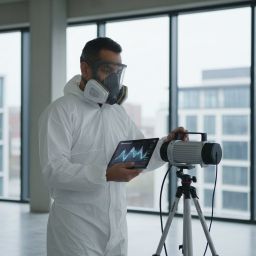
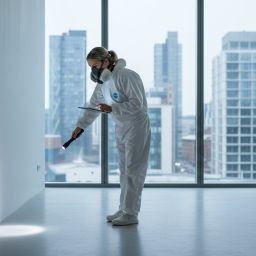
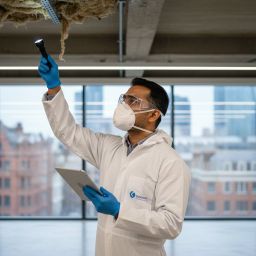
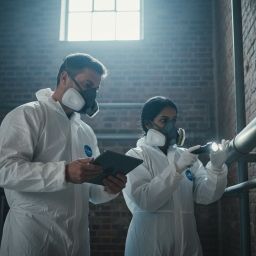
Every professional Asbestos Test follows a rigorous, four-part methodology to ensure data integrity and site safety. It begins with a P402 qualified surveyor performing a site-specific risk assessment to identify potential ACMs (Asbestos Containing Materials). During the sampling phase, the surveyor applies a surfactant wetting agent to the material. This precision step suppresses the release of respirable fibres during extraction. Each sample is then placed in a double-sealed, labelled polythene container to prevent cross-contamination.
The samples travel to our accredited Doncaster facility. In 2024, our laboratory team processed over 15,000 individual samples using Polarised Light Microscopy (PLM) to identify specific fibre types. Once the analysis is complete, we provide a comprehensive report. This document doesn’t just list findings; it acts as a strategic roadmap for your building’s safety. It details the material type, its condition, and the necessary steps for long-term management or immediate remediation.
Understanding Your Asbestos Report
Your report will classify results as either “Positive” or “No Asbestos Detected” (NAD). If a result is positive, it identifies the fibre type, such as Chrysotile or Amosite. We often recommend encapsulation for low-risk materials in good condition. This involves sealing the ACM with a specialist coating to prevent fibre release, which is significantly more cost-effective than removal. You must retain these reports for at least 40 years within your health and safety file to meet UK legal requirements for commercial properties UK wide.
Air Monitoring and 4-Stage Clearance
Air testing is essential following any major disturbance or removal of asbestos. We use phase-contrast microscopy (PCM) to ensure fibre concentrations are below the clearance limit of 0.01 f/ml. For licensed removals, a 4-stage clearance process is a legal mandate before a Certificate of Re-occupation can be issued. This process includes a preliminary site check, a thorough visual inspection, air monitoring, and a final post-remediation assessment. It provides the empirical proof needed to confirm the environment is safe for the public and tradespeople UK wide.
If you need professional guidance on managing identified risks, our team provides expert asbestos consultancy services to keep your project compliant.
Why Choose The Testing Lab PLC for Your Asbestos Test?
We’ve spent over 20 years refining our independent analytical processes to become a leader in the UK environmental sector. Our UKAS accredited laboratory doesn’t just process samples; we apply a rigorous engineering mindset to every Asbestos Test. This ensures that every client, from local developers to large-scale UK wide industrial contractors, receives data they can trust. Our specialist engineering team prioritises precision, delivering results that meet the strict requirements of the Control of Asbestos Regulations 2012. We understand that safety and compliance aren’t areas where you can afford ambiguity.
By choosing The Testing Lab PLC, you’re partnering with a team that values technical clarity. Our services extend beyond simple identification. We provide a holistic suite of environmental testing, including:
- Detailed water quality analysis and Legionella monitoring.
- Comprehensive soil testing for redevelopment projects.
- Waste Acceptance Criteria (WAC) testing for landfill compliance.
- Fast-turnaround bulk sample analysis.
Accredited Excellence in Doncaster
Our Doncaster facility serves as a central hub for technical excellence. We maintain a “laboratory approach” to safety, meaning we treat every sample with scientific scrutiny and methodical care. Local businesses benefit from our regional presence, while our logistics network supports complex projects UK wide. You can explore The Definitive Guide to UKAS Accredited Laboratories in Doncaster (2026) to understand how our accreditation sets the benchmark for quality this year. We support Doncaster businesses and national contractors by providing the same level of granular detail, regardless of project size.
Book Your Asbestos Test Today
It’s simple to initiate your Asbestos Test through our streamlined submission process. You can send bulk material samples directly to our lab for rapid, precise analysis by our specialist team. We believe in transparent pricing, so you’ll never encounter hidden laboratory fees or unexpected surcharges on your final invoice. Our quotes are fixed and clearly outlined from the start. Whether you’re managing a single domestic property or a national commercial portfolio, our team provides the technical assurance you need to move forward safely. Request a professional asbestos test quote today and experience a partner-centric approach to quality assurance.
Securing Your Compliance Through Scientific Precision
Navigating the UK’s stringent safety regulations requires a partner who treats risk management as a technical discipline. By opting for a UKAS accredited laboratory operating under ISO 17025 standards, you ensure every sample undergoes rigorous analysis. Our P402 and P404 qualified surveyors deliver a comprehensive service UK wide, strictly adhering to the Control of Asbestos Regulations 2012. You don’t need to struggle with the uncertainties of DIY methods when professional 4-stage clearance and 24-hour turnaround options are available. Investing in a professional Asbestos Test isn’t just a legal checkbox; it’s a strategic commitment to site safety and operational continuity. Let’s remove the burden of quality assurance from your shoulders with data you can trust. We’re ready to help you maintain a safe, compliant environment for years to come.
Get a Quote for UKAS Accredited Asbestos Testing
Frequently Asked Questions
How much does a professional asbestos test cost in the UK?
A professional asbestos test for a single bulk sample typically costs between £50 and £120, which includes UKAS accredited laboratory analysis. If you require a full Management Survey for a standard three-bedroom property, prices generally start from £250 across the UK. These costs cover the site visit, safe sample collection, and the final certificate of analysis. Total fees vary based on the number of samples required and the building’s total square footage.
How long does it take to get asbestos test results back?
You’ll typically receive your asbestos test results within 24 to 48 hours after the laboratory receives the samples. Most UKAS accredited facilities offer a same-day emergency service for an additional fee if you’re dealing with a suspected exposure event. We provide a digital PDF certificate as soon as the microscopic analysis is complete. This ensures you can make informed decisions about your project timeline without unnecessary delays.
Can I take an asbestos sample myself and send it to your lab?
You can take a sample yourself using a dedicated DIY kit, but we don’t recommend this due to the high risk of fibre release. If you choose this route, you must follow HSE L143 guidelines and use a P3 respirator along with Type 5/6 coveralls. Once you’ve safely double-bagged the material, you can post it to our laboratory for a professional asbestos test. Most clients prefer our UK-wide technician service to ensure total safety and legal compliance.
What should I do if my asbestos test comes back positive?
If your test returns a positive result, you should immediately seal the area and prevent any further disturbance to the material. Don’t attempt to remove it yourself. You must consult a licensed contractor to assess whether the material requires removal or can be safely managed in situ. Under the Control of Asbestos Regulations 2012, any material in poor condition or likely to be disturbed during renovations must be handled by specialists.
Is an asbestos test required before selling a house in the UK?
UK law doesn’t strictly mandate an asbestos test for domestic property sales, but most RICS surveyors will flag potential risks in buildings pre-dating 2000. Buyers and mortgage lenders frequently demand a survey before exchanging contracts to avoid future liability. Providing a clear UKAS accredited report can prevent delays in the 12 to 16 week average conveyancing process. It gives the purchaser confidence that there aren’t hidden remediation costs.
What is the difference between a bulk sample and an air test?
A bulk sample involves taking a physical piece of material to identify if it contains fibres, while an air test measures the concentration of airborne fibres in a specific volume of air. We use bulk sampling to confirm the presence of asbestos in products like floor tiles or insulation. Air monitoring is essential after removal work to ensure the area is safe for re-entry. Both methods are critical components of a robust safety framework.
Do I need to test Artex ceilings before removing them?
You should always test Artex and other textured coatings before removal because many formulations contained white asbestos until 1999. Even though the asbestos content is often low, typically between 1% and 5%, sanding or scraping these ceilings releases dangerous respirable fibres. A quick laboratory analysis confirms the risk level. This allows you to choose the correct disposal method and ensures your home remains a safe environment during refurbishment.
Is your laboratory UKAS accredited for asbestos identification?
Yes, our laboratory is UKAS accredited to ISO/IEC 17025 standards for the identification of asbestos in bulk samples. This accreditation is the gold standard in the UK, ensuring that our technical competence and quality management systems meet rigorous national requirements. Every analysis we perform follows the HSG248 guidelines. You’ll receive a formal certificate of analysis that’s legally defensible and recognised by local authorities and health and safety inspectors UK-wide.