

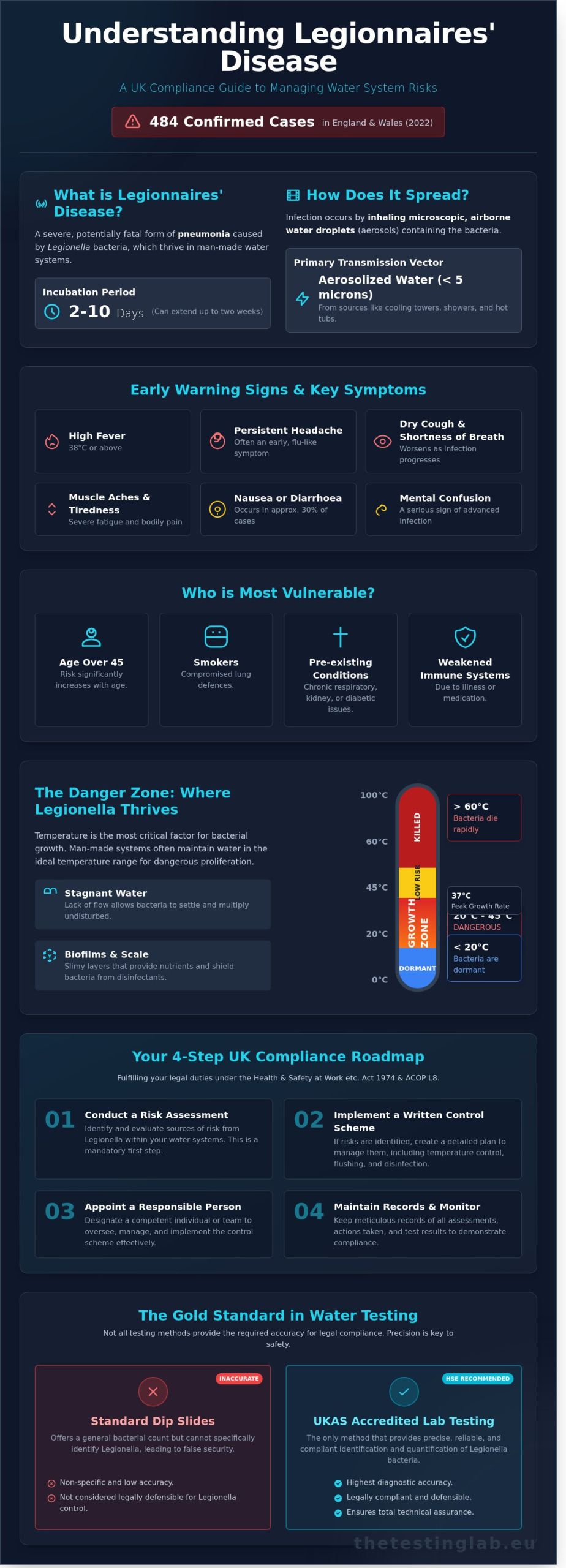
The Health and Safety Executive (HSE) recorded 484 confirmed cases of Legionellosis in England and Wales during 2022, a figure that underscores a silent threat within our built environment. You’re likely aware that managing commercial water systems involves a minefield of regulatory hurdles. It’s stressful to worry about potential outbreaks or feel lost in the technical jargon of UK health and safety laws. We understand that identifying high-risk systems requires a level of precision that isn’t always easy to achieve alone.
This guide cuts through the noise to explain what is Legionnaires’ disease, its primary symptoms, and the exact prevention strategies required by law. We’ll explore how bacteria colonises UK wide water systems and provide a logical roadmap for achieving ACOP L8 compliance. By applying a rigorous, engineering-led approach to your water safety, you can move from uncertainty to total technical assurance. You’ll finish this article with a professional framework to protect your occupants and ensure your business remains fully compliant with current UK legislation.
Key Takeaways
- Gain a clear understanding of what is Legionnaires’ disease, including the specific symptoms and the typical incubation period associated with this severe form of pneumonia.
- Identify the environmental triggers that allow bacteria to thrive in UK-wide man-made water systems, focusing on the dangers of stagnant water and specific temperature ranges.
- Navigate your legal responsibilities under the Health and Safety at Work etc. Act 1974 and other essential UK regulations to ensure full workplace compliance.
- Master the risk assessment process and learn how to establish a precise written scheme of control to mitigate biological threats effectively.
- Recognise the critical importance of UKAS accredited laboratory testing over standard dip slides to ensure the highest levels of diagnostic accuracy and safety.
What is Legionnaires’ Disease? Defining the Health Risks
Legionnaires’ disease is a severe, potentially fatal form of pneumonia caused by the Legionella bacteria. It’s primarily contracted by inhaling small droplets of water suspended in the air that contain the bacteria. Understanding What is Legionnaires’ Disease? is critical for duty holders across the UK, as the bacteria thrive in man-made water systems like cooling towers, hot tubs, and complex plumbing networks. The incubation period typically lasts between 2 and 10 days, though in some instances, symptoms may not appear for up to two weeks after the initial exposure.
It’s important to distinguish this condition from Pontiac fever. While both are caused by the same bacteria, Pontiac fever is a much milder, self-limiting illness that doesn’t result in pneumonia. Legionnaires’ disease, by contrast, is a systemic respiratory infection that often requires hospitalisation and intensive antibiotic treatment. In the UK, the Health and Safety Executive (HSE) provides strict frameworks to manage these biological risks, ensuring that “what is Legionnaires’ disease” is understood not just as a medical term, but as a preventable operational hazard.
Common Symptoms and Early Warning Signs
The onset of the disease is often deceptive, beginning with flu-like symptoms that include heavy muscle aches, tiredness, and a persistent headache. As the infection progresses, it attacks the pulmonary system, leading to a high temperature of 38°C or above. Patients frequently experience a dry cough, followed by chest pains and significant shortness of breath. In approximately 30% of cases, the infection also causes gastrointestinal issues like nausea or diarrhoea. If these symptoms appear, especially after staying in a hotel or using a public spa, it’s vital to seek urgent advice via NHS 111. Mental confusion is another serious warning sign that indicates the body is struggling with oxygen levels.
High-Risk Groups and Vulnerability
While anyone can contract the infection, certain demographics are statistically more vulnerable. Age is a primary factor; individuals over 45 are at a significantly higher risk of developing severe complications. This vulnerability is often compounded by lifestyle choices and existing health profiles:
- Smoking: Smokers or those with a history of heavy smoking have compromised lung defences, making it easier for bacteria to colonise the respiratory tract.
- Pre-existing conditions: People with chronic respiratory diseases, kidney failure, or diabetes face increased mortality rates.
- Immune health: Those with weakened immune systems, perhaps due to chemotherapy or long-term steroid use, are highly susceptible.
UK-wide legislation requires employers to identify these risks within their workforce and public spaces. Implementing Legionella risk assessments is a mandatory step for any strategic partner looking to maintain a safe, compliant environment for these high-risk groups.
How Legionella Bacteria Spreads in UK Water Systems
Legionella bacteria occur naturally in UK rivers, lakes, and ponds at low concentrations. In these open environments, they rarely pose a threat to public health. The danger arises when these organisms enter man-made water systems where conditions allow them to multiply into dangerous colonies. To understand what is Legionnaires’ disease, you have to look at how modern plumbing acts as an unintended incubator.
Bacterial proliferation depends on specific environmental factors. The most critical is temperature. Legionella thrives in water between 20°C and 45°C. At 37°C, the bacteria reach peak growth rates. Below 20°C, they remain dormant; above 60°C, they typically die within minutes. Stagnant water provides the stability these colonies need to form biofilms. These slimy layers of microorganisms and scale attach to pipe walls, acting as a nutrient-rich shield that protects bacteria from chemical disinfectants and temperature spikes.
Human infection doesn’t usually occur through drinking contaminated water. Instead, it happens via the aerosol effect. When water is agitated, it creates fine droplets or “mists” often smaller than 5 microns. These tiny particles are easily inhaled, carrying the bacteria directly into the lungs. UK employers have a legal duty to manage these risks. The primary guidance for compliance is found within the Legionnaires’ Disease and UK Law framework, which outlines the requirements for monitoring and control across all UK-wide premises.
Common Sources of Infection in Buildings
High-risk equipment is common in industrial and commercial centres. Cooling towers and evaporative condensers are significant concerns because they are designed to disperse heat through water evaporation, creating large-scale aerosols. In hotels, hospitals, and office blocks, the complexity of hot and cold water systems provides ample opportunity for bacterial growth. Specialist equipment like spa pools, hot tubs, and humidifiers also require rigorous maintenance, as they operate at the exact temperatures Legionella prefers while actively generating mists.
The Role of Stagnant Water and ‘Dead Legs’
Plumbing systems often contain “dead legs,” which are lengths of pipework leading to a closed end or an outlet that is rarely used. If a shower or tap in a vacant office hasn’t been turned on for 7 to 14 days, the water inside becomes stagnant. It loses its residual chlorine and eventually warms to the ambient room temperature. These pockets become breeding grounds. Regular flushing regimes and the removal of redundant pipework are essential steps in any safety programme. Many organisations ensure their compliance by commissioning professional Legionella risk assessments to identify these structural vulnerabilities across their UK-wide portfolios.
Legionnaires’ Disease and UK Law: Your Legal Obligations
Compliance with UK health and safety law isn’t optional; it’s a fundamental requirement for any organisation operating UK wide. The Health and Safety at Work etc. Act 1974 serves as the primary legislation, requiring employers to ensure the health and safety of employees and others. Under the Management of Health and Safety at Work Regulations 1999, this duty extends to conducting thorough risk assessments. Understanding what is Legionnaires’ disease and how it manifests in water systems is the first step toward meeting these statutory requirements.
The Control of Substances Hazardous to Health (COSHH) Regulations 2002 further classifies Legionella as a biological hazard. This framework mandates that you prevent or adequately control exposure to the bacteria. Within your organisation, two roles are critical. The ‘Duty Holder’ is typically the employer or the person in control of the premises. They must appoint a ‘Responsible Person’ who possesses sufficient authority and competence to ensure all control measures are implemented with engineering precision.
ACOP L8: The Gold Standard for Compliance
The Approved Code of Practice L8 (ACOP L8) provides the authoritative guide for controlling Legionella bacteria in water systems. While ACOP L8 itself isn’t law, it has a special legal status. If you’re prosecuted for a breach of health and safety law and it’s proved you didn’t follow the relevant provisions of the code, a court will find you at fault unless you can show you complied in another, equally effective way. Our Legionella risk assessment services provide the technical rigour needed to ensure your site meets these stringent standards.
Responsibilities for Landlords and Business Owners
Landlord obligations apply UK wide, covering both residential and commercial sectors. Residential landlords must ensure that the risk from exposure to Legionella is properly assessed and controlled. In commercial settings, the complexity of cooling towers or large-scale plumbing often requires a more intensive monitoring regime. A vital part of this process is understanding How Legionella Bacteria Spreads through aerosolised droplets in showers, taps, or air conditioning units.
Key administrative requirements include:
- Record Keeping: You must maintain records of all inspections, tests, and maintenance for at least five years.
- Risk Reviews: Assessments should be reviewed regularly or whenever there’s a change to the water system.
- Competence: Anyone involved in testing must have the necessary technical expertise to identify what is Legionnaires’ disease risk in a specific environment.
Failure to comply can lead to heavy fines or imprisonment. The Health and Safety Executive (HSE) also operates a ‘Fee for Intervention’ (FFI) scheme. If an inspector identifies a material breach, your business will be charged for their time at a rate of £174 per hour. Taking a proactive, laboratory-style approach to water safety isn’t just about avoiding fines; it’s about protecting lives through technical excellence.
Preventing Legionnaires’ Disease: The Risk Assessment Process
Prevention isn’t a one-off task; it’s a continuous cycle of precision monitoring and engineering control. Under the Health and Safety at Work etc. Act 1974, UK duty holders must identify risks across all UK-wide facilities to ensure occupant safety. Understanding what is Legionnaires’ disease is only the first step. Effective management requires a “laboratory approach” where every water system is mapped, tested, and maintained with scientific rigour. This process starts with a formal risk assessment, which serves as the foundation for your entire water safety strategy.
The Health and Safety Executive (HSE) ACoP L8 requires every UK employer to appoint a “competent person” with sufficient authority and knowledge to oversee water safety protocols. This individual ensures that the written scheme of control is followed to the letter. You’ve got to keep detailed logs of all remedial actions and inspections for at least five years. These records aren’t just paperwork; they’re your primary defence during a health and safety audit. Precision in documentation reflects the precision of your physical maintenance.
Five Steps to a Comprehensive Risk Assessment
Step 1 involves identifying and assessing sources of risk, such as dead legs in pipework or water temperatures between 20°C and 45°C. Step 2 requires creating a written scheme to manage these risks effectively. This document outlines exactly how you’ll prevent the bacteria from proliferating. Step 3 focus on implementation; you must manage and monitor precautions to ensure they’re working as intended. This systematic 5-step framework ensures no part of the system is overlooked, providing a strategic shield for your business.
Implementing Effective Control Measures
Temperature control is your most potent weapon. You must keep hot water stored at 60°C and distributed so it reaches outlets at 50°C within one minute. Cold water must remain below 20°C to prevent bacterial growth. In complex UK-wide industrial systems where temperature control isn’t enough, we deploy biocides or UV sterilisation to maintain water quality. These technical interventions require regular calibration to remain effective. If you haven’t reviewed your system in the last 24 months, it’s time for a professional evaluation.
Don’t leave your compliance to chance. You can request a quote for a professional site inspection to ensure your facility meets all UK legislative requirements. Our team brings an engineering mindset to every assessment, identifying hidden risks before they become liabilities. Knowing what is Legionnaires’ disease helps you understand the stakes; our expertise helps you manage the solution.
The Importance of UKAS Accredited Laboratory Water Testing
Reliable data forms the backbone of any water safety strategy. While understanding what is Legionnaires’ disease helps identify the threat, only rigorous UKAS (United Kingdom Accreditation Service) accredited testing provides the scientific certainty required for legal compliance. UKAS accreditation confirms a laboratory operates to ISO 11731 standards, ensuring every sample is processed with repeatable precision. This level of accuracy is vital because false negatives lead to an undetected outbreak, while false positives result in expensive, unnecessary system disinfections.
Many site managers rely on dip slides for routine monitoring. These are useful for a general snapshot of aerobic bacteria, but they cannot identify Legionella species. Formal laboratory analysis involves complex filtration and incubation periods, typically taking 10 to 12 days to yield a definitive result. When you receive a Legionella test certificate, you must check for the UKAS symbol and the specific Limit of Detection (LoD). In the UK, a result of “Not Detected” usually means the count is below 100 Colony Forming Units per litre (CFU/L).
Maintaining independence in your testing regime is a core principle of the Health and Safety Executive (HSE). Using a third party laboratory prevents a conflict of interest where a water treatment contractor might be tempted to validate their own work. Independent verification provides a transparent audit trail that protects duty holders during legal inspections and provides a clear, unbiased view of system health.
When is Microbiological Water Testing Required?
UK legislation, specifically HSG274, dictates when sampling is mandatory. For cooling towers, testing must occur at least quarterly to comply with Part 1 of the guidance. If your hot water temperatures drop below 50°C at the sentinel points or cold water rises above 20°C, you must sample to verify if control measures have failed. Investigative testing is also required immediately if a case of what is Legionnaires’ disease is suspected or if a previous sample showed counts exceeding 1,000 CFU/L.
Choosing a UKAS Accredited Partner
Verifying a laboratory’s credentials is the first step in robust risk management. You should check the laboratory’s schedule of accreditation on the UKAS website to ensure they’re specifically certified for Legionella pneumophila and other species. This due diligence offers vital legal protection in the event of an incident. For professional, UK wide support, visit The Testing Lab PLC for accredited services that remove the burden of quality assurance from your shoulders.
Secure Your Facility With Precise Water Safety Management
Managing complex water systems across the UK wide landscape requires more than a basic understanding of what is Legionnaires’ disease; it demands a rigorous, engineering-led approach to risk mitigation. Under the Health and Safety at Work etc. Act 1974, you’re legally responsible for preventing bacterial colonisation in your premises. A single oversight can lead to severe health risks and significant legal penalties. We’ve spent over 20 years refining our precision-based testing methods to ensure your facility remains fully compliant with ACoP L8 guidelines.
Our team provides UK wide coverage, delivering the technical confidence you need through our UKAS Accredited Laboratory. We don’t just provide a service; we act as your strategic partner to remove the burden of quality assurance from your shoulders. By choosing a scientific, laboratory-standard assessment, you’re protecting your people and your reputation with data-driven results. Don’t leave your compliance to chance when professional expertise is readily available.
Book your Legionella risk assessment with The Testing Lab PLC to ensure your building meets every safety standard.
We’re here to help you maintain a safe and compliant environment for the long term.
Frequently Asked Questions
Can you catch Legionnaires’ disease from drinking water?
You can’t catch Legionnaires’ disease from drinking water under normal circumstances. The infection occurs when you inhale small droplets of contaminated water, known as aerosols, into your lungs. While a 2017 study showed rare cases of aspiration during swallowing, the primary risk remains mist from showers, taps, or spa baths across the UK.
How often should a Legionella risk assessment be carried out in the UK?
You should review your Legionella risk assessment every 2 years or whenever there’s a change to your water system. The Health and Safety Executive guidelines, specifically the L8 Approved Code of Practice, mandate these regular reviews to ensure safety. Changes like new pipework, a change in building use, or 12 months of inactivity require an immediate reassessment.
Is Legionnaires’ disease contagious between people?
Legionnaires’ disease isn’t contagious and cannot spread from person to person. You only contract the illness by breathing in bacteria from a contaminated environmental source. Public Health England data confirms that outbreaks are linked to poorly maintained water systems rather than human contact, making environmental testing a critical safety pillar for UK wide businesses.
What should I do if I suspect a Legionella outbreak in my building?
If you suspect an outbreak, you must immediately shut down the affected water system and notify the local Proper Officer or the HSE. Under the Reporting of Injuries, Diseases and Dangerous Occurrences Regulations 2013 (RIDDOR), employers have specific legal duties to report confirmed cases. Secure the area and wait for a professional laboratory to conduct diagnostic sampling.
Do small businesses or private landlords need a Legionella certificate?
There’s no such thing as a “Legionella certificate” in UK law, but a written risk assessment is a legal requirement for all landlords. Whether you manage a single flat or a factory, the Health and Safety at Work etc. Act 1974 requires you to identify risks. Non-compliance can lead to fines exceeding £20,000 or even prosecution in severe cases.
What is the difference between Legionnaires’ disease and Pontiac fever?
The main difference is that Legionnaires’ disease causes life-threatening pneumonia while Pontiac fever is a mild, flu-like illness. When asking what is Legionnaires’ disease without its severe symptoms, it’s essentially Pontiac fever, which typically clears up in 2 to 5 days. Legionnaires’ disease has a mortality rate of approximately 10 percent according to NHS records.
How long does Legionella bacteria survive in water systems?
Legionella bacteria can survive indefinitely in water systems if temperatures remain between 20°C and 45°C. They become dormant below 20°C and begin to die off at temperatures above 50°C. Within 2 minutes at 60°C, 90 percent of the bacteria are killed, which is why UK regulations require hot water cylinders to store water at 60°C minimum.
Can air conditioning units spread Legionnaires’ disease?
Most domestic air conditioning units don’t spread the disease because they don’t use water to cool the air. However, large-scale industrial cooling towers or evaporative condensers pose a major risk if they aren’t maintained. These systems create the fine mist that carries what is Legionnaires’ disease causing bacteria over distances of up to 6 miles in certain weather conditions.
Absolutely. While Legionella poses a significant environmental risk from water systems, other bacteria like MRSA (methicillin-resistant Staphylococcus aureus) are a major concern in both healthcare and community settings. For individuals seeking proactive testing for this specific bacteria, resources like mrsatest.co.uk offer at-home screening kits in the UK.
While rare, pets can also contract Legionnaires’ disease by inhaling contaminated water droplets. Similar to humans, animals that are older or have compromised immune systems are at a higher risk. This underscores the importance of maintaining safe water systems for all occupants of a building, including animals. If you have concerns about your pet’s respiratory health, seeking professional veterinary advice is essential. For comprehensive care and diagnostics in London, Streatham Hill Veterinary Surgery is a leading 24-hour practice.