
What if a single microscopic fibre on a window ledge could halt your £1 million construction project and trigger an immediate HSE investigation? You likely already know that managing asbestos is the most high-stakes element of any UK wide refurbishment. The pressure to meet deadlines while navigating the 2026 4 stage clearance certificate requirements often feels like walking a tightrope between project efficiency and legal catastrophe. It’s frustrating when technical jargon and rigid HSE HSG248 guidelines stand between you and a safe, completed site. Our team at The Testing Lab understands that you need precision, not just paperwork, to keep your project on track.
This guide will help you master the complex legal and technical requirements of the 4-stage process, ensuring your site is ready for reoccupation without the fear of failed inspections or costly delays. We’ll break down every phase from the preliminary site check to the final air monitoring and document handover. By the end, you’ll have a clear roadmap to secure the full legal documentation required for your health and safety file, keeping your workforce safe and your compliance record spotless.
Key Takeaways
- Navigate the mandatory legal framework of the Control of Asbestos Regulations 2012 to maintain full compliance across all UK-wide projects.
- Master the technical 4 stage clearance certificate requirements to ensure every site is rigorously verified as safe for reoccupation.
- Identify the primary causes of clearance failure, from contractor cleaning standards to environmental variables, and learn how to prevent costly delays.
- Understand why UKAS accreditation and adherence to HSG248 (The Analyst’s Guide) are essential for meeting the 2026 quality benchmarks.
- Explore how mobile laboratory technology and expert analysts can accelerate your safety certification process without compromising on precision.
Understanding the Legal Requirements for 4 Stage Clearance Certificates
A 4-stage clearance is the rigorous, mandatory verification process required to confirm a site is safe for re-entry after the licensed removal of asbestos. For UK wide commercial property managers, these requirements aren’t optional. They’re a core component of the Control of Asbestos Regulations 2012 (CAR 2012). The final output of this process is the Certificate for Reoccupation. This document serves as your legal proof that the area is free from hazardous fibres and safe for staff or contractors to return. Failing to secure this certificate before re-entry can lead to prosecution, heavy fines, and significant health risks for building occupants.
The Role of CAR 2012 in Asbestos Management
CAR 2012 places a clear duty on building owners to manage risks effectively. The clearance process sits at the end of the project lifecycle, but its planning must begin much earlier. If you reoccupy a site without meeting the 4 stage clearance certificate requirements, you’re in direct violation of Regulation 17. This regulation demands independent third-party verification. Using an impartial laboratory ensures there’s no conflict of interest between the removal contractor and the analyst. This independence is critical for maintaining safety standards across the UK wide property sector and provides a transparent audit trail for regulators.
When is a 4 Stage Clearance Mandatory?
Not every project requires the full four stages, but licensed work always does. You’ll need this procedure whenever an asbestos enclosure is used. This typically involves high-risk materials like pipe insulation or asbestos insulating board. While notifiable non-licensed work (NNLW) and non-licensed tasks have different rules, the presence of an enclosure triggers the full requirement. Professional asbestos consultancy is vital here. Experts help you distinguish between work types, ensuring you don’t overspend on unnecessary tests or skip mandatory safety protocols. In 2026, the focus on documented compliance is tighter than ever. These certificates are your primary line of legal defence.
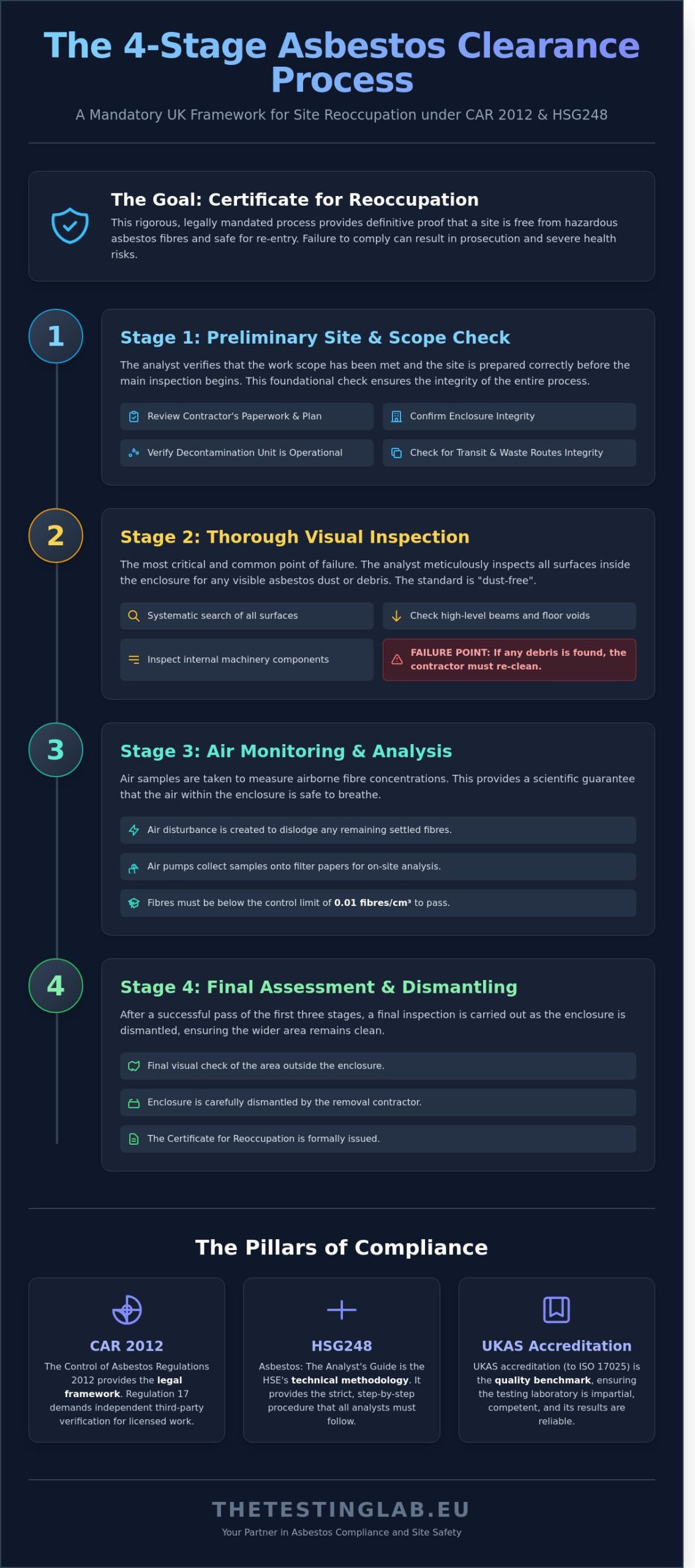
The 4-stage process includes a preliminary site check, a thorough visual inspection, air monitoring, and a final post-reductive assessment. Each stage must be passed sequentially. If a site fails at any point, the contractor must re-clean and the process starts again. This methodical approach is why the 4 stage clearance certificate requirements are considered the gold standard for UK wide safety. It’s a scientific guarantee that the environment is clean. It protects the health of your employees and the long-term viability of your assets.
The 4 Stages of Asbestos Clearance: A Technical Breakdown
Navigating the 4 stage clearance certificate requirements isn’t just a box-ticking exercise; it’s a rigorous technical audit designed to protect building occupants. Each stage serves as a critical checkpoint, ensuring that the removal contractor has met the necessary hygiene standards before a space is declared safe for re-occupation across the UK. This process follows the strict methodology outlined in HSG248 Asbestos: The Analysts’ Guide, which provides the definitive framework for every UK wide compliance project.
Stage 1 & 2: Preparing for the Visual Inspection
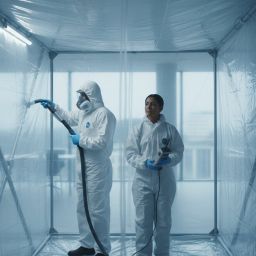
Stage 1 focuses on the preliminary site condition and the physical integrity of the enclosure. The analyst examines the contractor’s paperwork, confirms the plan of work is followed, and verifies that the decontamination unit is fully operational. It’s a foundational check to ensure the environment is controlled before any sampling begins.
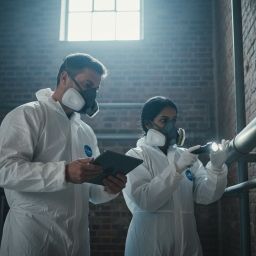
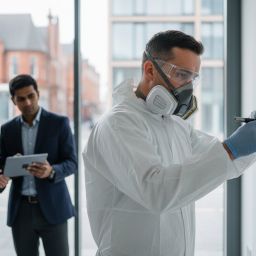
Once the site is confirmed as ready, the process moves to Stage 2, which is the most demanding phase of the entire sequence. The analyst conducts a thorough visual inspection, requiring a “dust-free” standard across all surfaces. This includes checking high-level beams, floor voids, and internal components of machinery. Industry data indicates that Stage 2 is the most common point of failure in UK wide projects, often due to fine dust settling in hard-to-reach areas after the initial cleaning. If any debris is identified, the contractor must re-clean the entire enclosure. This level of precision is why many site managers rely on professional asbestos consultancy to oversee the preparation phase.
Stage 3 & 4: Air Monitoring and Final Handover
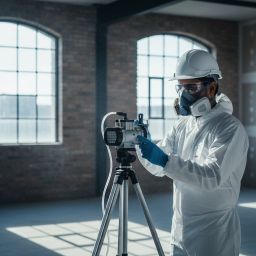
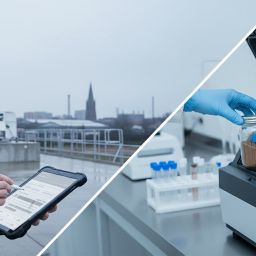
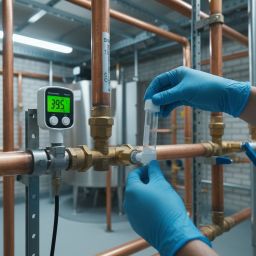
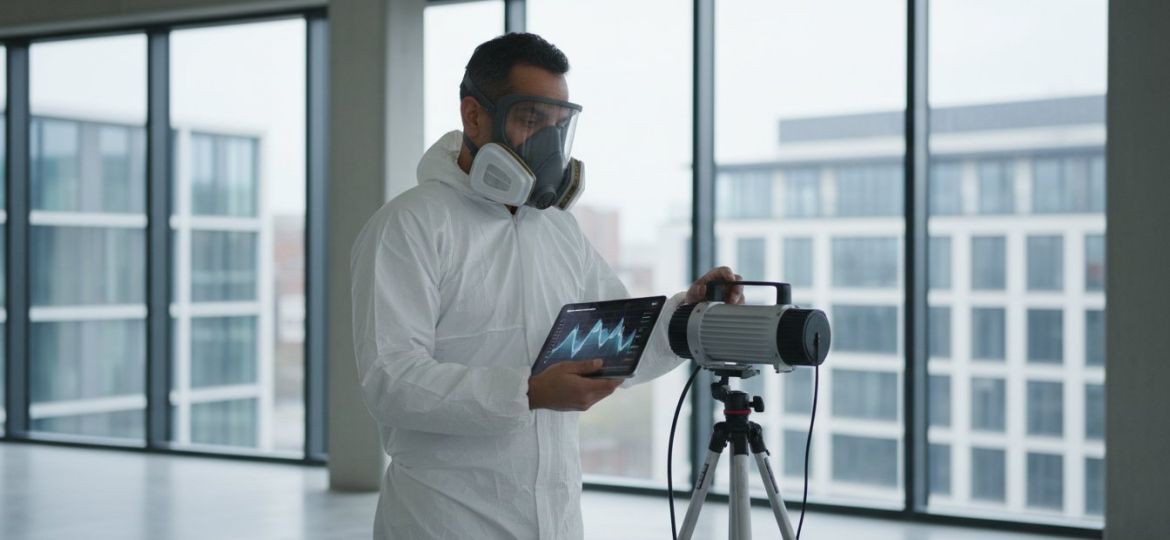
Stage 3 involves clearance air monitoring to detect microscopic airborne fibres. Analysts use Phase Contrast Microscopy (PCM) to evaluate air samples collected on filters. To pass, the fibre concentration must be below the limit of quantification, which is 0.01 fibres per millilitre (f/ml). During this test, the analyst employs “disturbance” techniques, using brushes or fans to agitate the air. This mimics normal occupancy conditions, ensuring that any latent fibres are captured and counted.
Stage 4 is the final assessment conducted after the enclosure has been dismantled. The analyst inspects the area where the enclosure stood and the transit routes used by the removal team. This ensures that no contamination was released or left behind during the teardown process. Only after Stage 4 is successfully completed can the final certificate be issued. This four-part safety net ensures that the 4 stage clearance certificate requirements are met with engineering-grade accuracy, leaving the site safe for general use.
Common Reasons for Clearance Failure and How to Avoid Them
Failed clearances aren’t just a minor delay; they represent a breakdown in the quality control process that can stall a project for days. Industry data across the UK suggests that over 80% of Stage 2 failures stem from visible dust or debris left behind by the removal contractor. This often happens when teams rely on “visual cleanliness” rather than the surgical standards required by the Control of Asbestos Regulations 2012. When an analyst identifies even minor traces of dust, the 4 stage clearance certificate requirements cannot be met, leading to immediate failure and mandatory re-cleaning.
The financial impact of a “re-clean” is significant. Beyond the contractor’s additional labour costs, you’ll face repeat analyst fees, which typically range from £300 to £600 per visit depending on the enclosure size. If environmental factors like high humidity or poor ventilation aren’t managed, even a clean site can fail Stage 4 air tests because moisture prevents fibres from being effectively disturbed and captured during sampling.
Site Hygiene and Contractor Performance
A successful clearance starts long before the analyst arrives. The enclosure must be bone dry and entirely free of visible debris. Contractors should perform their own rigorous “Stage 2” pre-check using high-intensity lighting to spot fine dust on ledgers, pipework, and plastic sheeting. For outdoor projects or demolition sites where the ground has been disturbed, asbestos in soils testing may be a prerequisite to ensure the perimeter is safe before the enclosure is struck. Site managers should insist on a signed handover document from the contractor confirming the area is ready for inspection.
Managing the Clearance Timeline
Rushing the cleaning process is the fastest route to a failed air test. If a contractor claims a large, complex enclosure is ready in half the estimated time, it’s a red flag. Analysts follow the “four-hour rule” for visual inspections in substantial enclosures to ensure every surface is checked thoroughly. It’s also vital to schedule inspections during daylight hours. Natural light provides the best conditions for identifying translucent fibres and dust that artificial “site lights” might miss, ensuring the 4 stage clearance certificate requirements are validated with precision.
- Confirm the enclosure is 100% dry; damp surfaces can mask asbestos fibres.
- Verify that all waste bags have been removed from the airlock and transit route.
- Check that the negative pressure unit (NPU) is functioning and filters are clean.
- Ensure all “dead spots” behind pipes or above eye level have been wiped down.
- Provide clear, safe access and sufficient lighting for the analyst’s inspection.
The Role of UKAS Accreditation and HSG248 Compliance
Achieving compliance with 4 stage clearance certificate requirements isn’t just about finishing a project; it’s about meeting the United Kingdom’s most rigorous safety benchmarks. UKAS (United Kingdom Accreditation Service) accreditation represents the gold standard for asbestos laboratories and site work UK wide. It ensures that every air test and visual inspection follows a validated methodology. Without this accreditation, a certificate for reoccupation lacks the legal weight needed to satisfy Health and Safety Executive (HSE) inspectors or insurance providers.
The Testing Lab PLC maintains strict UKAS standards across all UK wide operations to ensure every client receives a scientifically defensible report. The cornerstone of this process is HSG248, also known as The Analyst’s Guide. This document dictates exactly how analysts must perform their duties. Following the 2nd edition update, which remains the definitive framework for 2026, the requirements have become significantly more stringent to eliminate corner-cutting and improve site safety.
Why Independent UKAS Accreditation is Non-Negotiable
The HSE is clear in its guidance: building owners should employ analysts directly. When a removal contractor hires their own analyst, it creates a potential conflict of interest that can undermine the impartiality of the final report. Using an independent, UKAS-accredited firm ensures the 4-stage process remains objective. This independence is vital for a legally robust Certificate for Reoccupation. For a deeper look at these standards, you can read our UKAS accredited asbestos testing guide to understand how these protocols protect your property and personnel.
Key Updates in the Analyst’s Guide for 2026
The latest iteration of HSG248 introduced mandatory digital recording of site data. This means analysts must capture information in real-time, preventing retrospective reporting or “office-based” certificate generation. A critical change for 2026 compliance is the requirement for high-resolution photo evidence at every stage of the clearance. These photos must document specific elements of the process:
- The enclosure integrity, signage, and negative pressure unit (NPU) setup.
- Detailed visual inspections of the work area, including difficult-to-reach voids.
- The exact placement of air sampling pumps during the transition to Stage 3.
- The final state of the site once the enclosure is dismantled in Stage 4.
These digital audit trails protect the Duty Holder from future litigation by providing empirical proof that the site was safe at the time of handover. If you need to ensure your project meets these updated 4 stage clearance certificate requirements, request a professional compliance quote from our expert team today. We provide the technical certainty required to manage your asbestos risks effectively across the UK.
Securing Your Certificate for Reoccupation with The Testing Lab PLC
Meeting the 4 stage clearance certificate requirements for 2026 shouldn’t be a source of project delays or compliance anxiety. We provide a UK wide network of highly trained, UKAS-accredited analysts who understand the technical rigour needed for safe reoccupation. Our team doesn’t just tick boxes; we apply a scientific methodology to every site inspection and air test. This ensures that every stage of the process, from the initial preliminary check to the final site handover, is conducted with absolute precision.
Speed is critical in construction and renovation. To support tight schedules, we’ve deployed a fleet of mobile laboratories across the UK to ensure you get rapid, on-site results. There’s no waiting days for external lab processing. You’ll see the data as it’s generated, allowing for immediate decision-making. We maintain full transparency through our digital portals, giving you real-time access to certificates and site data from any device. This digital-first approach eliminates the paperwork trail and keeps your compliance records audit-ready at all times.
Our Approach to Asbestos Consultancy and Testing
Request Your Professional Clearance Quote
Ready to secure your site for reoccupation? You can request a quote for asbestos specialists through our streamlined online system. To provide an accurate fixed-fee estimate, we’ll need specific details regarding the site location, the scope of the removal works, and your projected timeline. Early engagement is the best way to ensure analyst availability, especially when you’re working toward strict 2026 deadlines. We’re here to take the burden of quality assurance off your shoulders, providing the engineering-led confidence your stakeholders demand. Don’t leave your compliance to chance when you can have the certainty of a laboratory-backed approach.
Ensure Your Site Meets 2026 Asbestos Compliance Standards
Navigating the 4 stage clearance certificate requirements doesn’t have to be a bottleneck for your project. As the 2026 compliance landscape evolves, strict adherence to the HSG248 (Asbestos: The Analysts’ Guide) remains the mandatory legal benchmark for every asbestos removal project across the United Kingdom. Successful reoccupation depends on the meticulous execution of all four technical stages, ranging from preliminary site assessments to final air monitoring. Our UK wide team of independent professional analysts removes the burden of quality assurance from your shoulders by applying a rigorous laboratory approach to every inspection. By partnering with a UKAS accredited laboratory, you ensure that your site is safe, legal, and ready for use without unnecessary delays. We provide the technical certainty you need to move forward with confidence.
Request a 4-Stage Clearance Quote from Our UKAS Accredited Experts
We look forward to helping you achieve a seamless and compliant handover for your next project.
Frequently Asked Questions
What is a 4 stage clearance certificate?
A 4 stage clearance certificate is a mandatory legal document issued by a UKAS accredited analyst to prove a work area is safe for re-occupation after licensed asbestos removal. The process follows the HSG248 Analyst Guide and includes a preliminary check, a rigorous visual inspection, clearance air monitoring, and a final post-enclosure assessment. It serves as the definitive proof of compliance with the Control of Asbestos Regulations 2012 across the UK.
How long does a 4 stage asbestos clearance take to complete?
A standard clearance procedure typically takes between 4 and 8 hours for a single enclosure on a UK site. Small domestic projects might finish in 4 hours, but complex industrial environments often require 12 hours or more of intensive testing. The air monitoring phase alone requires a minimum of 480 litres of air to be sampled per filter, which takes 60 minutes at a standard flow rate of 8 litres per minute.
Can I occupy a room before the Stage 4 assessment is finished?
No, you cannot re-enter the space until the analyst has officially issued the certificate. Stage 4 involves the removal of the enclosure and a final check of the transit routes to ensure no contamination occurred during the dismantling process. Re-entering early violates UK health and safety regulations and risks exposure to residual fibres that might’ve been trapped behind polythene sheeting during the earlier stages.
What happens if the air test fails during Stage 3?
If the air test fails, the area is declared unsafe and the asbestos removal contractor must re-clean the entire enclosure immediately. The analyst will issue a failure notice, and the 4 stage clearance certificate requirements mandate that the process restarts from the Stage 2 visual inspection. This protocol ensures that airborne fibre concentrations remain below the 0.01 f/ml limit of detection before any enclosure is dismantled.
Is a 4 stage clearance required for non-licensed asbestos removal?
While UK law strictly mandates a 4 stage clearance for licensed asbestos removal, it isn’t a legal requirement for non-licensed work. However, HSG248 guidelines recommend a simplified re-occupation test for non-licensed tasks to verify the environment is safe for users. For many UK commercial property managers, completing a full clearance is the only way to satisfy 2026 insurance requirements and provide definitive proof of safety.
Who is responsible for paying for the 4 stage clearance?
The person or organisation in control of the premises, known as the Duty Holder, is responsible for hiring and paying the independent analyst. This arrangement is a critical requirement of the 2022 update to the HSG248 Analyst Guide to prevent conflicts of interest between contractors and testers. By paying the testing lab directly, the client ensures the analyst remains impartial and focuses solely on the precision of the safety checks.
Can the same company do the asbestos removal and the clearance testing?
No, the removal contractor and the testing laboratory must be independent entities to comply with UK health and safety standards. Current 2026 compliance guidelines state that the analyst must be employed by the building owner or client, not the removal firm. This separation of duties creates a robust “double-check” system where the lab provides an objective, scientific verification of the contractor’s cleaning performance.
How long is a 4 stage clearance certificate valid for?
A 4 stage clearance certificate is a point-in-time document that remains valid as long as the area remains undisturbed after the test. It proves the room was safe at the specific moment of re-occupation following asbestos works. If further asbestos materials are discovered later or if additional remedial work occurs, a new assessment is required to ensure the environment still meets the 0.01 f/ml safety threshold across the UK site.