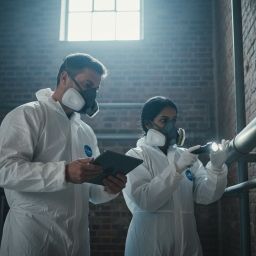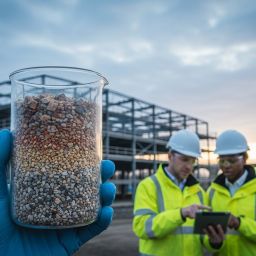

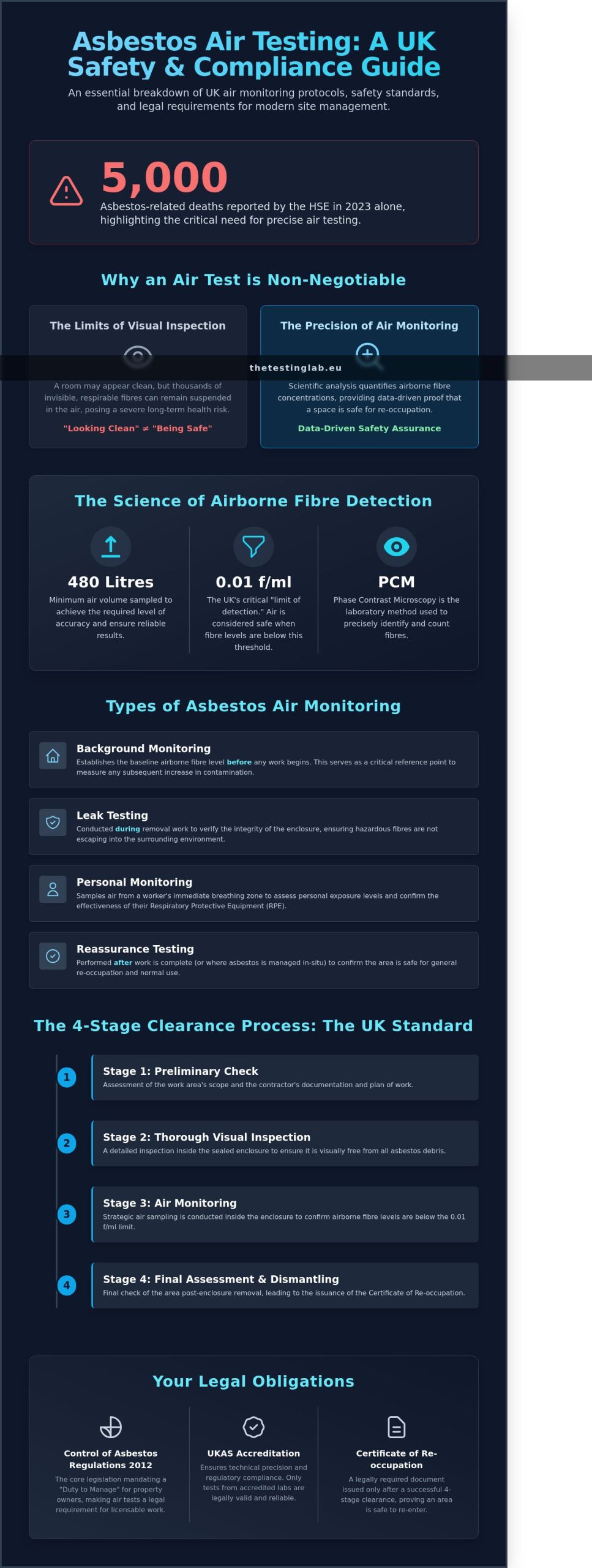
Did you know that the Health and Safety Executive (HSE) reported 5,000 asbestos-related deaths in 2023 alone? It’s a sobering figure that underscores why an Asbestos Air Test isn’t just a box-ticking exercise; it’s a critical safety protocol for every UK-wide project. You’ve likely felt the pressure of managing a site where hidden fibres could halt progress or endanger lives. Balancing the strict 2026 safety standards with the financial reality of a 4-stage clearance is a significant challenge for any modern site manager.
We understand that the technical nuances of the Control of Asbestos Regulations 2012 can feel overwhelming. This guide provides a precise, engineering-led breakdown of air monitoring requirements to ensure your site remains fully compliant. You’ll learn how to master the 4-stage clearance process, manage your budget effectively, and secure the peace of mind that comes with a legally valid certificate. We’ll examine the specific testing methodologies and the exact steps needed to eliminate risk across your entire building portfolio.
Key Takeaways
- Gain a clear understanding of how Phase Contrast Microscopy (PCM) identifies fibre concentrations to ensure your site remains within safe legal limits.
- Identify the critical differences between background monitoring and leak testing to protect your workforce during active removal projects.
- Master the 4-stage clearance process, the definitive UK standard for ensuring a work area is safe for re-occupation.
- Learn why securing a UKAS accredited Asbestos Air Test is the only way to guarantee technical precision and full regulatory compliance.
- Discover the essential site preparation steps required to facilitate rapid, UK-wide reporting and minimise operational downtime.
What is an Asbestos Air Test and Why is it Essential?
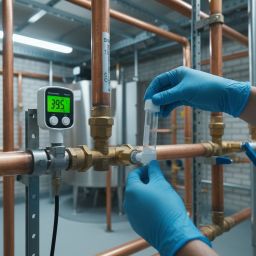
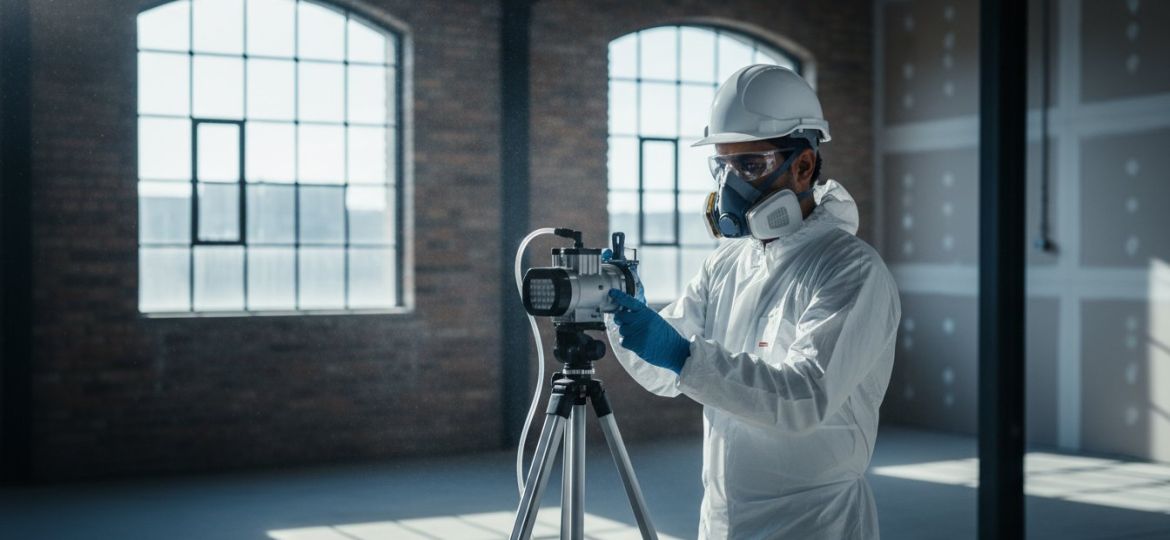
An Asbestos Air Test isn’t a mere formality; it’s a precision-engineered process designed to quantify the invisible. While a visual inspection identifies bulk materials and debris, air monitoring captures respirable fibres that remain suspended in the atmosphere long after a disturbance. This scientific approach is the only way to confirm a space is truly safe for habitation. Our methodology across UK wide projects relies on high-flow pumps drawing specific volumes of air through a 25mm gridded cellulose ester filter, providing a data-driven snapshot of environmental safety.
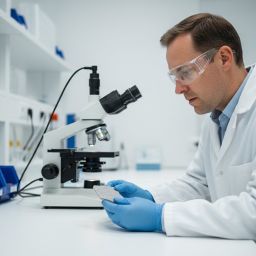
The distinction between a visual check and microscopic analysis is critical. A room might look clean to the naked eye, yet contain thousands of microscopic fibres capable of causing long-term respiratory damage. By employing Phase Contrast Microscopy (PCM) in a controlled laboratory setting, technicians can count individual fibres with absolute precision. This level of detail removes the guesswork from quality assurance, shifting the focus from “looking clean” to “being safe.”
The Science of Airborne Fibre Detection
Precision is the cornerstone of our laboratory approach. We use calibrated air pumps to draw a measured volume of air through a specialised filter. This isn’t a random sample; it’s a calculated procedure where the flow rate and duration are strictly monitored. In the UK, the “limit of detection” is the gold standard for safety, typically set at 0.01 fibres per millilitre (f/ml). To achieve this level of accuracy, a minimum of 480 litres of air must be sampled.
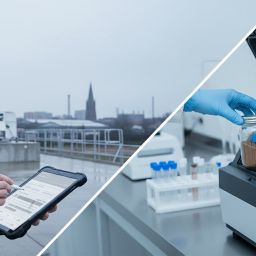
Once the sample is collected, the filter is cleared using a chemical solution and examined under a microscope. Our experts use PCM to identify and count fibres that meet specific dimensional criteria. This rigorous methodology is essential to distinguish hazardous asbestos from harmless background dust or synthetic fibres. It’s a scientific filter that ensures only the highest quality data informs your safety decisions.
Legal Obligations for UK Property Owners
Compliance is a primary driver for testing. Under the Control of Asbestos Regulations 2012, the “Duty to Manage” falls on the property owner or the person responsible for maintenance. This legislation makes an Asbestos Air Test mandatory for high-risk, licensable work. It’s a legal safeguard that ensures no one re-enters a contaminated zone until it’s proven safe. We act as your strategic partner, helping you navigate these requirements to ensure full compliance UK wide.
A key document in this process is the Certificate of Re-occupation. This certificate is legally required following major asbestos removal and is only issued after a successful four-stage clearance process. The risks of ignoring these protocols are severe. Beyond the obvious health hazards, the Health and Safety Executive (HSE) can issue substantial fines, and legal liability for negligence can lead to devastating financial and reputational damage. Utilising professional asbestos consultancy services ensures that every step of your project meets these stringent UK standards.
The Different Types of Asbestos Air Monitoring
Selecting the correct monitoring strategy is a technical requirement that ensures compliance with the Control of Asbestos Regulations 2012. Across the UK, duty holders must understand that air sampling isn’t a singular event but a series of targeted investigations. Each type of Asbestos Air Test serves a distinct purpose in the risk management lifecycle, from initial site characterisation to final clearance. By adopting a laboratory-grade approach to these tests, organisations can mitigate health risks and avoid the legal repercussions of inadequate safety protocols.
- Background Monitoring: This establishes the prevailing airborne fibre concentration before any work or disturbance begins. It acts as a baseline to ensure that future activities don’t inadvertently increase risk levels.
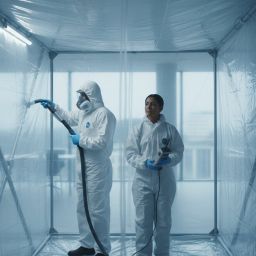
- Leak Testing: Conducted during active removal, this verifies that the static enclosures and negative pressure units are successfully containing hazardous fibres.
- Personal Monitoring: This involves sampling the air within the immediate breathing zone of a worker to assess the effectiveness of their Respiratory Protective Equipment (RPE).
- Reassurance Testing: These tests are performed after the removal of an enclosure or in buildings where asbestos is managed in-situ to confirm the air is safe for general occupancy.
Background and Leak Testing Protocols
Background monitoring provides a vital legal safeguard for UK-wide construction projects. By documenting fibre levels before a contractor arrives, you protect your organisation against claims that your site was contaminated prior to their arrival. Leak testing operates as a real-time quality control measure. Our technicians place samplers at the boundaries of the work zone, specifically near airlocks and waste transfer points. If concentrations exceed the 0.01 f/ml threshold defined in HSG248, work stops immediately. This prevents the spread of contamination to adjacent clean areas, ensuring the safety of other building users.
Personal Monitoring for Worker Safety
Personal sampling is the most direct way to measure occupational exposure. UK legislation sets the control limit at 0.1 fibres per cubic centimetre (f/cm³) averaged over a four-hour period. We use portable sampling pumps attached to the worker’s lapel to capture data during high-risk tasks like scraping or drilling. This data is essential for verifying that the chosen RPE provides a sufficient Assigned Protection Factor. Employers are legally required to link this monitoring data to long-term health records, which must be retained for 40 years. If you need technical guidance on setting up a monitoring programme, our asbestos consultancy services offer the precision required for full regulatory alignment.
This long-term health monitoring is supported by advanced diagnostic technology. The specialized pulmonary function testing systems developed by global leaders like Collins Medical are essential for tracking respiratory health in occupational settings over many years.
This focus on long-term respiratory health extends beyond occupational exposure. Many individuals working in high-risk industries also take proactive steps to reduce other personal health risks, and for those considering quitting smoking, professional services like London Hypnotherapy & NLP can provide valuable support.
For those taking a comprehensive approach to their health, services offering wellness panels and proactive health monitoring are essential. Resources like dyvinewellness.com provide such options, helping individuals in demanding fields stay on top of their overall well-being.
Executing a professional Asbestos Air Test ensures that the airborne fibre concentration remains below the statutory clearance limit. This methodical approach transforms a complex safety requirement into a manageable, transparent process that protects both your workforce and your reputation.
The 4-Stage Clearance Process: The UK Standard for Safety
Compliance with UK health and safety regulations requires a rigorous 4-stage clearance process for any high-risk asbestos removal project. This procedure, outlined in the HSE’s HSG248 guidance, ensures that a building is safe for re-occupation. At The Testing Lab, we treat this as a precision engineering task rather than a simple checklist. Our UK-wide teams follow these steps to provide a definitive Asbestos Air Test result and safety certificate.
Stages 1 and 2: The Critical Foundations
Stage 1 begins with a preliminary site assessment. We verify the contractor’s paperwork and ensure the enclosure is intact. Stage 2 is the visual inspection, and it’s the most common point of failure. Statistics from the United Kingdom Accreditation Service (UKAS) indicate that a significant number of sites fail here because of fine dust or residual debris.
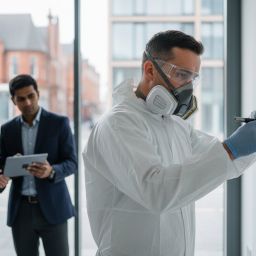
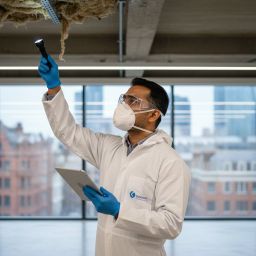
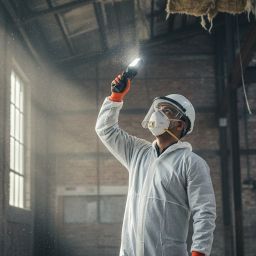
Our analysts spend hours inspecting every millimetre of the work area. They focus on hidden spots like the tops of cable trays, crevices in brickwork, and the seals around windows. A site must be clean, dry, and free from any visible dust before we even consider starting the pumps. If we find a single speck of debris, the contractor must re-clean the area. This uncompromising approach is why we’re seen as a strategic partner in risk management through our asbestos consultancy services.
Stages 3 and 4: Final Validation
Stage 3 is the technical core of the procedure: the Asbestos Air Test. We use disturbance sampling to mimic the conditions of a functioning room. By using fans or brushes to agitate the air, we ensure that the test reflects real-world safety. The legal threshold for a pass is a concentration below 0.01 fibres per millilitre (f/ml). Our mobile laboratories provide rapid analysis, ensuring that projects stay on schedule without compromising on accuracy.
Once Stage 3 is successful, the contractor removes the enclosure. Stage 4 involves a final site assessment. We check the area one last time to ensure that no dust was released during the deconstruction of the polythene screens. Only after this final check do we issue the Certificate for Re-occupation. This end-to-end process is available UK-wide, providing peace of mind for property managers and developers alike.
Organising Your Asbestos Air Test: Preparation and Expectations
Organising an Asbestos Air Test requires more than just booking a date in the calendar. It’s a precise technical operation that demands coordination between the client, the removal contractor, and the analyst. In the UK, this process is governed by the Health and Safety Executive (HSE) guidance HSG248, which sets strict parameters for how these tests are conducted UK-wide to ensure public safety.
Selecting a UKAS Accredited Partner
You can’t use just any laboratory for this task. UKAS (United Kingdom Accreditation Service) accreditation is the only recognised standard for asbestos analysis in the UK. This accreditation confirms the lab operates to ISO 17025 standards, ensuring their equipment is calibrated and their analysts are competent. Before hiring, you should check the provider’s schedule of accreditation to verify they’re specifically approved for “4-stage clearance” and “air monitoring.” Utilizing professional asbestos consultancy services helps bridge the gap between complex regulations and practical site management, ensuring your project remains compliant from start to finish.
This meticulous calibration is a non-negotiable part of the process, often handled by specialized instrumentation firms. For instance, companies like Zenith Sales & Calibrations Pty Ltd in Australia provide the kind of comprehensive calibration services for measurement equipment that are essential for maintaining these high standards globally.
Site Preparation Checklist
The efficiency of your Asbestos Air Test depends heavily on how well the site is prepared before the analyst arrives. If the site isn’t ready, you’ll face costly delays and potential re-test fees. Use this checklist to prepare:
- Contractor Cleaning: The licensed removal contractor must have completed their “Master Copy” cleaning and signed off the area as ready.
- Power Supply: Analysts require consistent 110v or 240v power for high-volume air pumps. Ensure these are live and accessible.
- Isolation: The work area must be vacated. No other trades should be working in the vicinity to prevent cross-contamination or interference with sensitive equipment.
- Access: Provide clear, safe access to the enclosure, including any scaffolding or ladders used during the removal phase.
Timeline and Understanding Your Report
Timeframes vary based on the scope of work, but a standard 4-stage clearance for a single room enclosure typically takes 4 to 6 hours. This isn’t a process that can be rushed. The analyst spends a significant portion of this time performing a rigorous visual inspection of every surface, crack, and crevice within the enclosure before the pumps even start.
The final report is your legal proof of safety. A “Pass” indicates that the airborne fibre concentration is below the limit of quantification, which is 0.01 fibres per millilitre (f/ml). If the result is a “Fail,” the area remains sealed. A fail at the visual stage requires the contractor to re-clean the entire area. A fail at the air sampling stage means the air must be filtered further until levels drop below the 0.01 f/ml threshold. Don’t settle for verbal confirmations; your Certificate of Re-occupation is the only document that legally allows your team to return to the space.
Need to ensure your site is safe for re-occupation? Request a technical quote for your Asbestos Air Test today.
Expert Asbestos Air Testing Services Across the UK
The Testing Lab PLC operates as a fully independent, UKAS accredited laboratory, providing comprehensive site coverage UK-wide. Our technical team prioritises precision in every sample, ensuring that your compliance documentation stands up to the strictest HSE scrutiny. We don’t just provide raw data; we offer a laboratory-first approach that integrates various disciplines to give you a complete picture of site safety. This includes everything from a standard Asbestos Air Test to specialised asbestos in soils analysis.
Our commitment to technical excellence means we invest heavily in the latest phase-contrast microscopy (PCM) equipment. This ensures that every fibre count is conducted with the highest degree of accuracy possible. Whether you’re managing a small residential renovation or a large-scale industrial decommissioning project, our analysts provide the same level of rigorous attention to detail.
Why Independence Matters in Asbestos Testing
Engaging a third-party laboratory separate from your removal contractor is vital for robust risk management. It eliminates potential conflicts of interest where a contractor might be tempted to overlook minor contamination to meet project deadlines. By choosing The Testing Lab PLC, you’re opting for an unbiased Asbestos Air Test that protects property owners and stakeholders alike. Our analysts follow ISO 17025 standards, ensuring every result is rooted in scientific accuracy rather than project convenience. This transparency is essential for maintaining the integrity of your health and safety audit trail.
Rapid Compliance and Digital Reporting
Time is a critical factor in construction and renovation. We provide instant on-site results immediately following the air monitoring process, allowing your team to understand the safety status of a zone without delay. Formal laboratory certificates follow shortly after, delivered through our streamlined digital reporting system. This efficiency supports tight project timelines across the UK, from the South Coast to the Highlands. Since 2024, we’ve reduced our average reporting turnaround by 18%, ensuring your compliance path is as smooth as possible.
- UK-wide coverage with rapid mobilisation times.
- Full UKAS accreditation for all four stages of clearance.
- Direct access to technical consultants for complex site requirements.
- Integrated soil and bulk sampling services available on request.
Ready to secure your site? You can book a technical consultation or get a professional quote for your asbestos air test today to ensure your project remains fully compliant with the Control of Asbestos Regulations 2012. Our team is ready to provide the clarity and confidence you need to move forward safely.
Take Control of Your Site Safety and Compliance
Maintaining a safe environment requires more than just a visual check; it demands scientific certainty. An Asbestos Air Test provides the empirical evidence needed to confirm that your premises are free from hazardous airborne fibres. Since 2002, we’ve delivered this precision through our UKAS accredited laboratory services. Our HSG248 compliant analysts manage the rigorous 4-stage clearance process, ensuring every UK-wide project adheres to the Control of Asbestos Regulations 2012. You don’t have to navigate these complex technical requirements alone. We position ourselves as your strategic partner, taking the weight of quality assurance off your shoulders with a methodical, engineering-led approach. By choosing a team with over two decades of expertise, you’re investing in a process where accuracy and transparency are guaranteed. Let’s ensure your project meets the highest standards of safety together.
Request a UKAS Accredited Asbestos Air Test Quote
We’re here to help you move forward with confidence and total peace of mind.
Frequently Asked Questions
How much does an asbestos air test cost in the UK?
A professional asbestos air test typically costs between £200 and £500 per site visit. This price fluctuates based on the number of samples required and the specific type of monitoring, such as leak testing or personal sampling. For large-scale industrial projects across the UK, costs might rise if the analyst needs to remain on-site for multiple shifts to oversee complex removals.
How long does an asbestos air test take to complete?
Most individual air monitoring sessions take between 1 and 4 hours to finish. A standard background sample requires 480 litres of air to be drawn through a filter, which usually takes about 60 minutes at a flow rate of 8 litres per minute. If you’re undergoing a full four-stage clearance, the process often spans 8 hours to ensure every phase meets HSE standards.
Can I stay in my house while an asbestos air test is being performed?
You shouldn’t stay in the immediate area while the analyst performs the test. While the equipment itself isn’t hazardous, the professional needs a controlled environment to ensure accurate readings without interference from household dust or movement. Analysts usually require the property to be vacant to maintain the integrity of the 0.01 f/ml safety limit required by UK legislation.
What happens if my asbestos air test fails?
If a test fails, the area must be re-cleaned by the contractor and tested again until it passes. A failure occurs when fibre concentrations exceed the limit of 0.01 fibres per millilitre of air. You’ll receive a non-conformance report detailing the specific failure point, and the enclosure must remain sealed until a follow-up test confirms the environment is safe for re-occupation.
Is a 4-stage clearance mandatory for all asbestos removal work?
A four-stage clearance is legally mandatory for all high-risk projects involving licensed materials like pipe insulation or asbestos insulating board. This requirement is strictly enforced under the Control of Asbestos Regulations 2012. While non-licensed tasks don’t always require all four stages, many UK duty holders choose this route to provide a definitive safety audit trail for their building records.
Can I take my own air samples and send them to a lab?
You can’t legally take your own air samples for compliance purposes because UK law requires testing to be performed by a UKAS-accredited laboratory. Air monitoring involves precision pumps and phase-contrast microscopy that isn’t available in DIY kits. Attempting to sample air without professional training risks your health and results in a certificate that holds no legal weight for property transactions.
How long is an asbestos air test certificate valid for?
An asbestos air test certificate is a snapshot of the air quality at the specific time of testing. It doesn’t have a formal expiry date like a vehicle MOT, but most UK safety managers treat them as valid for 12 months in stable environments. If any building work or accidental damage occurs in the area, the previous certificate is no longer reliable and you’ll need a new assessment.
What is the difference between an asbestos survey and an air test?
An asbestos survey identifies the location and condition of materials, whereas an asbestos air test measures the concentration of breathable fibres in the atmosphere. Think of the survey as a map of potential risks and the air test as a verification of current safety. You’ll need a survey before starting any renovation, but the air test confirms the room is safe after work finishes.