
Did you know that despite a total ban in 1999, the Health and Safety Executive (HSE) reports that asbestos remains the single greatest cause of work-related deaths in the UK, claiming roughly 5,000 lives every year? It’s a sobering reality for any duty holder responsible for a pre-2000 building. You likely feel the weight of this responsibility when trying to manage Asbestos Removal projects without disrupting your daily operations or blowing your maintenance budget. Complying with the Control of Asbestos Regulations 2012 is complex, and the fear of hidden costs or HSE interventions is a valid concern for 85% of facility managers according to 2024 industry data.
We’ll help you master the technical complexities of UK wide regulations, transforming a daunting safety requirement into a streamlined, precision-engineered process. You’ll gain a clear understanding of how to move from the initial survey to the final UKAS-accredited air clearance while maintaining full legal compliance. This guide provides the exact roadmap needed to secure a clean air certificate and protect your workforce without the typical stress of industrial remediation.
Key Takeaways
- Navigate the Control of Asbestos Regulations 2012 (CAR 2012) to ensure every stage of your project meets strict UK legal standards.
- Gain insight into the rigorous site preparation required, including the deployment of smoke-tested enclosures and high-efficiency negative pressure units.
- Understand why independent UKAS-accredited air monitoring is essential to provide an unbiased validation of safe Asbestos Removal.
- Learn the intricacies of the 4-Stage Clearance process to guarantee that your site is thoroughly inspected and safe for reoccupation.
- Discover how a strategic partnership with a Doncaster-based laboratory provides the technical precision needed for UK-wide compliance and quality assurance.
Understanding Asbestos Removal Regulations in the UK
Asbestos removal involves the highly controlled disturbance, containment, and disposal of Asbestos Containing Materials (ACMs). It isn’t a simple demolition task; it’s a precision-led engineering process designed to prevent the release of microscopic fibres. To understand the risks involved, it’s vital to first ask What is Asbestos? and recognise its prevalence in UK buildings constructed before the year 2000. All activities in this sector are governed by the Control of Asbestos Regulations 2012 (CAR 2012), which provides the legal framework for UK-wide safety standards. The Health and Safety Executive (HSE) acts as the primary enforcement body, ensuring that every project adheres to strict protocols to protect workers and the public.
The Legal Duty to Manage
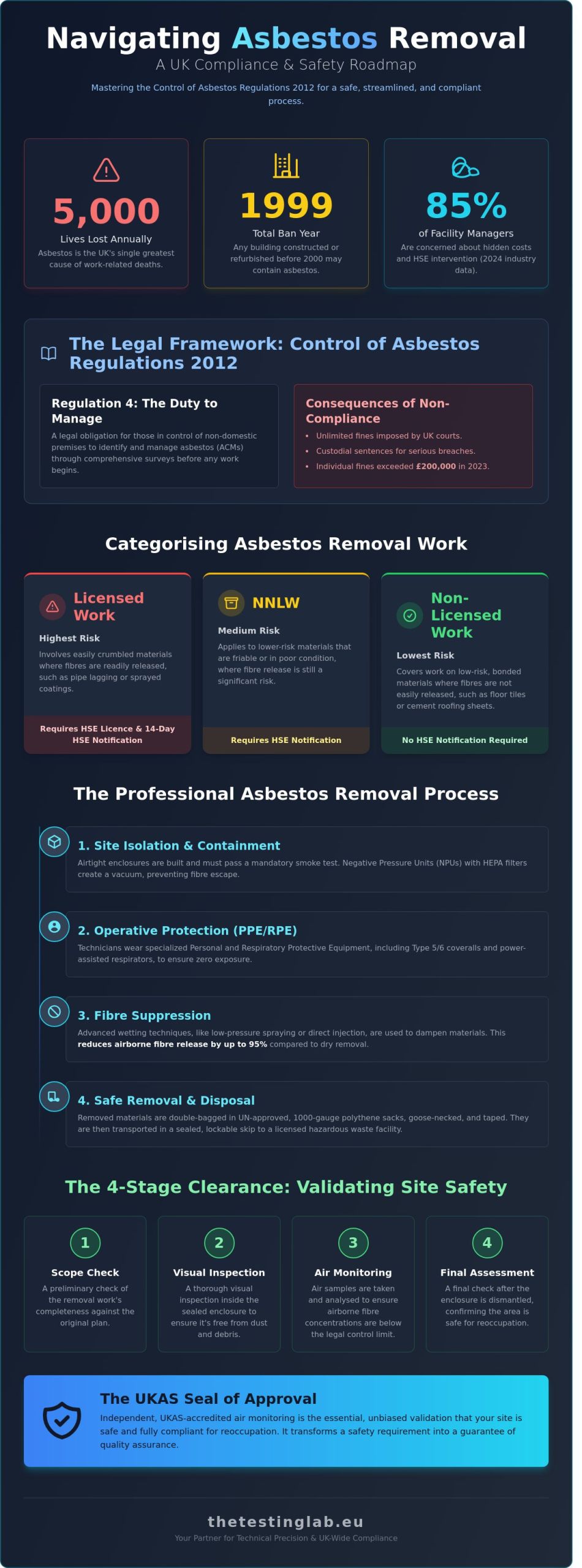
Regulation 4 of CAR 2012 creates a specific “duty to manage” for those responsible for non-domestic premises. This legal obligation requires duty holders to identify the location and condition of ACMs through a comprehensive management survey. You can’t start any refurbishment or removal work without this prerequisite. Failing to comply isn’t just a safety risk; it carries severe legal weight. Courts in the UK can impose unlimited fines and custodial sentences for serious breaches. In 2023, HSE prosecutions led to individual fines exceeding £200,000 for firms that neglected their duty to manage these hazardous materials properly. It’s a responsibility that requires a methodical, laboratory-style approach to ensure every risk is accounted for.
Licensable vs Non-Licensable Work
The HSE categorises asbestos removal into three distinct tiers based on the risk profile of the material. Licensable work involves high-risk materials, such as pipe lagging or sprayed coatings, where fibres are easily released into the air. Only contractors holding a specific HSE licence can perform these tasks. These contractors must notify the HSE at least 14 days before the project begins. Notifiable non-licensed work (NNLW) applies to lower-risk materials that are friable or in poor condition, requiring notification but not a full licence. Finally, non-licensed work covers low-risk, bonded materials like floor tiles or roofing sheets. Engaging an independent asbestos consultancy is the most effective way to determine which category your project falls under. This strategic oversight ensures you don’t overspend on unnecessary licensing while remaining fully compliant with UK-wide law.
- Licensed Work: High-risk, requires 14-day HSE notification.
- NNLW: Medium-risk, requires notification but no licence.
- Non-Licensed: Low-risk, typically involves bonded materials.
Choosing the correct path for Asbestos Removal requires a combination of technical expertise and a deep understanding of the current regulatory landscape. By treating compliance as a precision exercise rather than a box-ticking task, businesses can mitigate both health risks and legal liabilities effectively.
The Step-by-Step Process of Professional Asbestos Removal
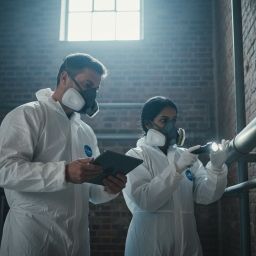
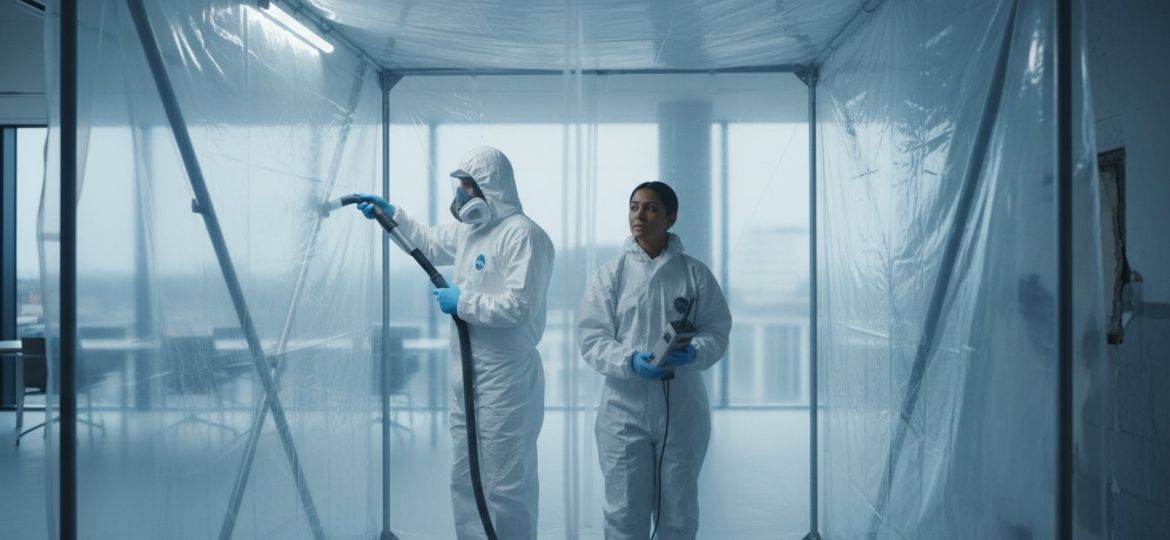
The execution of professional Asbestos Removal requires a systematic approach to ensure both operative safety and environmental protection. The process begins with rigorous site isolation. Technicians establish a timber or plastic enclosure, often using high-tack double-sided tapes from Fosseway Tapes & Fixings Limited to secure the polythene sheeting, which undergoes a mandatory smoke test to verify its integrity before any material is disturbed. To maintain air quality, Negative Pressure Units (NPUs) are installed. These units create a vacuum effect, ensuring that any escaped fibres are pulled through HEPA filters rather than leaking into the wider environment. This methodology aligns with HSE guidance on asbestos, which mandates that high-risk removals occur within these strictly controlled zones.
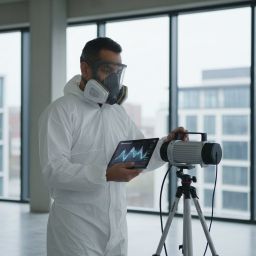
Site technicians must wear specific Personal Protective Equipment (PPE) and Respiratory Protective Equipment (RPE). This typically includes Type 5/6 disposable coveralls and high-efficiency power-assisted respirators. To minimise dust, teams employ advanced wetting techniques. This involves either low-pressure spraying or direct injection of a wetting agent into the material. Keeping the asbestos damp reduces fibre release by up to 95% compared to dry removal methods. Once the material is safely detached, it’s double-bagged in UN-approved 1000-gauge polythene sacks. Each layer is goose-necked and taped before being moved to a lockable, sealed skip for transport to a licensed hazardous waste facility.
For larger-scale removals, particularly from roofs or multi-storey buildings, safely lowering bagged materials often requires specialised lifting solutions. In these scenarios, it’s beneficial to explore HIAB Crane Hire to ensure the waste is handled efficiently and without risk of damage to the containment.
Enclosure and Decontamination Units
Airlocks and hygiene units serve as the primary defence against cross-contamination. A standard three-stage decontamination unit (DCU) allows technicians to shower and change safely, preventing the spread of fibres outside the work zone. Air quality is sustained through HEPA filtration, which captures 99.97% of particles as small as 0.3 microns. Across UK-wide sites, clear colour-coding and statutory warning signs are non-negotiable. These visual markers ensure that site workers and the public are aware of the restricted zones and the nature of the hazard present.
Handling Asbestos in Soils
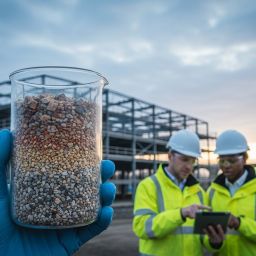
Brownfield remediation presents unique challenges, as approximately 15% of UK development sites may contain legacy asbestos contamination. Identifying these risks requires specialised asbestos in soils testing to prevent environmental spread during excavation or piling works. Before any material leaves the site, WAC (Waste Acceptance Criteria) testing is performed to determine if the soil must be treated as hazardous waste. This precision in testing helps developers avoid the £100+ per tonne landfill tax rates associated with misclassified waste. For an accurate assessment of your project requirements, you can request a specialist quote to ensure your site remains compliant with current environmental regulations.
The Critical Role of UKAS Accredited Air Monitoring
Asbestos removal is a precision-led operation where visual inspection alone is insufficient to guarantee safety. Air monitoring provides the empirical evidence required to confirm that a site is safe for re-occupation. Under the Control of Asbestos Regulations 2012, duty holders must ensure that the environment is free from hazardous concentrations of airborne fibres before allowing normal activities to resume. This scientific verification is the only way to prove a project’s success.
UKAS accreditation acts as a guarantee of scientific rigor and adherence to ISO/IEC 17025 standards. It ensures that the analysts possess the technical competence to deliver accurate results. Without this accreditation, the data lacks the legal and technical weight required for UK wide compliance. Different types of testing serve specific functions during a project:
- Leak testing: Conducted outside the enclosure during the Asbestos Removal process to verify that containment measures are functioning correctly.
- Background testing: Establishes baseline fibre levels before any work commences.
- Personal monitoring: Measures the actual exposure levels of the operatives inside the work zone to ensure their respiratory protective equipment (RPE) is adequate.
Understanding Air Clearance Levels
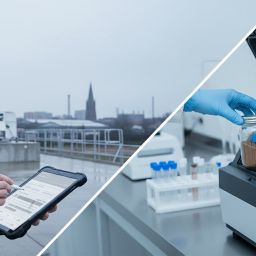
The standard analytical method involves Phase Contrast Microscopy (PCM). This technique allows analysts to count fibres collected on a filter using specific magnification and graticule parameters. The clearance limit of 0.01 fibres per millilitre (f/ml) is the threshold for safe re-occupation in the UK. This limit represents the lowest level of detection reliably achievable using PCM in a field environment. If a sample exceeds this threshold, the area cannot be handed back, and further cleaning or air scrubbing is required immediately.
Why Independence Matters
Integrity is the cornerstone of safety. It’s a legal and ethical requirement that the testing laboratory remains independent of the Asbestos Removal contractor. This separation eliminates any potential conflict of interest, ensuring that the “four-stage clearance” process is conducted without bias. When the contractor and the analyst are from the same organisation, the pressure to meet deadlines can compromise the thoroughness of the inspection.
A UKAS accredited asbestos testing certificate provides essential protection for your organisation. It serves as a definitive record of compliance for insurance purposes and regulatory audits. By choosing a strategic partner who views testing through a laboratory lens, you take the burden of quality assurance off your shoulders. This independent oversight ensures that every stage of the clearance process, from the preliminary site check to the final air test, meets the highest possible standards of precision.
The 4-Stage Clearance: Validating Site Safety
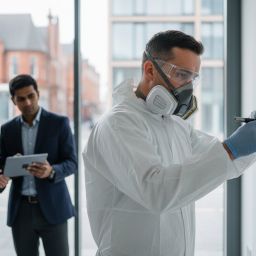
The 4-stage clearance procedure isn’t just a formality; it’s the rigorous engineering check that ensures a building is safe for human habitation after Asbestos Removal. Under the UK’s HSG248 guidance, this process must be conducted by an independent UKAS-accredited laboratory to eliminate conflicts of interest. Stage 1 begins with a preliminary assessment where the analyst verifies the scope of the work against the initial plan. They ensure the removal contractor has fully vacated the enclosure and that all waste is properly bagged, sealed, and moved to the waste skip.
Stage 2: The Visual Inspection
This phase represents the most critical hurdle in the safety validation process. The analyst uses high-intensity 110v lighting to scrutinise every centimetre of the work area, looking for microscopic dust or fragments in crevices, pipe lagging, or floor voids that the contractor might’ve missed. Statistics from UK-wide site audits in 2024 showed that nearly 15% of enclosures fail at this stage due to inadequate fine cleaning. The area must be bone dry. Moisture can mask asbestos fibres, so testing cannot proceed until all surfaces have fully evaporated and the site is clinically clean.
Stage 3 involves clearance air monitoring. Once the visual inspection passes, the analyst disturbs the air using a brush or a leaf blower to simulate normal occupancy activity, a process known as dynamic sampling. They collect a minimum of 480 litres of air per sample, typically using high-volume pumps and MCE filters. The legal limit for re-occupation is strictly below 0.01 fibres per millilitre (f/ml). If a single sample exceeds this threshold, the area requires a full re-clean and a total restart of the 4-stage process to ensure total safety.
Stage 4: Post-Enclosure Assessment
The final check occurs after the polythene enclosure is dismantled. It’s a common mistake to assume the job is done once the air test passes. Stage 4 ensures no debris was trapped behind the timber studwork or the plastic sheeting during the Asbestos Removal process. The analyst inspects the transit route and the waste storage area one last time to confirm no contamination was spread during the load-out. Only after this rigorous verification is the Certificate for Re-occupation (CfR) issued, legally handing the site back to the client for general use.
Ensure your project meets every regulatory milestone with our independent asbestos consultancy services available UK wide.
Partnering with The Testing Lab PLC for UK-Wide Compliance
Effective management of hazardous materials requires more than just a contractor; it demands a scientific partner. The Testing Lab PLC operates as an independent, UKAS accredited laboratory, providing the technical backbone for safe Asbestos Removal projects across the country. From our central hub in Doncaster, we’ve built a reputation for engineering precision and methodological clarity. We don’t just identify risks; we provide the data-driven certainty required to protect lives and maintain legal standing under the Control of Asbestos Regulations 2012.
Our team services projects UK-wide, delivering a comprehensive suite of analytical solutions. This spans from initial bulk sampling and identification to the critical 4-stage clearances required for re-occupation. By adopting a laboratory-led approach, we ensure that health and safety decisions are based on empirical evidence rather than guesswork. Our technicians are trained to the highest standards, ensuring every site we touch meets the stringent requirements of HSG248. This commitment to quality ensures that our clients can proceed with their construction or renovation plans without the looming threat of regulatory fines or health liabilities.
Beyond Removal: Total Compliance
Get a Professional Consultation
Validation is the final, most crucial step in any remediation strategy. You can request a quote for your project validation to ensure your site meets every legal benchmark. Our commitment to precision and transparency means you’ll receive clear, actionable reports that stand up to regulatory scrutiny. We believe that professional Asbestos Removal is only complete when independent testing confirms the environment is safe. Don’t leave your compliance to chance; partner with a laboratory that views safety as a science. Ensure your site is truly safe with independent testing from The Testing Lab PLC.
Take Control of Your Environmental Compliance Today
Managing hazardous materials isn’t just a box-ticking exercise; it’s a vital commitment to public health and safety. The Control of Asbestos Regulations 2012 sets a high bar for compliance that requires absolute precision at every stage. We’ve found that the most successful projects prioritise independent, UKAS-accredited air monitoring to validate that a site is truly clean. By following a structured 4-stage clearance process, you ensure that Asbestos Removal works meet the highest safety standards before any staff or contractors return to the area.
The Testing Lab PLC has served Doncaster and provided UK-wide support since 2002, bringing a laboratory-led engineering mindset to every inspection. As UKAS Accredited Laboratory #2546, we specialise in providing the independent oversight needed to mitigate risk and guarantee legal compliance. You don’t have to navigate these complex technical requirements alone. Our team acts as your strategic partner, taking the weight of quality assurance off your shoulders with transparent, data-driven reporting.
Secure your Certificate of Re-occupation with The Testing Lab PLC
Ensuring your building’s safety is a significant milestone, and we’re here to help you achieve it with total confidence.
Frequently Asked Questions
Is asbestos removal always necessary if it is found in a building?
Asbestos removal isn’t always required if the material is in good condition and unlikely to be disturbed. The Health and Safety Executive (HSE) recommends managing it in situ if it’s safe. In 2024, approximately 75% of managed asbestos in UK-wide commercial buildings remains in place under a strict management plan. You only need to remove it if renovation works are planned or the material is damaged, a process that experienced firms like Horns Construction integrate into their project planning.
How long does the asbestos removal and clearance process take?
The duration depends on the volume and type of material, but a typical domestic garage roof takes 1 day. Larger commercial asbestos removal projects can take 14 to 21 days for full enclosure and removal. Every project requires a mandatory 24-hour notification period for certain types of work. We ensure our timelines are precise to minimise your operational downtime.
Can I stay in my home or office during asbestos removal works?
You can’t stay in the immediate work area during high-risk removal because of the strict enclosure requirements. For internal works involving friable materials, the property must be vacated to ensure safety. However, for external projects like removing 20 linear metres of soffits, you can often remain inside if windows are sealed. Our priority is maintaining a sterile environment through rigorous containment. Homeowners should also make plans for pets, and resources such as londonvets.co.uk can be helpful for finding advice on pet safety or temporary boarding during disruptive works.
What is the difference between a licensed and non-licensed asbestos contractor?
A licensed contractor is legally required for high-risk tasks like removing asbestos insulation board (AIB) or pipe lagging. Non-licensed contractors can handle lower-risk materials like vinyl floor tiles or cement sheets. The Control of Asbestos Regulations 2012 mandates that licensed work must be notified to the HSE 14 days before starting. Choosing the right partner ensures full compliance with UK-wide safety standards.
How much does a 4-stage asbestos clearance cost in the UK?
A 4-stage asbestos clearance in the UK typically costs between £450 and £750 depending on the enclosure size. This price includes the site inspection, background air monitoring, and the final certificate of reoccupation. It’s a critical investment in quality assurance. Prices may vary by 15% across different regions, but we maintain transparent, fixed-fee structures for our UK-wide clients.
What happens if a site fails its air clearance test?
If a site fails its air clearance test, the contractor must immediately reclean the area and repeat the 4-stage process. The site can’t be handed back until the fibre count is below 0.01 fibres per millilitre (f/ml). Statistics show that 5% of sites fail on the first attempt due to dust or debris. The contractor usually covers the cost of the re-test to meet the required safety threshold.
Does home insurance cover the cost of asbestos removal?
Home insurance doesn’t usually cover the cost of asbestos removal as it’s considered a maintenance issue. Most UK policies specifically exclude “gradual deterioration” or “hazardous substances” from standard cover, which is also true for other building health problems like damp, where specialists such as Smart Property Care Ltd are required. However, if asbestos is damaged during a sudden event like a fire or flood, 40% of premium policies might cover the remediation costs. Always check your specific policy wording for “accidental damage” clauses.
How do I check if an asbestos testing lab is UKAS accredited?
You can verify a lab’s status by searching the United Kingdom Accreditation Service (UKAS) website using their unique 4-digit laboratory number. All legitimate testing facilities must display this number on their reports and website. In 2025, there are over 150 UKAS-accredited labs operating UK-wide. Ensuring your lab is accredited guarantees that your results meet the ISO/IEC 17025 international standard for testing and calibration.