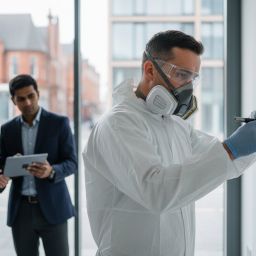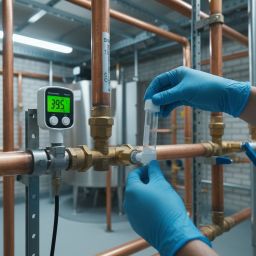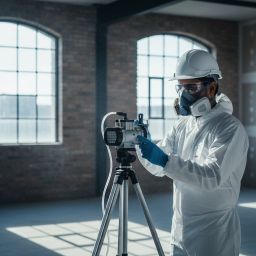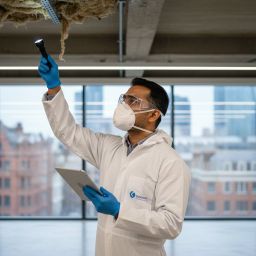


Did you know the Health and Safety Executive (HSE) still reports over 5,000 asbestos-related deaths each year in the UK? This isn’t a historical problem; it’s a critical, ongoing risk that makes definitive bulk asbestos identification a non-negotiable step before any refurbishment or demolition work begins.
It’s completely understandable why the mere possibility of asbestos brings a project to a halt, creating anxiety around project delays, health risks, and non-compliance with the Control of Asbestos Regulations 2012 (CAR 2012). This guide is designed to replace that uncertainty with clarity. We promise to walk you through the entire process, from sample collection to the final accredited laboratory analysis. You’ll gain a clear understanding of the scientific methods, your legal duties, and how to interpret a lab report to keep your project compliant, on schedule, and safe.
Key Takeaways
- Discover why visual checks are unreliable and understand the definitive laboratory process, Polarised Light Microscopy (PLM), used to confirm asbestos fibres.
- Distinguish between situations requiring a standalone sample and when a full Management or Refurbishment Survey is legally necessary for your project.
- Learn to confidently interpret your analysis report, including the critical difference between ‘NAD’ (No Asbestos Detected) and the specific types of asbestos identified.
- Understand the step-by-step UKAS accredited process for bulk asbestos identification, from sample receipt to certification, ensuring full compliance with UK regulations.
What is Bulk Asbestos Identification?
Bulk asbestos identification is the definitive scientific process used to determine if a specific building material contains asbestos fibres. It involves taking a physical sample of the suspect material, known as a ‘bulk’ sample, and subjecting it to rigorous analysis in an accredited laboratory. This isn’t a visual check or an on-site guess. It’s a meticulous microscopic examination that provides absolute certainty.
Visually identifying asbestos is impossible. The fibres themselves are microscopic, often millions of times smaller than a human hair. For a detailed overview of its properties, the article What is Asbestos? provides a comprehensive background. These fibres were intentionally mixed into hundreds of common building products, from cement boards to vinyl floor tiles, making them completely invisible to the naked eye. The term ‘bulk’ simply distinguishes this type of material testing from other forms of asbestos analysis, such as air monitoring or dust wipe sampling. We are analysing the solid material itself.
This process is the cornerstone of legal compliance in the United Kingdom. The Control of Asbestos Regulations (CAR) 2012 places a “duty to manage” asbestos on the owners and managers of non-domestic properties. Effective management starts with knowing exactly where asbestos-containing materials (ACMs) are located. Therefore, professional bulk asbestos identification is not just a best practice; it’s a foundational step in fulfilling your legal obligations and ensuring workplace safety.
Common Materials Requiring Bulk Analysis
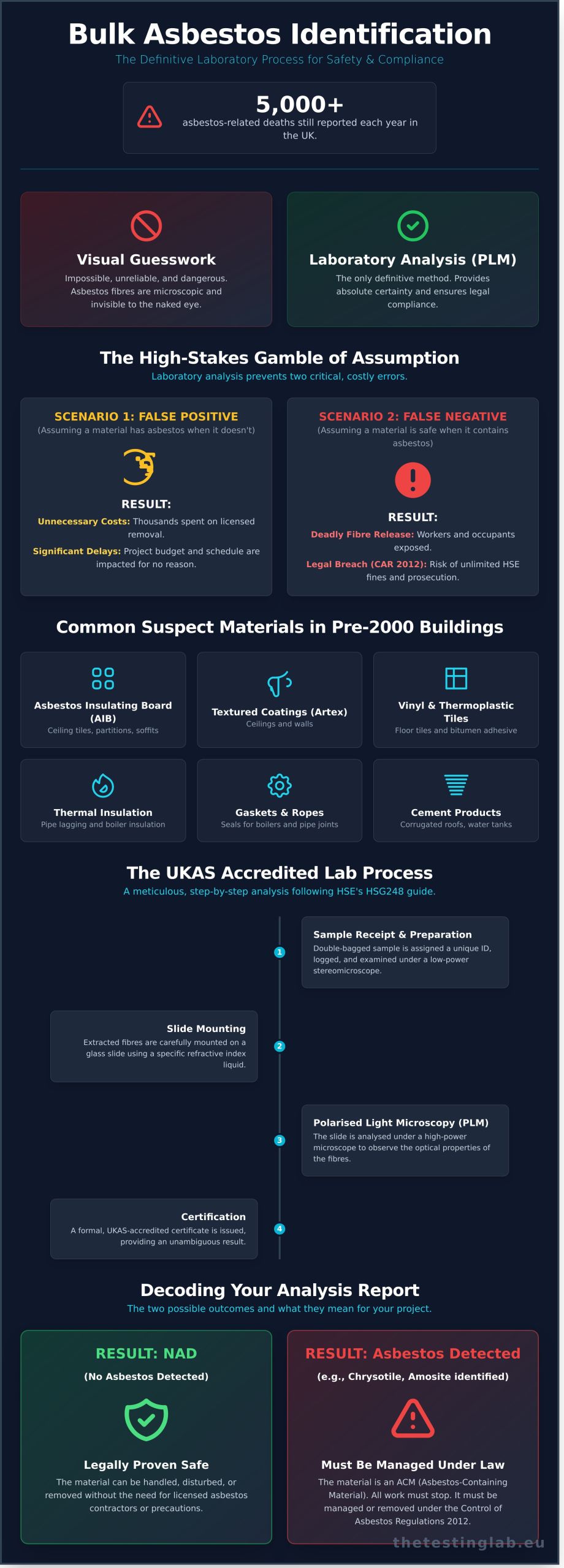
Decades of widespread use mean asbestos can be found in numerous materials, particularly in buildings constructed or refurbished before the year 2000. Some of the most frequently tested items include:
- Asbestos Insulating Board (AIB): Commonly used for ceiling tiles, partition walls, and soffit boards.
- Textured Coatings: Branded products like Artex, often found on ceilings and walls.
- Vinyl and Thermoplastic Tiles: Both the tiles and the adhesive bitumen used to fix them can contain asbestos.
- Thermal Insulation: Pipe lagging, boiler insulation, and sprayed coatings are high-risk materials.
- Gaskets and Ropes: Used for sealing in high-temperature environments like boilers and pipe joints.
- Cement Products: Corrugated roof sheets, water tanks, and flue pipes often contain asbestos for reinforcement.
The Danger of ‘Assuming’ Asbestos Content
Making assumptions about asbestos is a high-stakes gamble with both financial and human costs. The consequences of getting it wrong are severe, which is why laboratory analysis is the only responsible path forward.
A “false positive,” where you assume a material contains asbestos when it doesn’t, leads to unnecessary and expensive remediation work. A licensed asbestos removal project can cost thousands of pounds and cause significant disruption, all for a material that was perfectly safe. This is a costly mistake that drains project budgets.
A “false negative” creates a far more dangerous scenario. Assuming a material is safe, and then drilling, cutting, or disturbing it, can release deadly fibres into the air. This not only constitutes an illegal breach of CAR 2012, risking unlimited fines from the Health and Safety Executive (HSE), but it also exposes workers and occupants to incurable diseases like mesothelioma. For this reason, a UKAS-accredited laboratory certificate stating ‘No Asbestos Detected’ (NAD) is the only form of evidence that legally proves a material is safe to handle.
The Science Behind the Lab: Polarised Light Microscopy (PLM)
Once a sample of suspect material arrives at our facility, it leaves the construction site behind and enters a world of clinical precision. The definitive method for bulk asbestos identification in the UK is Polarised Light Microscopy (PLM), a technique governed by the strict protocols outlined in the Health and Safety Executive’s (HSE) guide HSG248, The Analysts’ Guide. This isn’t just a quick look under a microscope; it’s a systematic, multi-stage process designed to deliver an unambiguous result.
The journey of a sample follows a meticulous chain of custody:
- Sample Receipt & Preparation: Your double-bagged sample is assigned a unique laboratory number and logged into our system. In a controlled environment, a qualified analyst examines the material under a low-power stereomicroscope to identify any suspicious fibres for extraction.
- Slide Mounting: The selected fibres are carefully mounted onto a glass slide using a refractive index liquid. This liquid is crucial, as its known optical properties are used as a baseline for identifying the fibres.
- PLM Analysis: The slide is placed under a high-power polarised light microscope. As polarised light passes through the mineral fibre, its crystalline structure alters the light in a unique way. An analyst observes several key optical properties, such as morphology, colour, and birefringence, to make an initial identification.
- Dispersion Staining: To confirm the finding, a specialised technique called Dispersion Staining (DS) is used. This involves observing the colour effects produced at the edge of a fibre when it’s immersed in a liquid of a specific refractive index. Each asbestos type produces a characteristic set of colours, acting as a definitive fingerprint.
This rigorous, science-led approach removes all guesswork. The unique optical physics of each asbestos type allows our analysts to differentiate them with certainty, providing the data you need to manage risk effectively.
Identifying the Six Regulated Asbestos Types
UK regulations recognise six specific mineral types that must be identified. They fall into two mineral families. The most common is Chrysotile (White asbestos), the sole member of the Serpentine group, known for its curly, flexible fibres. The more hazardous Amphibole group includes Amosite (Brown) and Crocidolite (Blue), which have brittle, needle-like fibres. The remaining three, Anthophyllite, Tremolite, and Actinolite, are far rarer in UK building materials.
Why UKAS Accreditation (ISO 17025) is Non-Negotiable
An asbestos test result is more than just data; it’s a legal document with profound safety and financial implications. That is why choosing a UKAS-accredited laboratory is not optional. Accreditation to the ISO 17025 standard confirms a laboratory’s technical competence and its adherence to an exhaustive quality management system. This system governs everything from analyst training and equipment calibration to sample handling protocols that eliminate the risk of cross-contamination. The rigorous standards for accredited testing are recognised globally; for example, OSHA bulk asbestos analysis regulations in the United States similarly mandate the use of accredited labs to ensure worker safety and compliance. For 2026 standards, UKAS accreditation to ISO 17025 is the definitive benchmark, verifying a laboratory’s technical competence and impartiality in delivering legally defensible asbestos analysis. When you see the UKAS symbol, you can be confident the result is accurate, reliable, and will stand up to scrutiny. Our commitment to this standard means we can provide you with fully compliant and trustworthy certification for every sample we test.
Strategic Sampling: Bulk ID vs. Asbestos Surveys
Understanding when to test a single material versus commissioning a full survey is a critical decision in property management and maintenance. The choice isn’t just about cost; it’s about strategic risk management. A targeted bulk asbestos identification provides a fast, precise answer to a specific question, while a comprehensive survey provides the full, legally required overview of risk across a property.
Standalone bulk sampling is the ideal tool for isolated, reactive situations. Imagine a plumber needs to access pipework and discovers a section of damaged, unfamiliar insulation lagging. Or perhaps a piece of a ceiling tile has fallen in a corridor. In these cases, taking a single, targeted sample for analysis allows you to make an immediate, informed decision about safety protocols for that specific maintenance task. It’s a tactical solution for an immediate problem.
A full Asbestos Survey, however, is a proactive and often legally mandated requirement. Under the UK’s Control of Asbestos Regulations 2012, anyone with a duty to manage non-domestic premises must have an Asbestos Management Survey in place. This survey identifies all accessible Asbestos Containing Materials (ACMs) that could be disturbed during normal occupancy. If you’re planning any intrusive work, from installing new IT cabling to a full demolition, a more destructive Refurbishment and Demolition Survey is a legal prerequisite.
Bulk Sampling for Property Managers
For managers of large commercial portfolios, targeted bulk sampling is an efficient screening tool. Before scheduling minor, localised works like replacing a few damaged vinyl floor tiles or repairing a gasket, a quick sample analysis can confirm the presence of asbestos. This approach, with lab analysis typically costing between £40 and £60 per sample, provides the data needed to apply the correct safety measures without the expense of a full building survey for a single task. It’s a pragmatic way to manage immediate risks across multiple sites. Learn more about the different types in our complete asbestos survey types guide.
Of course, a property manager’s duty of care doesn’t end with hazardous materials. Ensuring robust fire and security systems are in place is equally critical for compliance and safety. For those evaluating their current systems or planning new installations, you can check out Quartz Empire Fire & Security Ltd for professional services.
This holistic view of safety also extends to the well-being of personnel, particularly in industries where physical labour and high-pressure environments can contribute to challenges with substance misuse. For managers seeking confidential advice or referral services to support their teams, you can visit Detox Rehab Clinics UK.
The Risks of Improper Sampling
While “DIY” asbestos testing kits are available, taking a sample without proper training and equipment is a significant gamble. The moment a material is disturbed, the risk of fibre release becomes real. A qualified surveyor mitigates this risk through controlled methods, but an improper sample can create a hazard where none existed before. Key risks include:
- Uncontrolled Fibre Release: Snapping a piece of asbestos insulating board (AIB) without containment and appropriate respiratory protective equipment (RPE) can release millions of invisible, harmful fibres into the air.
- Non-Representative Samples: An untrained person might scrape only the surface paint from a wall, missing the asbestos-containing textured coating underneath. This leads to a dangerously misleading “no asbestos detected” result.
- Cross-Contamination: Poorly sealed sample bags can contaminate your vehicle, your clothes, and other areas of the property, spreading the very hazard you’re trying to identify.
The integrity of the process starts at the source. That’s why The Testing Lab always recommends professional sample collection for anything other than the lowest-risk materials. The chain of custody—a documented log of who collected the sample, where, when, and how it was handled—is essential for a legally defensible result. While UK regulations are governed by the HSE, the importance of precise analysis is a global standard. For example, a review of OSHA’s requirements for bulk sampling in the US shows that even trace amounts of asbestos trigger significant protocols, underscoring why accredited testing is non-negotiable. An undocumented sample from a DIY kit lacks this vital provenance, making it unsuitable for formal health and safety records.
Interpreting Your Bulk Asbestos Analysis Report
You’ve sent your sample for analysis and the certificate has arrived. This document is the critical turning point in your compliance journey, providing the definitive data needed to protect people and property. The result will fall into one of two clear categories: ‘NAD’ (No Asbestos Detected) or ‘Asbestos Detected’. While an NAD result provides peace of mind, a positive identification is not a cause for panic; it’s a call for a structured, legally-compliant plan.
Understanding the specifics of a positive report is crucial. The type of asbestos fibre identified directly influences the level of risk and dictates the necessary management strategy under UK law. This is where the technical data from your bulk asbestos identification transforms into your practical, on-site action plan.
Key Components of a Valid Analysis Certificate
A legitimate report from an accredited laboratory is non-negotiable. Before you even look at the results, verify the certificate contains these three elements. It should clearly display the laboratory’s unique UKAS accreditation number and logo, confirming it meets the ISO/IEC 17025 standard. It must also include a unique sample reference number tied to a precise description of the material and its location on your property, ensuring complete traceability. Finally, it will state the analytical method used, which for bulk samples in the UK is Polarised Light Microscopy (PLM) in accordance with the HSE’s guidance document HSG248.
Turning Results into Action
A positive result immediately engages your responsibilities under the Control of Asbestos Regulations 2012, specifically Regulation 4, the ‘Duty to Manage’. The type of asbestos found is the most significant factor in determining your next steps.
- Chrysotile (White Asbestos): The most common type, often found bonded within materials like cement sheeting, floor tiles, and textured coatings. If the material is in good, stable condition, it can often be managed in situ with regular inspections.
- Amosite (Brown Asbestos) & Crocidolite (Blue Asbestos): These are amphibole asbestos types and are significantly more hazardous. Their fibres are more brittle and pose a higher risk of becoming airborne. Finding Amosite or Crocidolite, particularly in materials like insulation board (AIB) or pipe lagging, demands a more urgent and stringent management approach. Any work on these materials is almost always classed as licensed work, requiring a specialist HSE-licensed contractor.
Your next steps are dictated by a risk assessment based on the material’s condition, location, and fibre type. The options typically include:
- Managing in Situ: If the material is in excellent condition and unlikely to be disturbed, it can be labelled and monitored as part of an asbestos management plan.
- Encapsulation: This involves sealing the material with a protective coating to prevent fibre release. It’s a less disruptive alternative to removal.
- Removal: The only permanent solution. This is essential for damaged materials or prior to any major refurbishment or demolition work.
The distinction between non-licensed and licensed asbestos work is critical. While some minor tasks on low-risk chrysotile materials may be non-licensed, any work involving higher-risk materials like AIB, spray coatings, or insulation containing Amosite or Crocidolite must be performed by a licensed professional. For a more granular breakdown of every section, read our detailed guide on Understanding Your Asbestos Analysis Report.
If your report has identified asbestos and you’re unsure of the next steps, our expert team can help you formulate a compliant management plan. Contact our asbestos consultants today to ensure your property is safe and fully compliant with HSE regulations.
Bulk Asbestos Identification at The Testing Lab PLC
Choosing the right laboratory partner is the final, critical step in managing asbestos risk effectively. At The Testing Lab PLC, we combine state-of-the-art analytical precision with a client-focused approach. Our purpose-built, UKAS accredited (ISO/IEC 17025, accreditation number 4321) laboratory in Doncaster is the hub for our nationwide testing services, providing property managers, construction firms, and surveyors across the UK and Ireland with definitive, reliable results.
We understand that project timelines are non-negotiable. A delay in asbestos analysis can halt a multi-million-pound construction project, causing significant financial and logistical strain. That’s why we offer a suite of turnaround options tailored to your project’s urgency, from our standard 3-day service to an emergency 4-hour analysis for critical situations. But our service doesn’t end with a test certificate. We believe in providing clarity. Our expert analysts are on hand to help you interpret the results, explaining the practical implications of finding chrysotile in a floor tile versus amosite in an insulation board. This expert consultancy is part of our commitment to being your strategic partner in safety and compliance.
Why Choose Our Independent Laboratory?
Our operational model is built on three pillars: impartiality, capacity, and accessibility. These principles ensure that every client receives the highest standard of service, regardless of project size.
- Absolute Impartiality: We are a dedicated testing facility. We do not perform asbestos removal or abatement. This strict separation guarantees that our analysis is completely independent, with no commercial conflict of interest. Your results are based purely on scientific fact.
- High-Volume Capacity: Our Doncaster lab is engineered for efficiency, capable of processing over 500 samples per day. This capacity makes us a trusted partner for large-scale site investigations, portfolio-wide housing surveys, and complex demolition projects where hundreds of samples require swift and accurate analysis.
- Direct Analyst Access: If you have a technical query about your report, you won’t be passed through a call centre. We provide direct access to our lead analysts, allowing you to discuss the specifics of your sample and results with the expert who performed the test.
Start Your Testing Process Today
Engaging our services is a straightforward process designed for speed and accuracy. For individual or small numbers of samples, you can securely send them directly to our lab. Simply double-bag the material, label it clearly, complete our online submission form, and post it to our Doncaster facility. We recommend using a tracked postal service for peace of mind.
For larger projects or where you require professional sampling to meet regulatory standards (in line with HSG248 guidance), we can coordinate an on-site visit from a P402-qualified surveyor. This ensures samples are collected safely, documented correctly, and transported with a full chain of custody. Whether you need a single test or a comprehensive site-wide analysis, our team is ready to provide a clear, competitive quote. Contact The Testing Lab PLC for bulk asbestos identification quotes and take the first step towards definitive answers and a safer environment.
Secure Your Site with Precision Asbestos Analysis
Navigating asbestos management begins with certainty. Identifying suspected materials isn’t a guessing game; it requires the scientific precision of Polarised Light Microscopy (PLM) to confirm the presence and type of asbestos fibres. Understanding your lab report is the critical link between testing and taking safe, compliant action. That’s why professional bulk asbestos identification is your first and most important line of defence against exposure risks.
Since 2002, The Testing Lab PLC has provided this essential service to clients across the UK and Ireland. As a fully independent and UKAS accredited laboratory, we deliver unbiased results you can depend on to make informed decisions. Don’t leave safety to chance. When you need definitive answers, trust the experts.
Ready to move from uncertainty to action? Get a Quote for Bulk Asbestos Identification and take the first step towards a safer environment.
Frequently Asked Questions About Bulk Asbestos Identification
What is bulk asbestos identification?
Bulk asbestos identification is the definitive laboratory process used to analyse a physical sample of a material to confirm the presence and type of asbestos fibres. Using a technique called Polarised Light Microscopy (PLM), as required by the HSE’s HSG 248 guidance, our analysts can accurately identify all six regulated types of asbestos. This analysis is the only way to be 100% certain if a suspect material contains asbestos.
How long does it take to get asbestos test results?
You can typically expect your asbestos test results within 24 to 48 hours after the sample arrives at our lab. For urgent projects, such as those holding up construction or property sales, we offer express services. These priority options can deliver a certified Certificate of Analysis on the same business day, ensuring your project timelines are met without compromising on analytical precision. Contact us directly to discuss your specific turnaround requirements.
Can I take an asbestos sample myself?
While it is not illegal for a homeowner to take a sample, we strongly recommend against it due to the serious health risks. Disturbing potential asbestos-containing materials without proper training and protective equipment can release dangerous fibres into the air. For your safety and to ensure a correct, representative sample is taken, you should always hire a BOHS P402 qualified asbestos surveyor to collect the sample for you.
Does a ‘No Asbestos Detected’ result mean the whole building is safe?
No, a ‘No Asbestos Detected’ result is only valid for the specific material sample that was tested. A building can contain many different types of materials, and asbestos content can vary even within the same product type. For example, a negative result from one ceiling tile doesn’t guarantee all ceiling tiles are clear. A comprehensive asbestos survey is the only method to assess the risk for an entire property.
What is the difference between Chrysotile, Amosite, and Crocidolite?
These are the three most common asbestos types found in UK buildings, differing in their physical structure. Chrysotile (‘white asbestos’) has soft, curly fibres and accounts for over 95% of asbestos used. Amosite (‘brown asbestos’) and Crocidolite (‘blue asbestos’) are amphibole types with sharp, needle-like fibres, which are generally considered more hazardous. Our lab analysis will precisely identify which, if any, of these are present in your sample.
Is UKAS accreditation required for asbestos testing in the UK?
Yes, for an asbestos test result to be considered legally compliant and reliable under UK law, the laboratory must be UKAS accredited to the ISO/IEC 17025 standard. This accreditation is your guarantee that the lab meets strict standards for technical competency, impartiality, and quality management systems. Always verify a lab’s accreditation status on the UKAS website before submitting a sample to ensure your results will be officially recognised.
How much does a bulk asbestos sample test cost?
The cost for testing a single bulk asbestos sample in the UK typically ranges from £25 to £50 + VAT. The final price depends on the required turnaround time, with same-day express services costing more than a standard 48-hour service. We often provide discounted rates for analysing multiple samples submitted at the same time, offering a more cost-effective solution for larger projects or comprehensive surveys. We recommend requesting a quote for precise pricing.
What should I do if my bulk sample comes back positive?
If your sample is positive for asbestos, the first rule is not to disturb the material. Under the Control of Asbestos Regulations 2012, your legal duty is to manage the risk. Depending on the material’s condition and location, this may involve sealing it (encapsulation) or arranging for its safe removal by a licensed asbestos contractor. A positive certificate of analysis is the first step in creating a safe management plan.